
Introduction
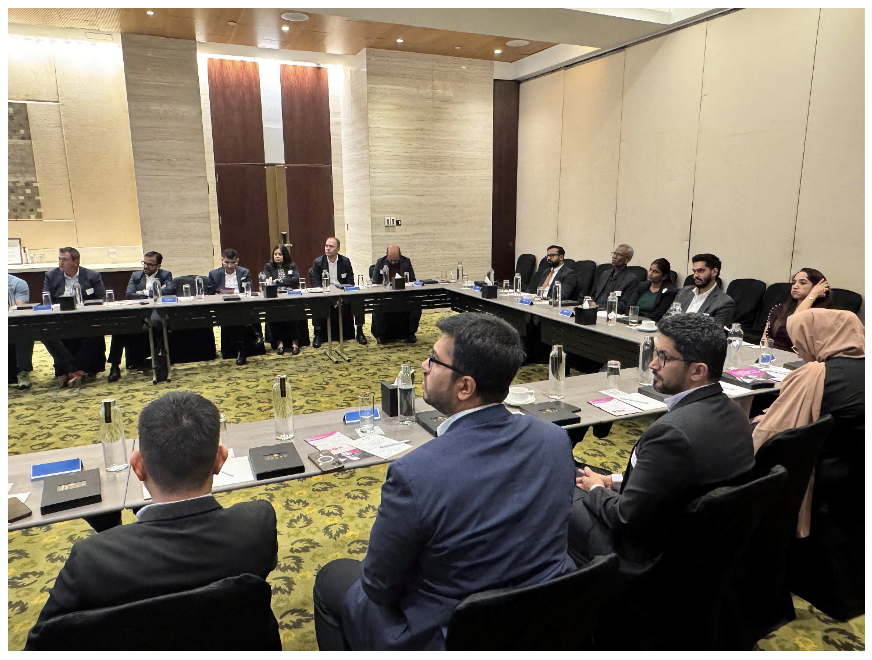
The final Dubai FP&A Board meeting of 2025 brought together senior finance leaders for a focused discussion on what effective FP&A Business Partnering truly requires in modern organisations. Sponsored by Jedox and supported by Michael Page, the session combined global research, local insights, a practical case study, and an in-depth look at how Agentic AI is reshaping partnering expectations. This was the 14th Dubai FP&A Board meeting since the chapter’s launch in 2016, marking a meaningful close to a year of transformation and learning across the global FP&A Board community.
Why This Topic Matters
FP&A Business Partnering has become central to enabling agile decision-making and elevating finance from transactional reporting toward strategic influence. Partnering today is defined less by technical excellence and more by trust, collaboration, business acumen, and the ability to communicate insightfully. Yet barriers remain. Many organisations continue to operate in “Nokia-era” transactional mode rather than moving toward “iPhone-level” predictive and strategic capability.
Against this backdrop, the Dubai Board explored what still holds teams back, and what steps leading organisations are taking to move toward a more strategic state.
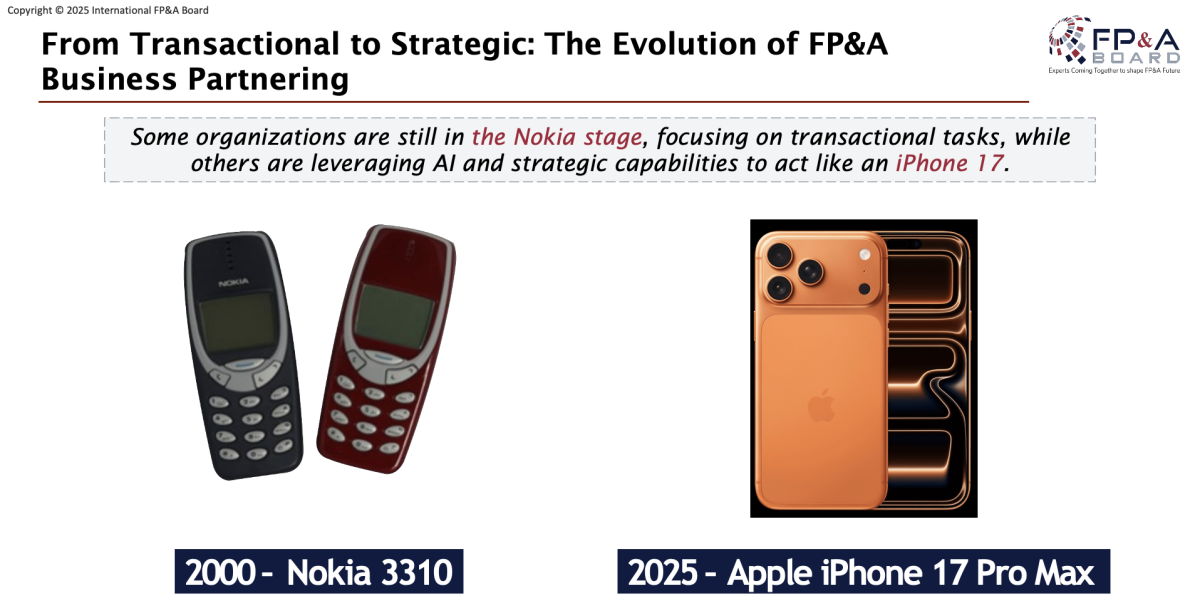
Figure 1
Opening Question: What Prevents FP&A from Being a True Business Partner?
The session opened with a simple but powerful question also featured in the deck:
“What is the biggest barrier preventing FP&A from being a true business partner in your organisation?”
Responses centred on mindset, resilience, organisational silos, lack of insights, and data availability and integrity.
Key Frameworks and Models
1. What Best-in-Class FP&A Partnering Looks Like
Best-in-class partnering is rooted in the ability to tell the story behind the numbers. It shifts FP&A from reporting what happened to shaping what could happen next. High-performing FP&A partners provide proactive insight, communicate clearly, understand the business intimately, and influence decisions with confidence. At the heart of effective partnering is the ability to “tell the story behind the numbers.”
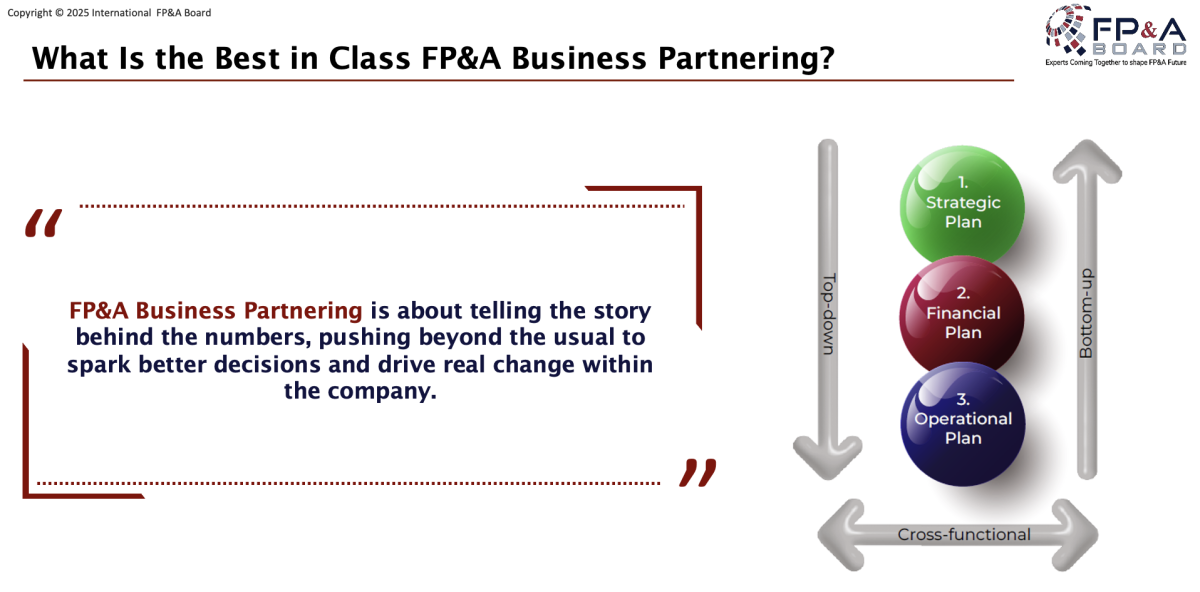
Figure 2
Characteristics include:
- Proactive insight
- Clear communication
- Strong business knowledge
- Ability to influence and guide decisions
2. Attributes and Skills Needed
The attributes and skills required for modern FP&A roles blend analytical precision with behavioural strengths. Communication and storytelling bring clarity to complexity. Curiosity drives deeper questioning and more meaningful insights. Business acumen ensures analysis is grounded in operational reality. Strong analytical capabilities uncover patterns and scenarios, while leadership and influence enable FP&A to guide decisions without formal authority.
Together, these capabilities reflect a profession that sits at the crossroads of numbers and narrative turning data into decisions.
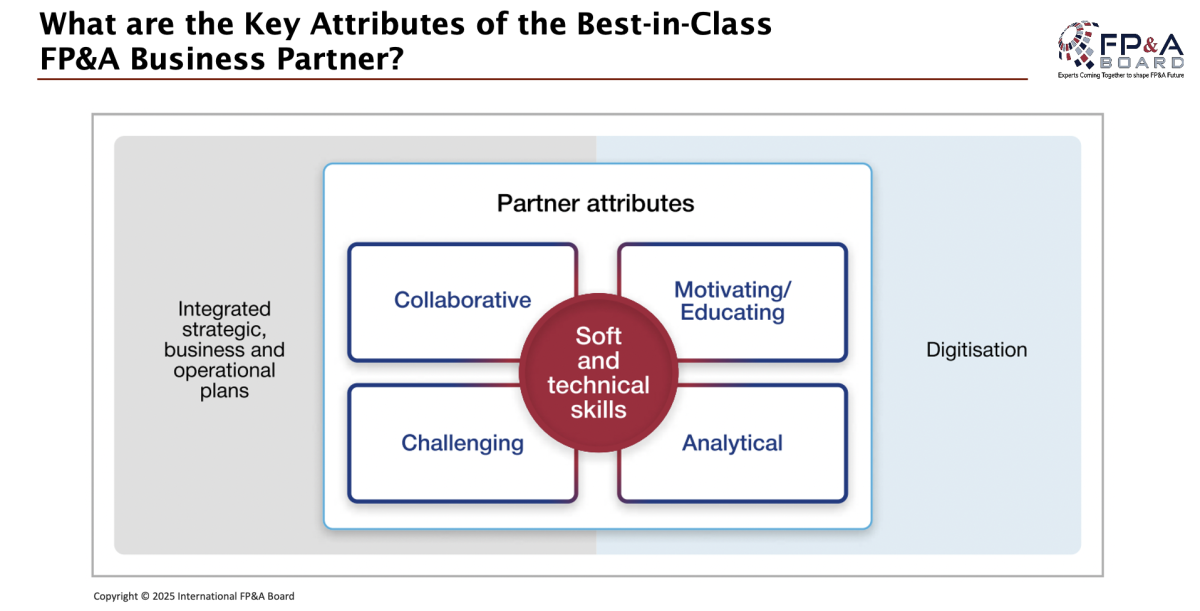
Figure 3
3. FP&A Business Partnering Maturity Model
The FP&A Business Partnering Maturity Model provided a powerful storytelling moment in the session, offering participants a mirror to assess where their organisations stand today and what “better” looks like across six dimensions: Approach, Business Acumen, Influence, Skills, Analytics, and Technology.
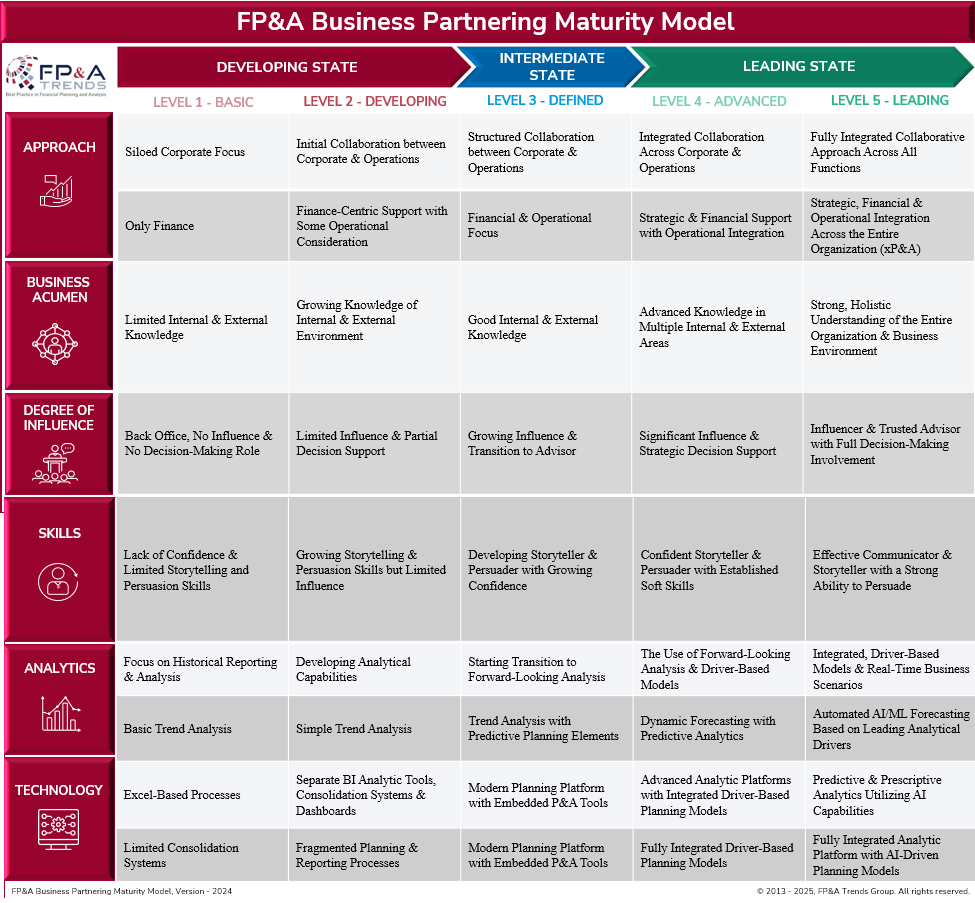
Figure 4
Rather than a linear checklist, the model represents a progressive shift in identity:
Basic → Developing: teams begin moving beyond transactional tasks, but insight generation is still inconsistent.
Defined: FP&A becomes more integrated into planning cycles, with clearer roles and repeatable processes.
Advanced: the business increasingly seeks FP&A input early, not just at quarter-end. Scenario planning and forward-looking analysis become standard.
Leading: FP&A is a true strategic partner, operating with predictive capabilities, strong influence, and an enterprise-wide view of value creation.
Most organisations remain in the Developing or Defined stages. This resonated strongly with participants, who noted that maturity is not achieved through technology alone but through a balance of people development, disciplined processes, and a technology foundation that supports speed and trust.
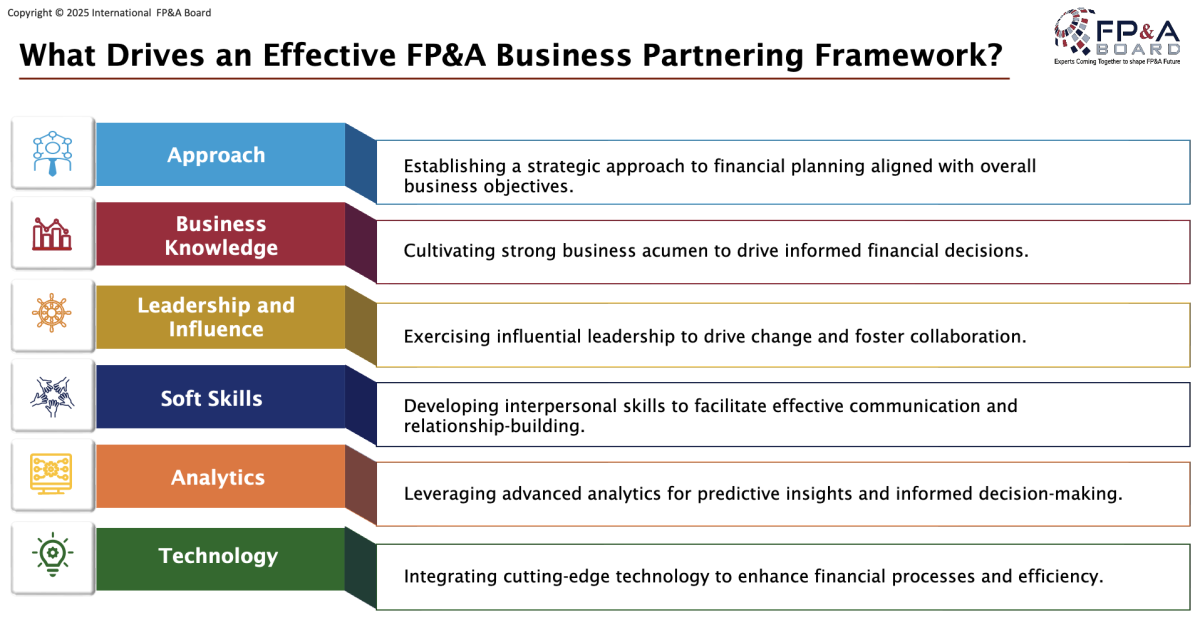
Figure 5
4. Technology’s Role in Modern Partnering
Technology is no longer an optional accelerator — it is part of the partnering identity. AI, ML, cloud platforms, and integrated planning tools improve forecast quality, enhance processing speed, and free FP&A capacity for strategic work. In many ways, technology becomes the enabler that allows teams to climb the maturity curve and adopt the attributes highlighted above.

Figure 6
Case Study and Technology Insights
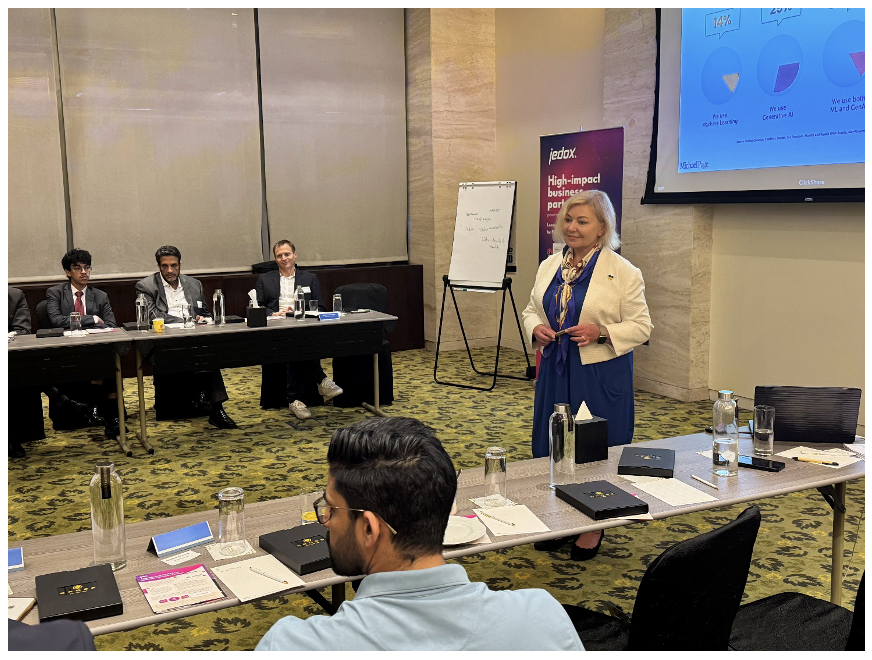
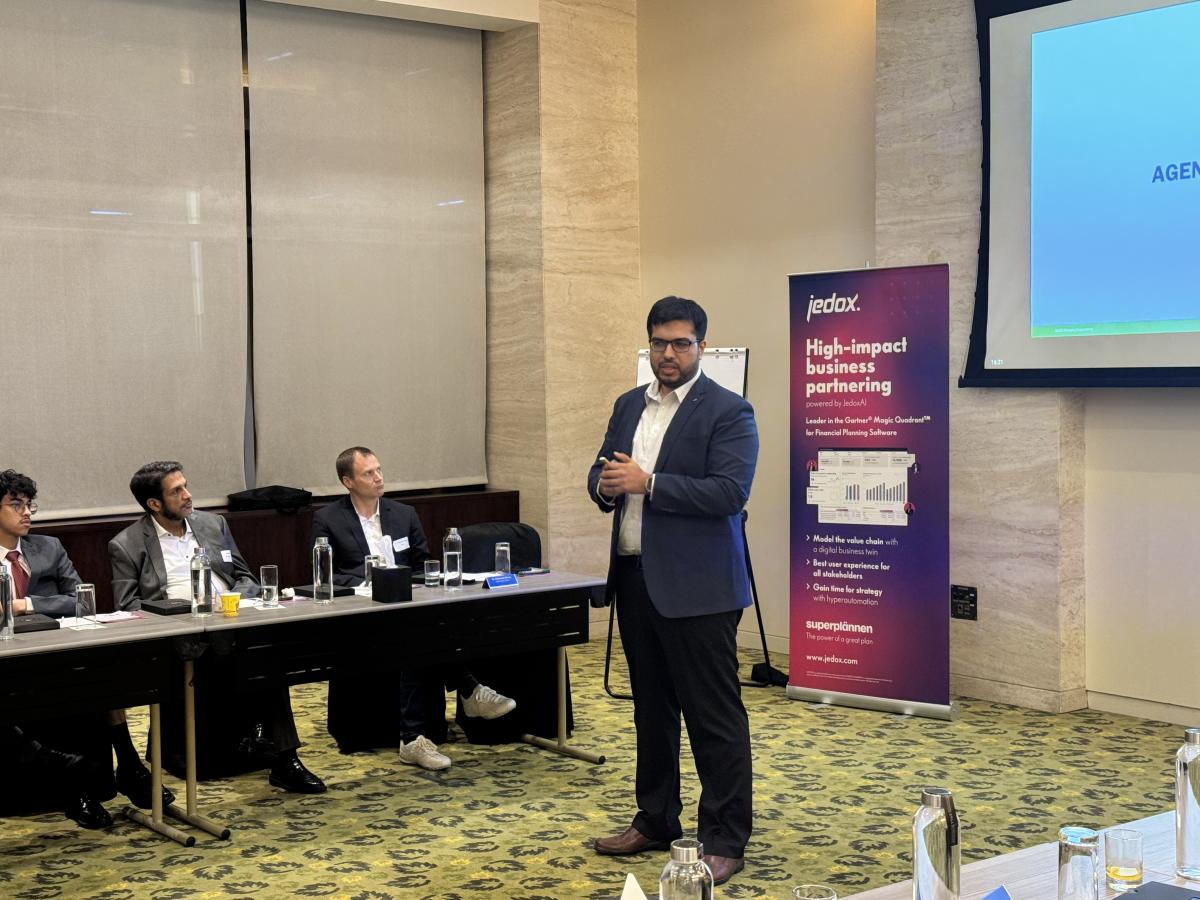
Presented by Kashif Khan, VP FP&A at EMEA, this case demonstrated how structured processes, clear expectations, and cross-functional alignment strengthen FP&A’s ability to influence decision-making.
Dr. Christoph Streng, CCO at Jedox, outlined how Agentic AI — including the Knowledge Agent and Reporting Agent — is transforming workflows, accelerating insights, and supporting a more strategic FP&A role.
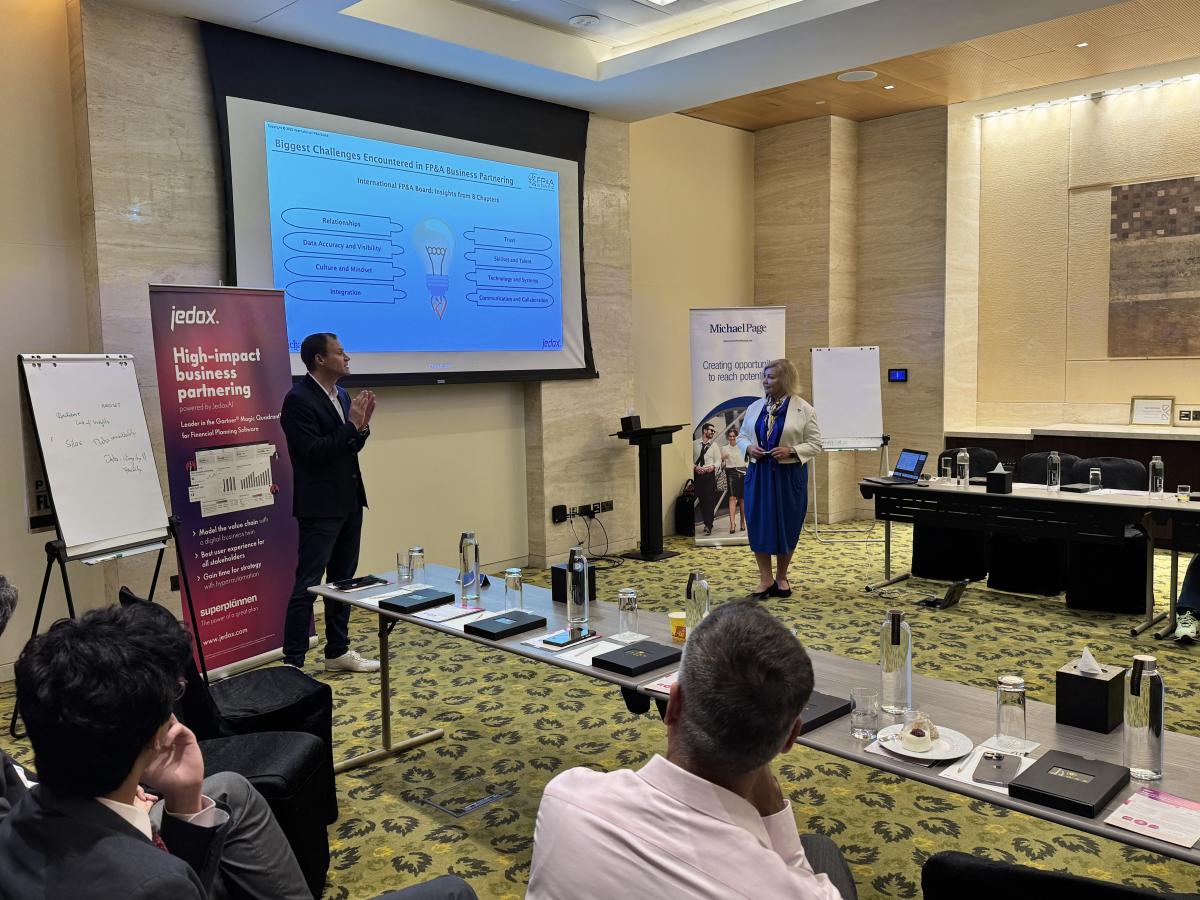
Group Work
The group work revealed a clear progression from challenges to solutions.
One group pinpointed the foundational blockers: mindset limitations, organisational silos, and ongoing issues with data quality and availability.
Another group mapped out what a mature partnering model requires, emphasising integrated systems, cross-functional collaboration, strong culture and processes, skills development, and storytelling.
A third group focused on the technological enablers, noting the importance of leadership support, dependable data, structured change management, and continuous capability-building. Overall, the insights showed that strategic FP&A partnering is driven by the combined strength of people, processes, technology, and behavioural leadership

Conclusion
The closing Dubai FP&A Board meeting of 2025 highlighted both the challenge and the opportunity of modern FP&A partnering. Persistent gaps in mindset, collaboration, skills, and data quality continue to hold teams back. However, the Parsons case and the Agentic AI perspective from Jedox showed that clear structure, disciplined processes, and intelligent automation can accelerate the shift from insight to impact.
As the FP&A community looks toward 2026, the emphasis remains on connection, capability, and continuous improvement — the foundations of world-class FP&A Business Partnering.