

Recent innovations have completely transformed internal finance operations and, as a result, are changing the nature...

Building “AI-Ready FP&A” Teams: Essential Governance, Value-Led Pilots, and Upskilling Strategies
March 17, 2026

AI Readiness Is Now a Finance Leadership Mandate
In April last year, I explored how Artificial Intelligence (AI) was beginning to reshape finance business partnering and FP&A in my previous article "Empowering FP&A: Using AI for Smarter Business Partnering". While the technology showed early promise, the FP&A community was divided on whether AI could be trusted, governed, and embedded into real-world operating models built on rigour, control, and accountability.
As we enter 2026, FP&A is now seeing a clearer AI operating model transition, moving beyond early uncertainty around the technology. Olga Rudakova’s report “The Future Is Now: Building an Autonomous FP&A Function in 2026” identifies this inflexion point, noting FP&A’s shift from experimental pilots to operationally relevant AI adoption.
The mandate for finance leadership has shifted. It is no longer a question of whether to explore AI, but of how to adopt, execute, govern, and scale it responsibly for AI readiness. At the heart of this transition, FP&A is uniquely positioned to lead disciplined governance, value-driven pilots, and structured upskilling, transforming AI ambition into credible, board-ready financial outcomes.
What “AI-Ready FP&A” Really Means
Much of the AI conversation has been shaped by concerning claims of a fully autonomous future, one where machines replace humans in enterprise decision-making. For FP&A, this narrative is unproductive and risks setting the wrong expectations.
Instead, “AI-ready FP&A” is an operating model in which FP&A humans own decisions and governance, with AI embedded as a trusted analytical co-pilot across planning, forecasting, and performance management.
“AI-ready FP&A” is not about replacing analysts with algorithms or deploying isolated GenAI tools without coherence, controls, or accountable use cases. While AI can enhance speed, scale, and analytical insight, decision-making remains fundamentally human-led, and sustainable value depends on governance and judgment evolving in step with the technology.
The success in building such an “AI-ready FP&A” function rests on three essential pillars.
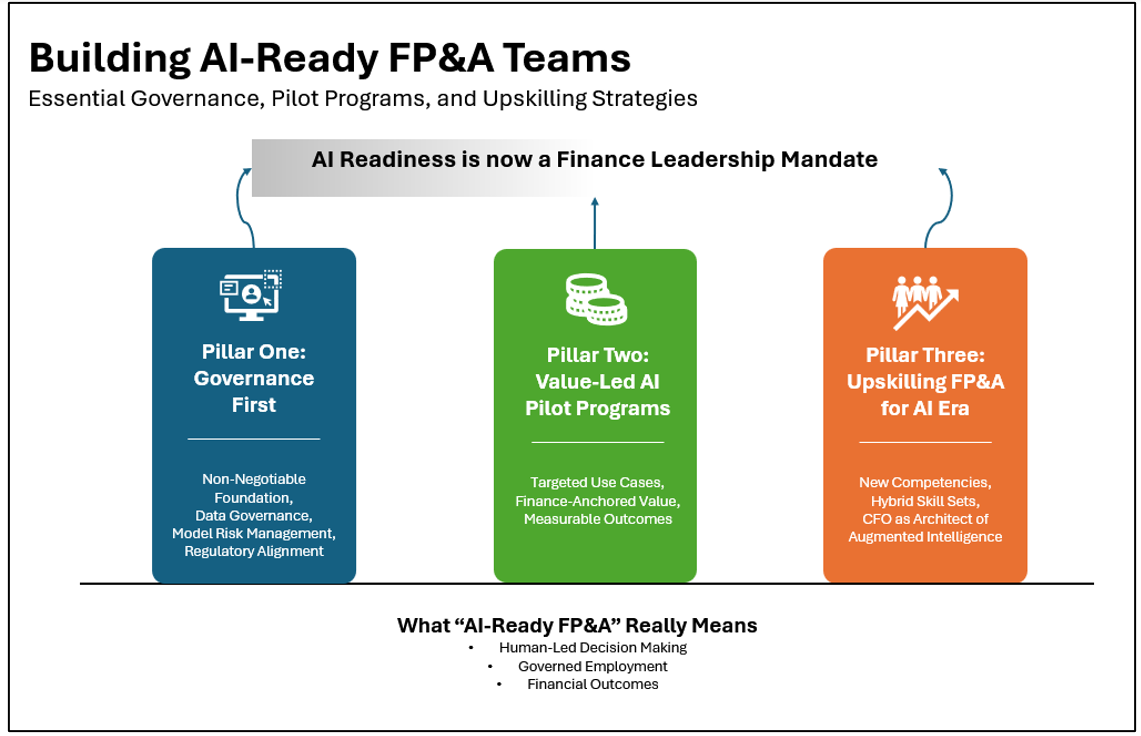
Figure 1: Three Essential Pillars for an “AI-Ready FP&A”
Pillar One - Governance First: The Non-Negotiable Foundation
While governance is often mistaken for a compliance burden that curtails innovation, in AI, it serves the opposite role, enabling FP&A to deploy AI in a decision-grade, defensible, and scalable way.
In FP&A, governance must come before scale and speed. Robust governance lays the foundation for moving from experimentation to operational use by combining disciplined data management, clear financial ownership with executive sponsorship, and appropriate model risk oversight. When implemented pragmatically through finance-led steering committees, targeted FP&A policies, and audit-ready documentation, governance becomes an enabler of both confidence and velocity.
Peer discussions at the AI FP&A Committee last September reinforced this perspective, highlighting that trusted, well-governed data foundations are a critical enabler of scalable AI in finance.
Pillar Two – Value-Led AI Pilot Programs for FP&A
The measure of a successful AI pilot for FP&A is not technical sophistication, but its ability to make financial insights faster, more consistent, and defensible, while strengthening executive confidence in decision-making.
A well-designed AI pilot moves the conversation from technology experimentation to enterprise impact by focusing on use cases that enhance FP&A performance, decision credibility, and executive confidence. Examples include faster and more consistent forecast variance explanations, driver-based scenario modelling, rolling forecast commentary, and synthesised management reporting. These are use cases that FP&A teams are increasingly focusing on, as part of broader AI integration strategies.
Grounded pilots with clear principles, measurable success metrics, structured governance, and cross-functional coordination enable FP&A to transform early AI interest into meaningful, decision-grade practice rather than isolated experiments. As Hans Gobin recommended in “First Steps into AI in FP&A: Getting Started Without Getting Overwhelmed”, start narrow but scale design, incorporate human-in-the-loop oversight, and benchmark baseline performance versus AI-assisted performance with measurable outcomes (time saved, accuracy improvements, insight depth).
Pillar Three – Upskilling FP&A for the AI Era: Roles, Not Just Tools
As FP&A evolves beyond traditional data preparation, static modelling, and retrospective analysis, teams must develop new competencies, including prompt engineering, model supervision, scenario orchestration, and strategic storytelling. New FP&A capability profiles and roles, such as AI-augmented analysts, finance data translators, model stewards, and scenario architects, will become increasingly critical, enabling FP&A teams to shift from routine execution to higher-value activities such as insight generation, decision support, and strategic influence.
Finance practitioners are already observing this shift. “FP&A in the Age of AI: How to Build Expertise for a Data-Driven Future” by Hans Gobin highlights that AI’s transformative impact depends on deliberate planning and strong change management, particularly the evolution of skills and behaviours within finance functions.
To build these capabilities systematically, organisations need a structured upskilling framework. At the foundational level, all FP&A professionals require AI literacy, an understanding of how AI works, its limitations, and how to critically interpret outputs. Applied specialists must develop skills in prompt design, validation, and stress-testing of AI outputs.
At the leadership level, CFOs and FP&A leaders must strengthen capabilities in governance, risk oversight, portfolio prioritisation, and change leadership. In doing so, their role evolves from AI tool sponsor to architect of augmented intelligence, reshaping career paths, performance management, and cross-functional alignment to ensure AI becomes a durable source of confidence and competitive advantage for the enterprise.
FP&A Action Checklist: From Intent to Execution
Turning AI ambition into tangible FP&A results requires CFOs and FP&A leaders to move from intent to execution. This checklist offers a practical roadmap to get there.
Do we have finance-owned AI governance in place to ensure accountability and control?
Are our AI pilots tied to concrete decision outcomes rather than isolated experimentation?
Is FP&A capability being redesigned to embed AI into daily workflows, rather than being limited to ad hoc training?
And crucially, can the organisation explain and defend AI-assisted forecasts with confidence to management, auditors, and regulators?
Addressing these questions ensures that AI initiatives are grounded in financial value rather than just technological promise.
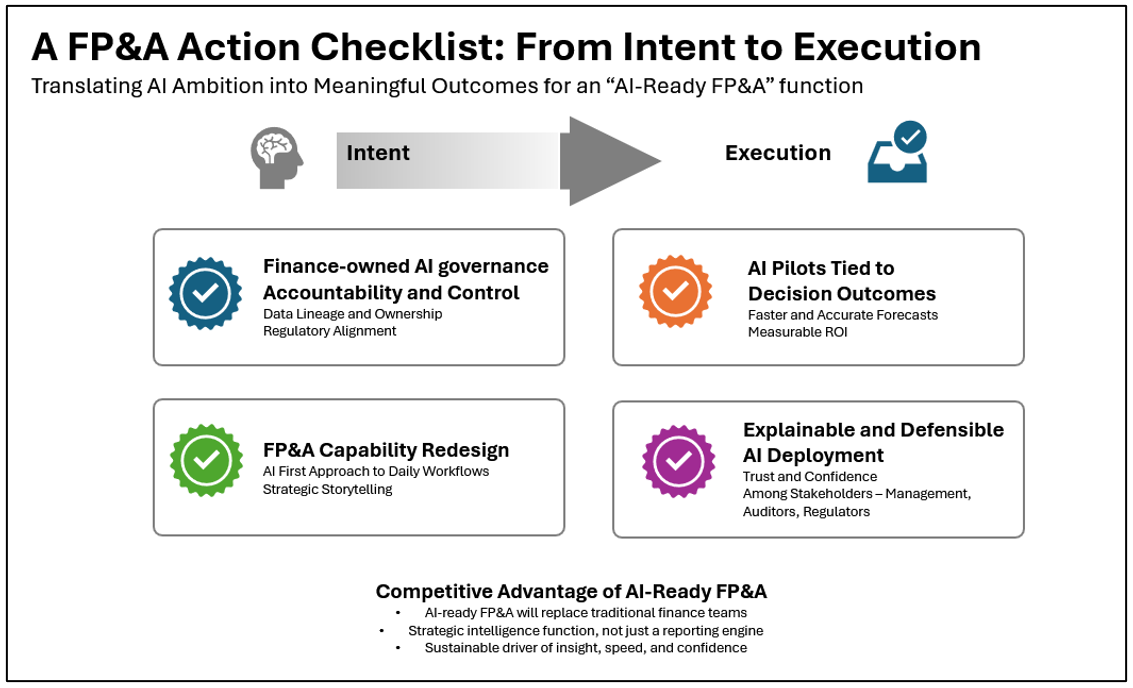
Figure 2: FP&A Action Checklist for Translating AI Ambition into Meaningful Outcomes
Closing Perspective: The Competitive Advantage of Being “AI-Ready FP&A”
AI will not replace FP&A, but “AI-ready FP&A” will redefine traditional finance teams. The organisations that gain a decisive advantage are those that combine disciplined governance, value-led experimentation, and deliberate talent reinvention.
Finance leaders who act early to define frameworks, develop capabilities, and embed AI into FP&A operations are shaping the future of finance as a strategic intelligence function, not just a reporting engine. By leading with foresight, they ensure AI drives sustainable insight, speed, and confidence, positioning FP&A and the broader enterprise for enduring competitive advantage.
The full text is available for registered users. Please register to view the rest of the article.
Related articles

AI technologies are reshaping FP&A with better forecasting, automation, and data accuracy — but trust and...

In this article, the author explains how AI is transforming FP&A from a reporting function into...

The 23rd meeting of the Global AI/ML FP&A Committee, which took place on June 4th, 2024, featured...

In this article, the author explores how AI-driven tools are shifting FP&A from manual processes to...

In this article, the author explores how an FP&A team can evolve across three maturity levels...
+
Subscribe to
FP&A Trends Digest

We will regularly update you on the latest trends and developments in FP&A. Take the opportunity to have articles written by finance thought leaders delivered directly to your inbox; watch compelling webinars; connect with like-minded professionals; and become a part of our global community.