

Strong controllership gives FP&A the reliable actuals, faster close cycles, and clearer business drivers needed to...

Stop Reporting Outcomes. Start Shaping Them: How FP&A Builds Stronger Influence
July 30, 2026

There is a question every FP&A leader should ask themselves before walking into a senior leadership meeting:
"Am I adding value to this business, or just adding information?"
The gap between those two answers defines whether finance is perceived as a back-office function or a genuine strategic partner. In most organisations today, that gap remains wide, even if it is beginning to narrow.
In a recent corporate training session, I asked senior finance managers how they spend their time. Their answer was revealing. Roughly 70% still goes to “foundational finance”, i.e., stewardship, operational tasks, transaction processing, and reporting.
The other side of that split was equally revealing. Less than one-third of their capacity is spent on what I call "frontier finance". This is where finance moves from explaining decisions to shaping them, improving decision quality with numbers.
My training room experience is consistent with a broader pattern across FP&A managers. They are spending the bulk of their time on operational matters, while expressing a stronger desire to spend more of their time directly on business influencing and strategic outcomes.
Overall, the aspiration is there. The structural shift has not kept pace.
As Automation Reshapes FP&A, Strategic Influence Becomes the Defining Advantage
Finance’s foundational pillars of accounting accuracy, control, and compliance rigour are necessary, but they are increasingly no longer sufficient. Not because of a CFO mandate or an organisational restructure, but because of automation technology.
AI is rapidly compressing the time and effort required for variance analysis, data validation, routine reporting, and reconciliation. That does not make FP&A less important. It amplifies where FP&A must create value. As foundational tasks become easier to automate, the premium shifts to judgment, commercial framing, stakeholder trust, and decision influence.
This tension sits at the heart of a challenge the FP&A community is actively grappling with. As Jagan Kallaganti explored in his FP&A Trends article “From Reporting Outcomes to Shaping Them: The Evolution of FP&A”, the FP&A function must actively move from describing what happened to influencing what happens next.
Introducing the INSIGHT Framework
As Steve Legg articulates in "Beyond the Board Pack: How FP&A Can Shape the Strategic Agenda", FP&A influence is determined long before the presentation begins. It is built through deliberate choices about what to surface and how.
If influence is built before the presentation begins, FP&A needs a disciplined way to decide what to surface, what to recommend, and what decision to drive. That is the purpose of the INSIGHT Framework that I developed and field-tested over time, to help finance professionals move from explaining performance to shaping action.
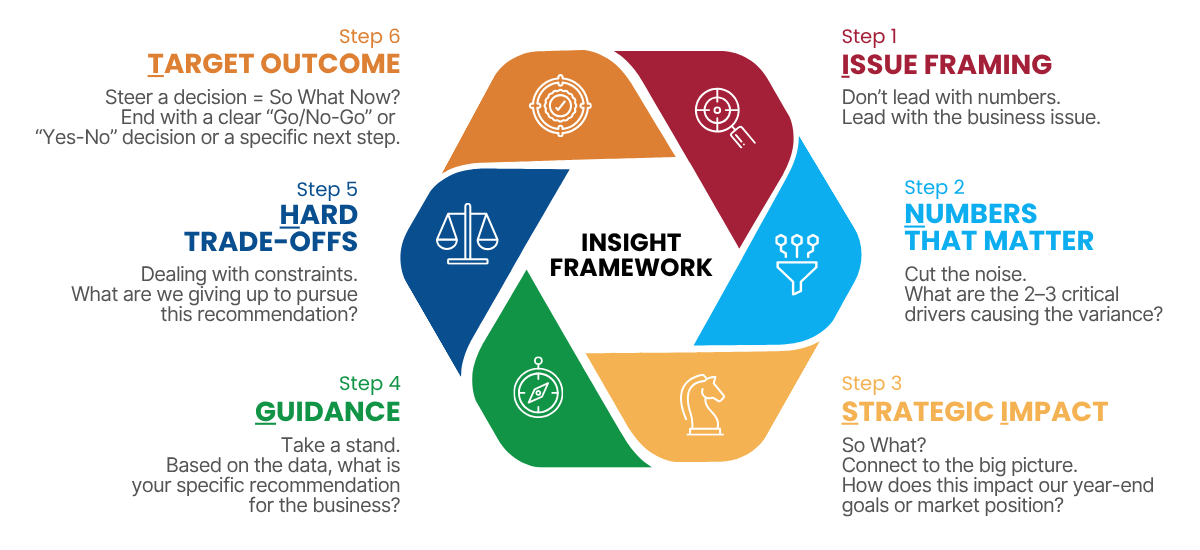
Figure 1. INSIGHT Framework for Moving from Reporting to Influence
Here are the steps for applying the INSIGHT Framework.
I — Issue Framing. Open with the commercial problem. Executives engage with problems, not with ledgers. For example, establish the business context before connecting it to the financial impact, whether it’s a market-share decline, a regulatory shift impacting sales, or a change in customer behaviour.
N — Numbers That Matter. Strip the noise. Identify the 2–3 drivers that explain the variance. Identify those and lead with them. Everything else is a distraction.
S & I — Strategic Impact. Connect the local data points to the wider organisational impact. A revenue shortfall is never just a quarterly issue. It may threaten profitability, debt covenants, or long-term market position. Make that link explicit.
G — Guidance. Take a position. This is the step where many finance professionals stall. Strategic advisors make recommendations. Reporters present options and leave the decision to others. Name your recommendation clearly and justify it.
H — Hard Trade-offs. Demonstrate genuine business acumen by openly identifying the constraints. What must be deprioritised to execute the recommendation? What resources are being redirected, and what is being sacrificed as a result?
T — Target Outcome. Close with clarity on the “So What Now” question. Define the immediate next step or frame a structured Go/No-Go decision. Every strategic advisory conversation should end with clear ownership, a next step, and a decision path.
A Step-by-Step INSIGHT Approach with a Practical Example
Consider the following case scenario.
The Context:
It is the end of Q1 2026, and APAC has closed the quarter with a $15M revenue shortfall. The gap was driven primarily by two external pressures: unexpected regulatory changes in Southeast Asia and adverse FX movements from weaker local currencies.
The Challenge:
HQ Finance has issued updated guidance for the rolling forecast. Due to the ongoing crisis in the Middle East, EMEA is now projected to miss its full-year target by $50M. As a result, HQ is asking APAC to do more than recover its own Q1 shortfall. APAC is being asked to deliver an additional $20M above its original full-year budget to help offset the EMEA gap.
In effect, APAC now faces a $35M performance challenge:
$15M to recover its own Q1 revenue miss
$20M in additional stretch above the original full-year budget
The Task:
As the Regional FP&A lead for APAC, you need to brief APAC Sales Management on two issues: first, how the region can recover the Q1 shortfall; and second, whether the additional $20M stretch target is commercially realistic.
Your role is not simply to explain the numbers. You need to frame the choices, assess the feasibility of the revised target, highlight the trade-offs, and guide Sales Management toward a clear decision on the recovery plan.
Here’s a step-by-step INSIGHT approach you can apply.
INSIGHT Framework | Applying INSIGHT to Communicate, Persuade and Decide |
|---|---|
Issue Framing What is the real commercial problem? | “We’re dealing with two pressures at the same time. First, we need to recover the Q1 shortfall in Southeast Asia. Second, HQ is asking APAC to stretch beyond our original plan to help offset the EMEA gap. The real question is whether we can shift our H2 growth strategy aggressively enough without putting pressure on our cost base and margins.” |
Numbers that Matter
Which two or three drivers are causing this? | “There are really three numbers driving this discussion: $15M — the Q1 recovery gap in Southeast Asia $20M — the additional stretch target from HQ 105% — the productivity level the sales organisation now needs to achieve to land the revised target” |
Strategic Implication
What does this mean for the organisation beyond this quarter? | “How we respond matters beyond this quarter. If we try to close the full $35M gap through aggressive discounting, we risk damaging our long-term margin structure. But if we redirect investment into stronger-performing markets like India, we have a better chance of recovering revenue while protecting pricing discipline and market positioning.” |
Guidance What is your recommendation? | “My recommendation is that we accept the additional $20M stretch target, but phase most of the recovery into Q4 rather than force short-term actions in Q2. We should immediately redirect part of the unused Japan marketing budget to India to accelerate pipeline in H2. I would also recommend we stop trying to recover the Southeast Asia regulatory impact this year. That revenue is unlikely to come back in the near term, so we should focus our energy on markets where we still have growth momentum.” |
Hard Trade-Offs What are we giving up to pursue it?
| “To hit the revised target, we’ll need to pause non-critical hiring and shift resources toward growth markets. We also need to be realistic that the SPIFF programme will temporarily increase operating expenses. Revenue growth may improve, but OPEX ratios will likely worsen in the short term.” |
Target Decision "So What Now.” Specify next steps.
| “I need your approval by Friday on two things: The reallocation of $2M in OpEx from Japan to India. The revised Q2-Q4 'Stretch Forecast' is to be sent to Global HQ. Is the team aligned on prioritising revenue volume over margin preservation for the remainder of 2026?” |
Figure 2. Applying the INSIGHT Framework to an FP&A Revenue Shortfall
For the Regional FP&A lead, this case is more than a forecasting exercise.
APAC is being asked to recover its own Q1 miss while also contributing to a broader global shortfall, creating a situation where financial analysis alone is not enough. Sales Management needs more than an explanation of the gap. They need a clear view of the choices, risks, trade-offs, and decisions required to close it.
The INSIGHT Framework provides a practical way for FP&A to lead that conversation by moving from variance reporting to commercial guidance, and from presenting the numbers to influencing the actions that follow.
Conclusion: The Future of FP&A Lies in Perspective, Judgment, and Influence
INSIGHT is not the only framework FP&A teams can use. But the discipline behind it matters. Frame the issue, isolate the drivers, connect the implications, recommend a path, name the trade-offs, and close with a decision.
That is how finance moves from arriving with reports to arriving with judgment. And in an AI-enabled future, that judgment will be the real source of FP&A influence.
The future of FP&A will not belong to those who produce the most data, but to those who shape the decisions that matter most. They are the ones who consistently bring a point of view, make a recommendation, and back it with sound judgment of data.
The full text is available for registered users. Please register to view the rest of the article.
Related articles

A practical framework for FP&A teams to balance forecast precision with strategic foresight in uncertain business...

Why cross-framework thinking is becoming essential for more accurate forecasting, sharper variance analysis, and stronger decision...

In this article, discover how FP&A storytelling turns numbers into compelling business stories using waterfall charts...

In this article, FP&A professionals discover how soundtracking — the art of blending data, storytelling, and...

In this article, discover how AI is transforming FP&A roles, skills, and storytelling — and what...
+
Subscribe to
FP&A Trends Digest

We will regularly update you on the latest trends and developments in FP&A. Take the opportunity to have articles written by finance thought leaders delivered directly to your inbox; watch compelling webinars; connect with like-minded professionals; and become a part of our global community.