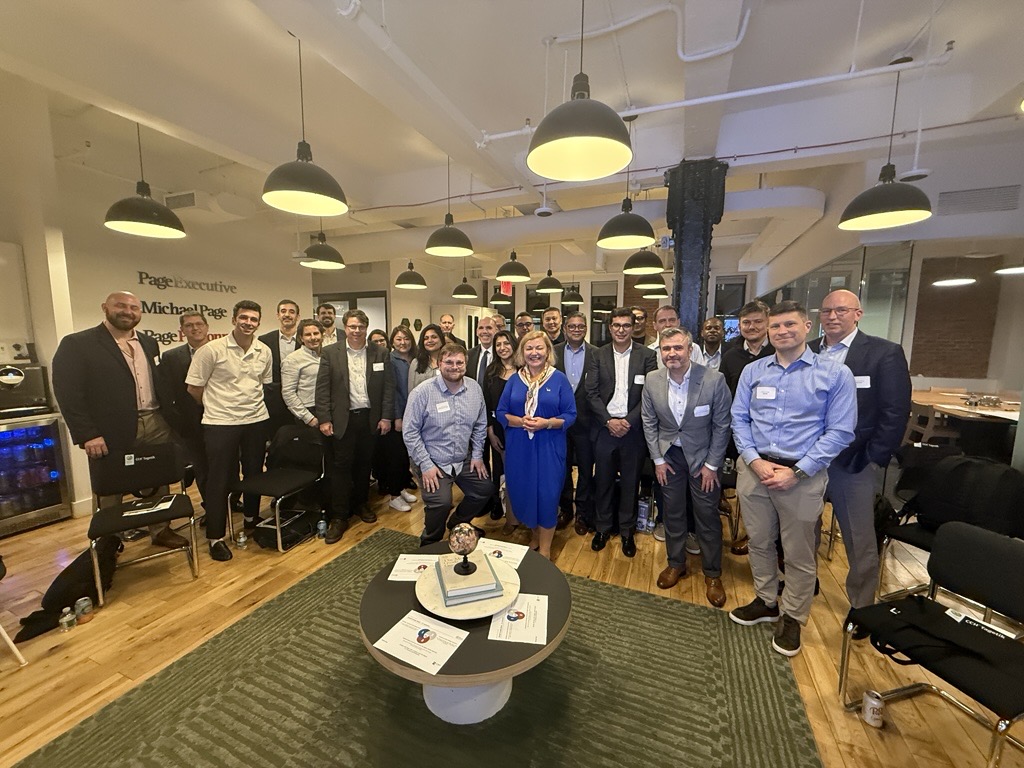

The New York FP&A Board convened on March 10, 2026, to explore the topic of FP&A system agility, how it is measured, and how the organization’s FP&A system can take a step towards greater agility. The event was sponsored by Wolters Kluwer CCH® Tagetik and in partnership with Michael Page. The question of why the agility is even needed has been answered by the following quote.
If there’s one thing that’s certain in business, it’s uncertainty.
– Stephen Covey, American educator and author
Introduction
The session has been run in a format unique to the FP&A Boards, starting with introductions to the topic, the attendees, and the rules, the most intriguing of which was the Chatham House rule. As someone said (and the quote here is fully compliant with the Chatham House rule) “What happened in Vegas, stays in Vegas” and what was discussed in the Board meeting is protected by the privacy of the speakers. This creates a trusted environment for open discussions, candid professional opinions, and practical insights.
All of the above is very much needed to have efficient discussions on the topic that is on the edge of the development responding to the burning questions of the day that FP&A professionals, in particular and enterprises in general are asking – how the FP&A system can evolve, what roles does agility plays in it and how the practice is different from the myths surrounding it.
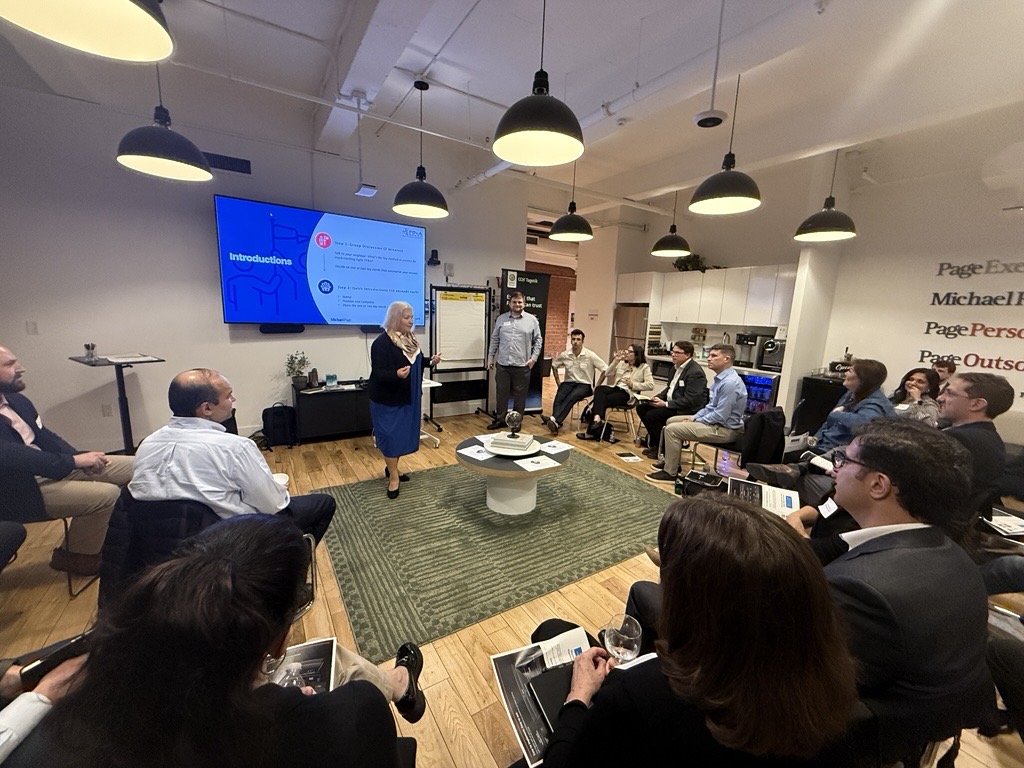
Key Topics Discussed
- What is Agile FP&A?
- Driver-Based Planning as the First Pillar of Agile FP&A
- Integrated Processes & People as the Second Pillar
- Technology & Analytics as the Third Pillar
- Practical evidence observed by professionals in the field
So what is the Agile FP&A anyway?
Condensed and filtered from hundreds of boards, meetings and researches FP&A Trends defines it in a way that is not stoned but reflects the cumulative opinion of professionals to date:
Agile FP&A empowers organizations to quickly adapt to market shifts while maintaining financial stability and shareholder value. It leverages real-time data and flexible planning to enable quick, informed decision-making.
In practice, Agile FP&A is built on three core pillars: driver-based planning, integrated processes and people, and technology and analytics, which support more responsive and effective business performance.
One of the distinguishing features of Agile FP&A is scenario planning, recognizing that there is no “perfect” or “most accurate” scenario. There are several of them.
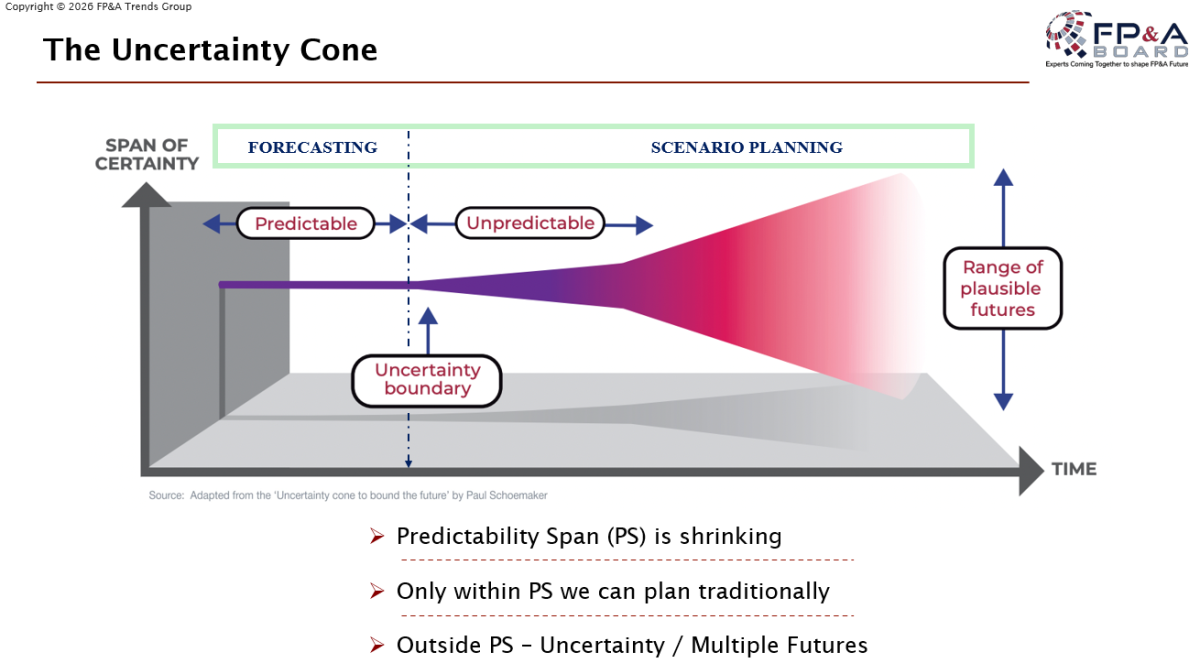
Figure 1
The Rise of Predictive and Real-Time FP&A
A clear gap exists between where organizations are today and where they aim to be. Many finance teams remain focused on historical reporting and reactive analysis, while leading organizations are moving toward more predictive and forward-looking capabilities.
This shift is enabled by advanced analytics and integrated technology, allowing FP&A to anticipate outcomes and support faster, more informed business decisions.
This creates a strong opportunity to move toward:
- Predictive forecasting
- Driver-based planning
- Real-time scenario analysis
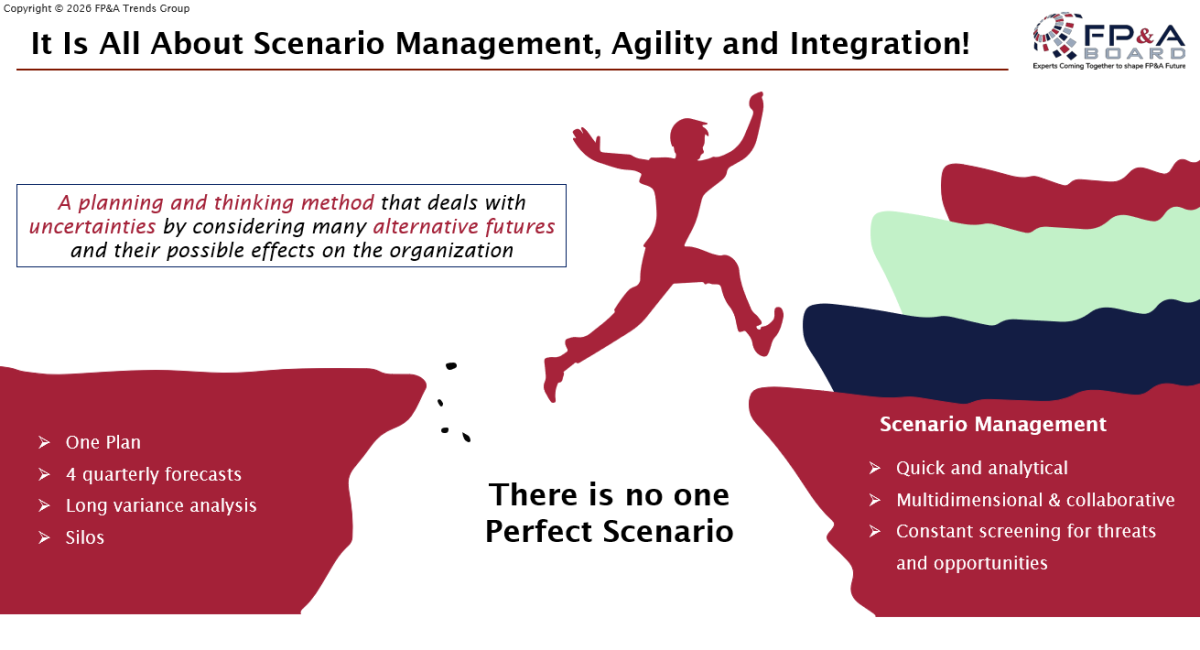
Figure 2
Figure 2 illustrates the key characteristics of Agile FP&A, including the use of multiple scenarios, frequent updates, and more collaborative and dynamic planning processes, supported by continuous monitoring of risks and opportunities. While the above seems smart and reasonable, why aren't all organizations switching to the Agile FP&A stage?
This gap is also reflected in FP&A Trends research, which shows how challenging it remains for many organizations to operationalize scenario-based planning in practice.
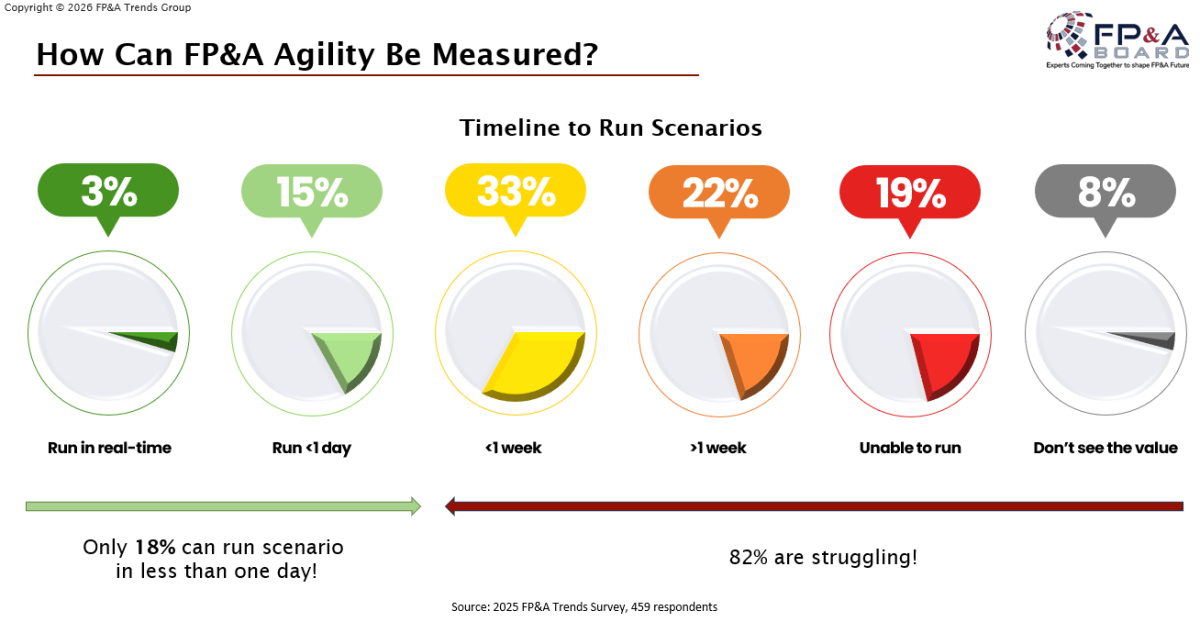
Figure 3
Only 18% of organizations can run scenarios in less than one day, highlighting the gap between Agile aspirations and real-world execution.
Implementing Agile FP&A
One of the small-group discussions among the Board attendees focused on the question, “What’s the key method or process for implementing Agile FP&A?”
Several raw elements were brought to the bigger group discussion:
- Standardization
- Driver-based process
- Clarity
- Automation
- Planning
- Simplification mindset
- Predictive analysis
- Culture
- Comprehensive approach
- Rolling forecast
- Business partnering
When reviewed together, it became obvious that some of those include processes (standardization, drivers), some technology (automation), and some human factors (culture, business partnering). The insights discussed by NYC professionals aligned with those produced by other groups across the globe and are summarized in the Figure below.
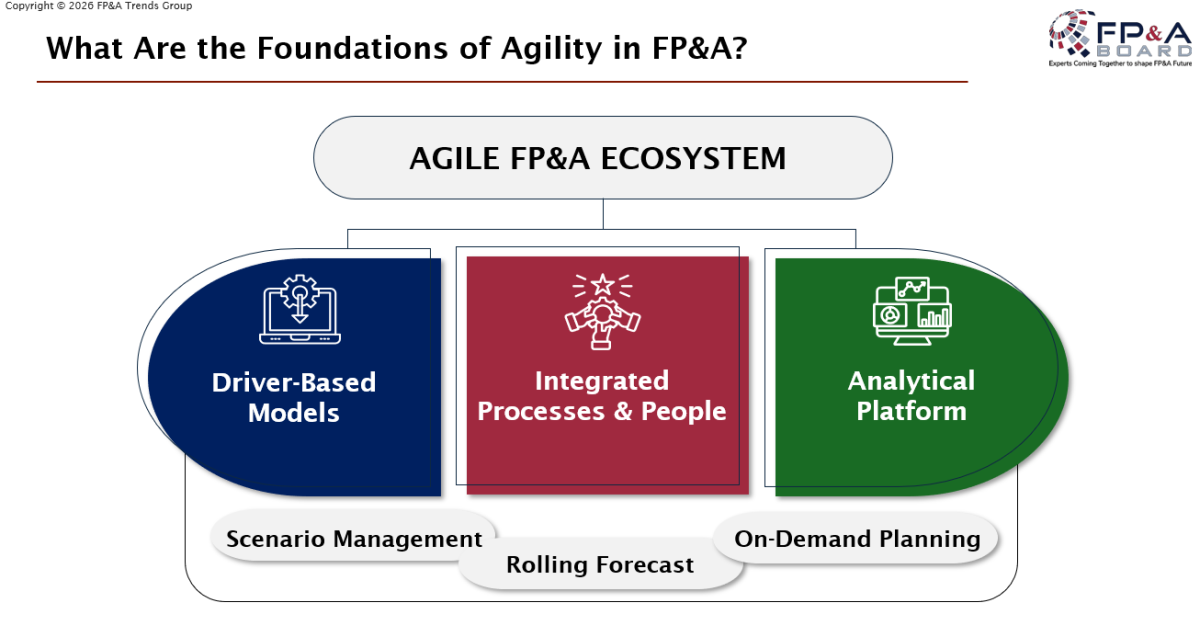
Figure 4
Of course, the discussion would not be complete without bringing the topic of the year in the professional FP&A setting – AI implementation.
The Human and AI Equation in FP&A
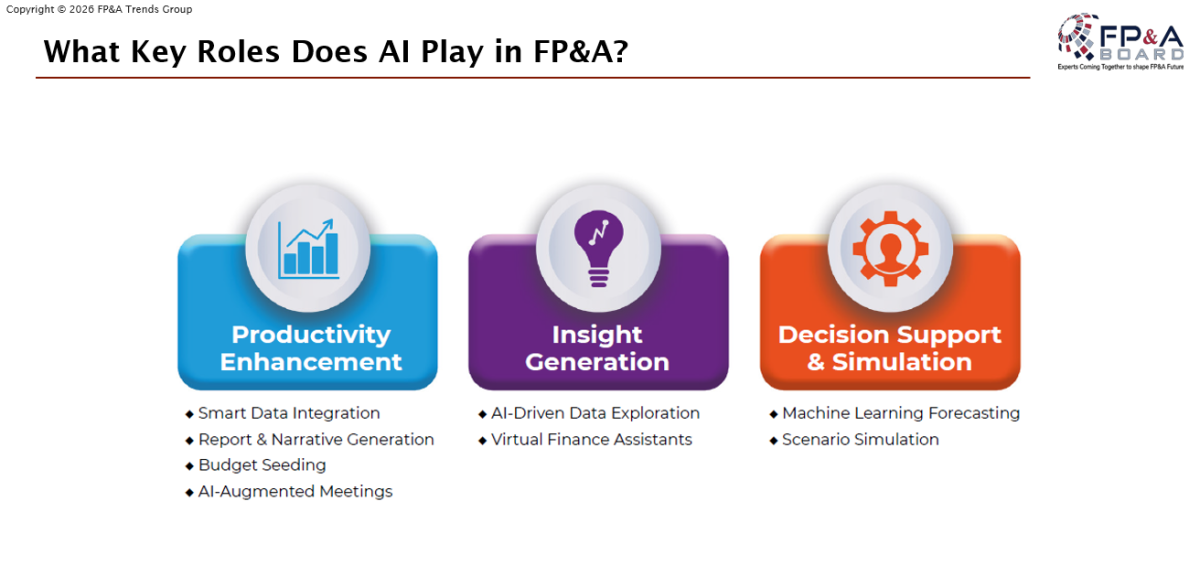
Figure 5
One of the key ideas discussed was the complementary roles of AI:
• Machine Learning as a mathematician, focused on prediction
• Generative AI as a storyteller, focused on communication
Together, they enhance both analytical insight and narrative capability within FP&A.
Small Group Discussions
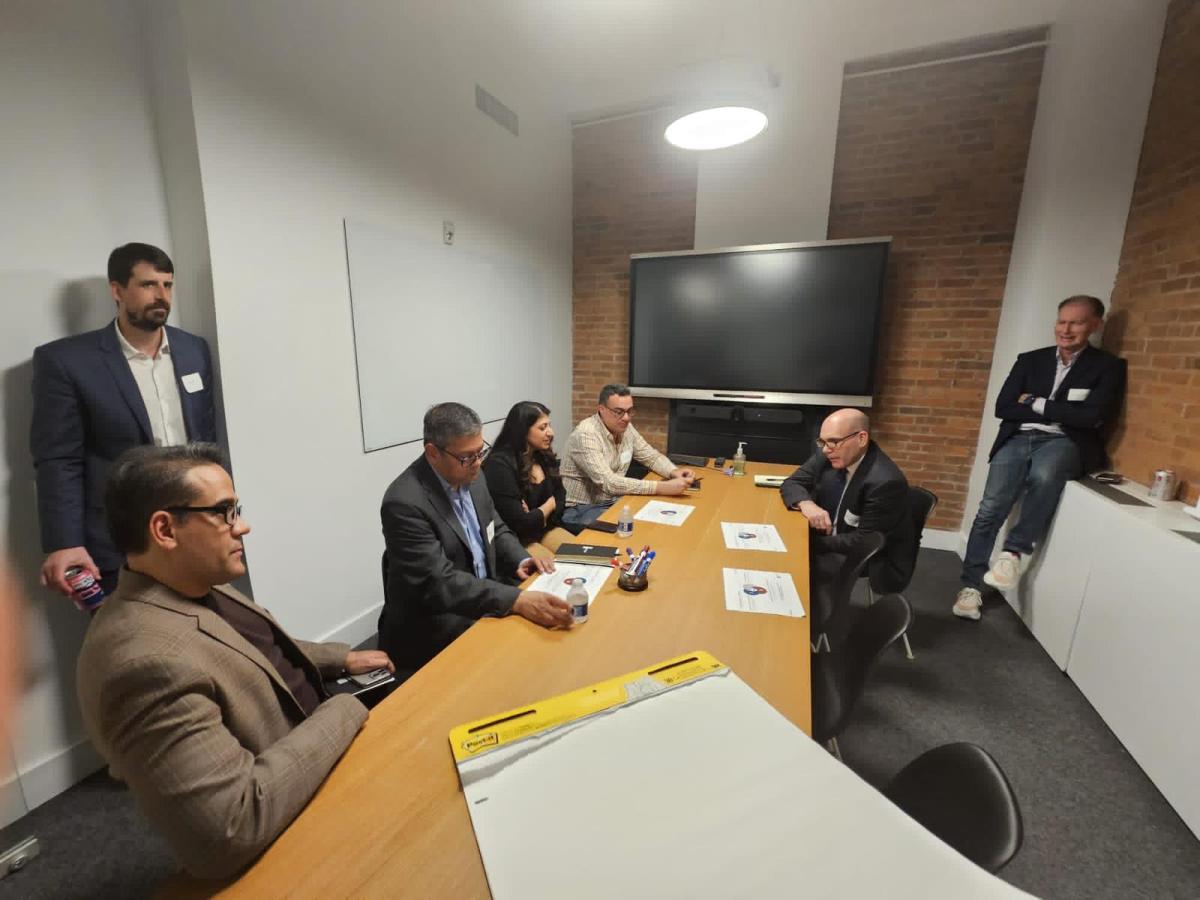
Following the unique FP&A Boards format, participants were divided into groups to discuss specific aspects of the Agile FP&A systems.
Group 1: Building a Dynamic Driver-Based Model
How do we identify key drivers from data and create a dynamic, adaptable model?
To summarize the results of the small-group discussion, which resonate with what FP&A professionals are talking about across the globe: to build a dynamic driver-based model, first clearly identify and define the relationship between key inputs and outputs, using an info-led strategy grounded in high data quality and simplicity, and check the appropriate frequency (daily, monthly, quarterly) so the model updates at a useful cadence. Prioritize a small set of material drivers, then validate any added complexity against the incremental insight gained to avoid over-engineering, and follow the Pareto principle: 20% of the drivers determine 80% of the output.
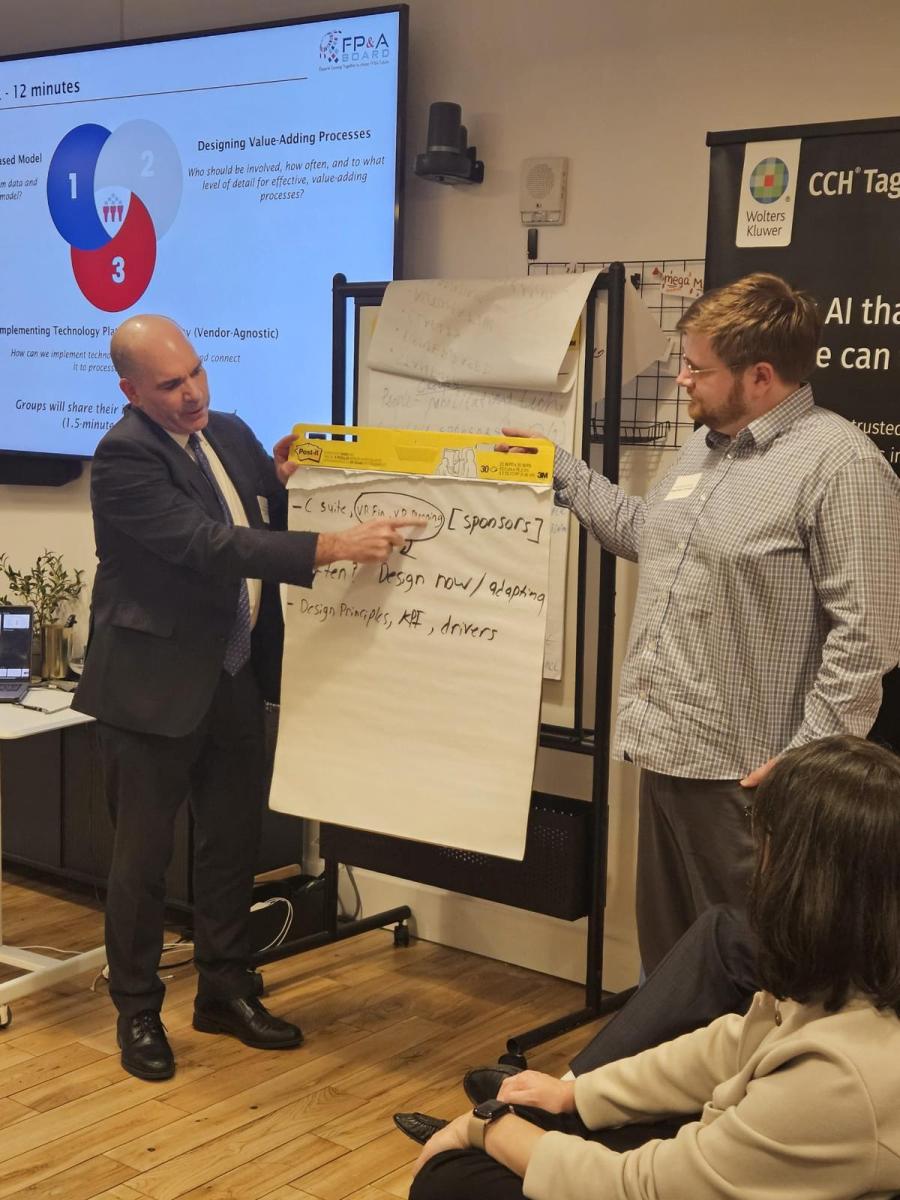
Group 2: Designing Value-Adding Processes
Who should be involved, how often, and to what level of detail for effective, value-adding processes?
Value-adding processes should be co-designed and continuously sponsored by the leadership of the organization or department with clear ownership from functional heads. who translate design principles, KPIs, and key drivers into day-to-day actions. Senior leaders and sponsors set the strategic intent, principles, and KPIs, while remaining ready to adapt them as the business and data evolve, typically reviewing at a weekly to quarterly cadence, depending on volatility and decision cycles. Heads of Department and their teams contribute operational insight and challenge the level of detail to ensure that material drivers are captured without creating unnecessary complexity, ensuring that KPIs link directly to value drivers, are measurable at the right frequency, and genuinely inform decisions rather than just report history.
Group 3: Implementing Technology Platforms for Agility
How can we implement technology to enhance agility and connect it to processes and models?
This topic turned out to be the toughest one, probably because it encompasses a lot of human-process-organization interactions. To implement new or improved systems, many stakeholders need to be on board, and every participant should feel engaged — for example, by understanding how the change will make their work easier — so collaboration among all participants is essential. It is helpful to have a dedicated transformation team and an integrated project plan that includes organizational learning and structured change management to overcome resistance, supported by people who know how to implement the change.
Conclusion
In conclusion, the Board session created a trusted environment where FP&A practitioners could openly test ideas, share candid experiences, and separate practice from myth around agility and modern FP&A. The three group discussions showed how these themes connect: dynamic, driver-based models must stay simple, data‑driven, and sharply focused on the few material drivers that truly move the needle.
The value-adding processes depend on active sponsorship from senior leadership and clear ownership by functional heads, aligning principles, KPIs, and drivers at the right level of detail and cadence. The technology is an enabler rather than a silver bullet, requiring broad stakeholder engagement, structured change management, and a dedicated transformation capability.
Together, these insights point to an FP&A function that is not only technically advanced but also collaborative, agile, and tightly integrated with decision-making across the enterprise.