

Discover how AI/ML in FP&A is transforming forecasting, automation, and decision-making through quality data and advanced...

Stages of AI Maturity in Finance
April 16, 2026

Introduction
Artificial Intelligence (AI) has revolutionised many industries, and the finance function is no exception. AI enables organisations to automate processes and controls, improve forecasting and decision-making, manage risk, and drive efficiency. The evolution of AI in finance can be understood in maturity stages, each marked by advances in technology, changes in operations, new skills, and shifting management priorities.
This article explores those stages, with expanded attention to governance, predictive technologies, and the responsibilities of finance leadership — not only as budget sponsors but as educators, stewards of risk, and champions of responsible AI use.
Different AI Technologies
Several categories of AI technologies shape the finance function. Each plays a role in the maturity journey:
Robotic Process Automation (RPA): Rules-based automation that manages repetitive tasks. It is often grouped with AI, but technically, it is not. Still, it is the entry point in most finance AI journeys.
Predictive AI: Uses historical data, statistics, and machine learning (ML) to forecast outcomes such as revenue, cash flow, churn, or risk exposures. This is essential to finance planning and analysis.
Generative AI: Produces new content — text, code, images — and excels at knowledge aggregation, summarisation, and assistance.
Conversational AI: Copilots, chatbots, and virtual assistants that streamline knowledge access and employee/customer service.
Agentic AI: Autonomous systems that take actions toward goals with minimal supervision, combining LLMs and adaptive learning.
Figure 1 summarises the key AI technologies currently influencing the finance function.
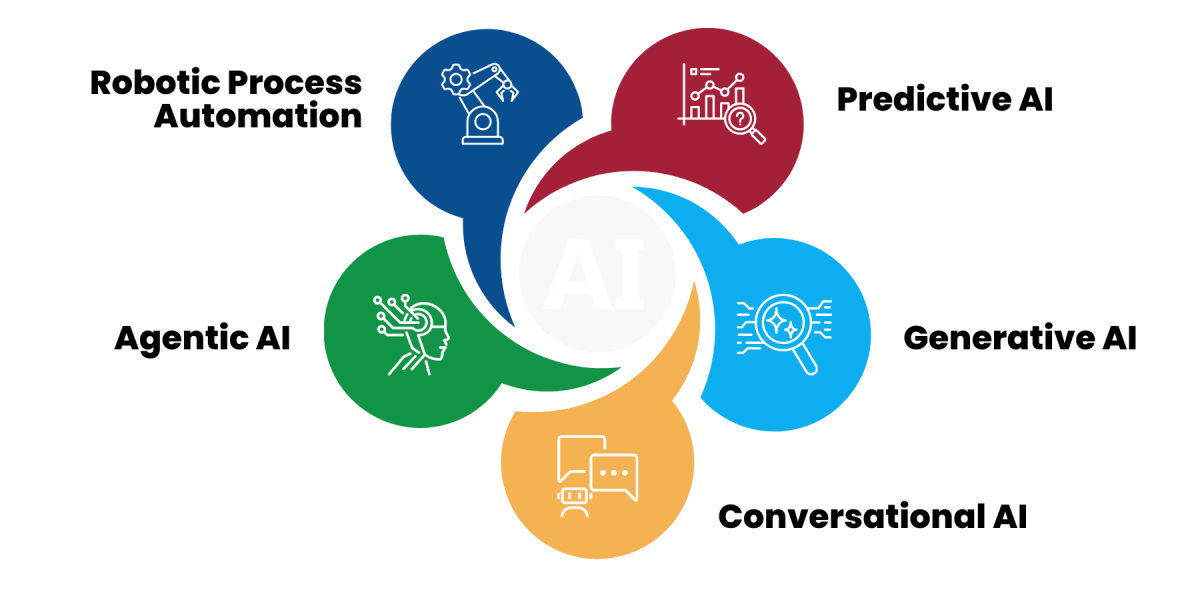
Figure 1. Categories of AI Technologies in Finance
Increasingly, these technologies are combined into hybrid solutions — for example, using RPA for data extraction, predictive AI for forecasting, and generative AI for reporting and drafting narrative discussion points.
Stage 0: Readiness & Foundations
Key Features:
- Establishing data governance and mastering data management standards
- ERP/cloud readiness and integration capabilities
- Initial AI governance policies and compliance protocols
- Workforce training and change management
Use Case:
A mid-market manufacturer implemented a finance data governance program before deploying automation. By standardising its chart of accounts and enforcing access controls, it reduced reconciliation errors by 35% and shortened its month-end close by 20%, creating a clean foundation for future AI.
Role of Senior Finance Management:
- Champion readiness as a finance-led initiative, not just IT’s responsibility
- Educate the board and teams on what “AI readiness” entails
- Approve early investments in governance, data quality, and training
Success Factors:
- Clear ownership and accountability for data quality
- Documented governance policies covering AI use
- Alignment of IT and Finance leadership
- Early “quick wins” (e.g., shorter close cycles) to build confidence
Implications and Benefits for Customers:
- Greater confidence in reporting accuracy
- Faster issue resolution and transparency
- Stronger trust in financial information
Red Flags to Watch Out For:
- Rushing into automation without data readiness
- Overlooking compliance and privacy at the start
- Treating governance as an afterthought
Stage 1: Basic Automation
Key Features:
- Automated data entry
- Bank and ledger reconciliations
- Billing and Payroll automation
- Rule-based workflows for expense approvals
Use Case:
A global corporation used RPA to automate accounts payable, reducing invoice cycle time by 60%, eliminating 95% of manual errors, and improving month-end expense accruals.
Role of Senior Finance Management:
- Set the vision and prioritise automation areas
- Sponsor training programs for exception handling
- Approve budget allocations for RPA tools
Success Factors:
- Strong ROI measurement for automation projects
- Improvements to error reduction and process cycle time
- Visible/measurable impact on employee productivity
Implications and Benefits for Customers:
- Faster, more accurate transactions
- Improved service and payment consistency
- Increased trust through fewer errors
Red Flags to Watch Out For:
- Automating flawed or redundant processes
- Lack of training for exception handling
- Poor underlying data quality leading to failures
Stage 2: Advanced & Predictive Analytics
Key Features:
- Forecasting cash flow, revenue, and costs with ML models
- Predictive risk scoring and delinquency analysis
- Predictive tax planning and working capital optimisation
- Scenario modeling and variance analysis
Use Case:
A regional bank deployed ML-driven credit scoring, reducing loan default rates by 20% and increasing approval efficiency by 30%.
Role of Senior Finance Management:
- Drive data quality and governance
- Support cross-functional integration of analytics
- Champion predictive insights in strategic decisions
Success Factors:
- Quality of training data and model validation with minimal hallucinations
- Effective ROI tracking on forecasting tools
- Integration into decision-making, not just reporting
Implications and Benefits for Customers:
- Personalised services based on predictive insights
- Faster, more accurate loan and credit approvals
- Proactive financial advice and planning
Red Flags to Watch Out for:
- Misinterpreting outputs without context
- Relying on outdated or irrelevant models
- Ignoring privacy and regulatory requirements
Stage 3: Cognitive Computing
Key Features:
- Fraud detection using anomaly detection
- Natural language processing (NLP) for contracts and customer support
- AI-driven scenario modelling for planning and allocating resources
Use Case:
An e-commerce firm reduced fraudulent chargebacks by 40% using AI-powered fraud detection, saving millions annually. The integration of NLP with traditional fraud systems creates more comprehensive protection by analysing the human communication layer that other systems might miss.
Role of Senior Finance Management:
- Establish policies for ethical use of cognitive tools
- Lead adoption and integration of NLP and fraud systems
- Educate teams on bias, fairness, and transparency
Success Factors:
- Timely fraud detection and reduction in losses
- Continuous improvement in NLP accuracy
- Upskilling staff for collaboration with cognitive systems
Implications and Benefits for Customers:
- Greater protection against fraud
- Faster, personalised responses to inquiries
- More reliable and secure services
Red Flags to Watch Out For:
- Over-dependence without fallback processes
- Biased algorithms create unfair outcomes
- Insufficient cybersecurity measures
Stage 3.5: Human-in-the-Loop AI
Key Features:
- Human oversight embedded in AI decision-making
- Guardrails defining AI scope and escalation rules
- AI learns iteratively from human feedback
Use Case:
A global insurer implemented AI-driven claims processing, with human reviewers validating high-value or disputed claims. Processing time was cut by 40% while maintaining regulatory compliance.
Role of Senior Finance Management:
- Define guardrails and escalation points
- Ensure accountability and explainability
- Train staff to collaborate with AI tools
Success Factors:
- Clear governance policies for human oversight
- Documented exceptions and escalation processes
- Continuous model improvement based on feedback
Implications and Benefits for Customers:
- Faster yet safe transaction approvals
- Increased transparency and trust
- Balanced efficiency with human judgment
Red Flags to Watch Out For:
- Overestimating AI’s readiness for autonomy
- Lack of clarity in accountability when errors occur
- Employee resistance if oversight roles aren’t clear
Stage 4: Autonomous Finance
Key Features:
- Self-healing systems
- Real-time reporting and forecasting
- End-to-end process automation
- AI-driven treasury and intercompany settlement
Use Case:
A Fortune 500 firm deployed an autonomous treasury platform to manage global liquidity, FX exposure, and real-time cash flow forecasting.
Role of Senior Finance Management:
- Define long-term strategy and boundaries for autonomy
- Oversee ROI and performance metrics
- Ensure ethical compliance and transparency
Success Factors:
- Clear objectives and ROI metrics
- Alignment with risk management frameworks
- Adequate resources and skilled teams
Implications and Benefits for Customers:
- Real-time updates and transparency
- Faster, more reliable services
- Stronger trust through seamless operations
Red Flags to Watch Out For:
- Lack of accountability for AI-driven decisions
- Insufficient transparency in autonomous processes
- High costs without a clear return
Governance and Compliance
Governance is the backbone of sustainable AI adoption. Figure 2 highlights the core governance elements finance organisations should establish as AI adoption expands.
Core Elements:
- Policy Development: Covering data use, privacy, and AI accountability
- Risk Management: Bias, explainability, cybersecurity, auditability
- Regulatory Alignment: EU AI Act, U.S. state-level AI laws, SEC disclosure requirements
- Accountability: Clear oversight roles and responsibilities
Figure 1 summarises the key AI technologies currently influencing the finance function.
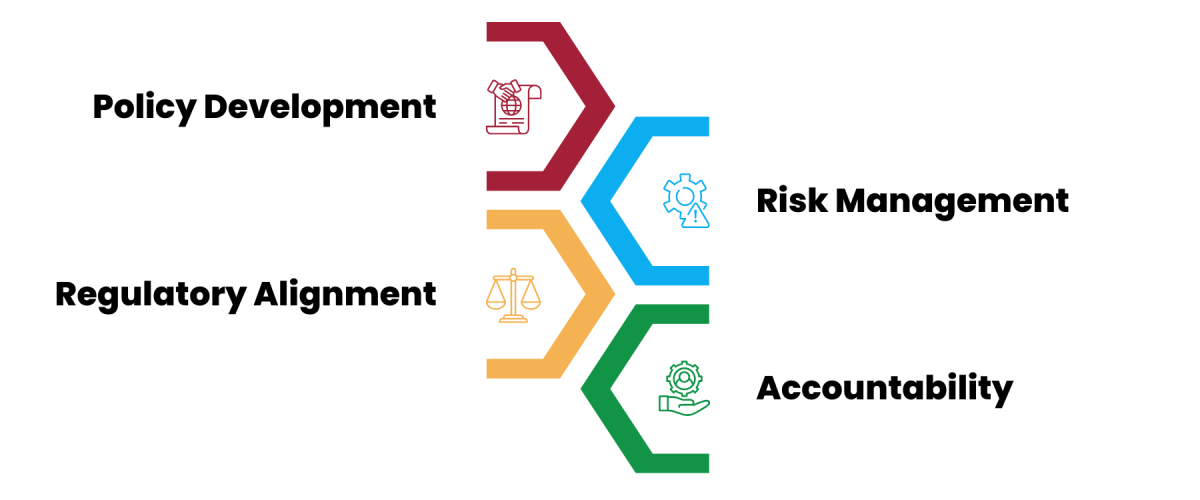
Figure 2. Framework for AI Governance
Governance Maturity Checklist:
- Basic: Ad hoc policies, limited oversight
- Intermediate: Centralised risk management, regular audits
- Advanced: Enterprise-wide AI governance embedded in strategy
Workforce and People Dimension
Technology succeeds only when people are ready.
Key Imperatives:
- Upskill teams in data, analytics, and AI literacy
- Provide continuous training and guidance
- Set guardrails for ethical use
- Position senior leaders as educators and guides, not just sponsors
Conclusion
The journey of AI in finance is not linear but layered: readiness, automation, analytics, cognition, human-in-the-loop, and autonomy. At each stage, technology expands capabilities — but leadership, governance, and people determine success.
For CFOs, AI is both a strategic imperative and a risk responsibility. Boards will demand ROI. Regulators will demand compliance. Teams will demand education and trust.
Organisations that combine advanced technology with strong governance and empowered people will not just automate finance — they will transform it into a driver of growth, resilience, and ethical innovation.
If you want to explore this further, here’s AI Readiness Assessment tool: https://claude.ai/public/artifacts/b0005759-632a-4320-a56d-9db66a4d6196
The full text is available for registered users. Please register to view the rest of the article.
Related articles

In this article, the author explains how AI is transforming FP&A from a reporting function into...

In this article, the author explores how AI-driven tools are shifting FP&A from manual processes to...

In this article, the authors show how AI agents can turn messy earnings call transcripts into...

Drawing on insights from over 270 International FP&A Board meetings worldwide, annual FP&A Trends Survey data...

In this article, the author explains how AI in FP&A can evolve from automation to a...
+
Subscribe to
FP&A Trends Digest

We will regularly update you on the latest trends and developments in FP&A. Take the opportunity to have articles written by finance thought leaders delivered directly to your inbox; watch compelling webinars; connect with like-minded professionals; and become a part of our global community.