

AI-enabled scenario planning helps FP&A move beyond forecasting by turning uncertainty into signals, triggers, owners, and...

The Hardest Part of Scenario Planning Is Asking the Right Question
September 29, 2026
Most finance teams can build a financial model quickly. But few spend time asking the real question: are we solving the right problem?
Leadership Expectations from FP&A Have Evolved
FP&A used to mean business reporting. Once the accounting books closed, we analysed the financial variances and explained last month's performance. It primarily required finance expertise.
Over time, the role evolved into business partnering. Finance got embedded within commercial leadership, where decisions are made. While most organisations have adapted over the past decade, others are still undergoing this change. Figure 1 illustrates the evolution of FP&A from reporting to business partnering and decision intelligence.
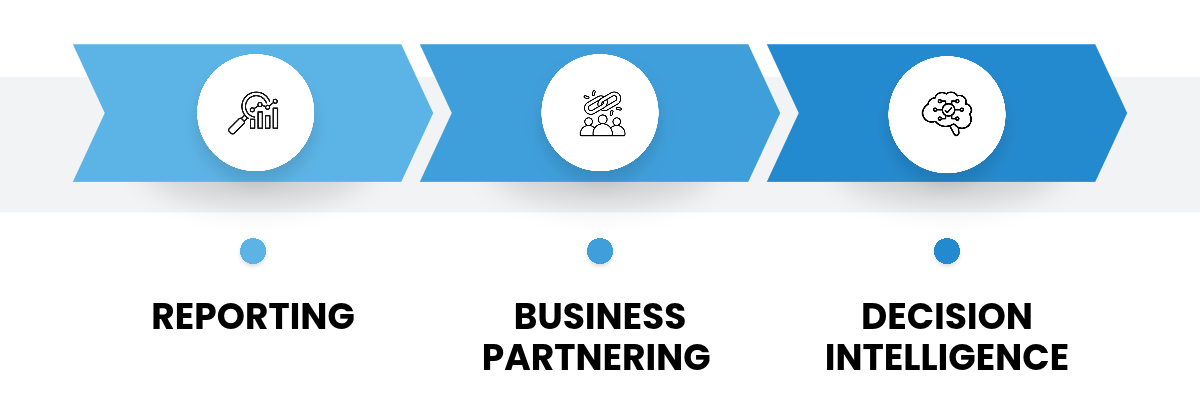
Figure 1: The Evolution of FP&A Leadership Expectations
Today, finance is expected to do more than just analyse performance. Leaders rely more heavily on FP&A to help shape business decisions. The focus has shifted from delivering better analysis to supporting better decision-making by understanding business challenges, bringing together the right stakeholders, questioning assumptions, and guiding informed decisions.
I don't think this is simply the next stage in FP&A's evolution. It is a fundamentally different role. It rewards a different instinct from what many of us were originally trained to develop.
Start With the Business Problem, Not the Numbers
A request lands in our inbox, and our instinct is to start thinking about data. Which report did we use last time? Can we refresh the numbers and respond quickly? Send the analysis and explain what we observed. This approach often produces an incomplete answer.
Most requests that reach finance describe the output someone thinks they need, not the decision they are actually trying to make. If we answer the request exactly as it is asked, we often produce something that is accurate and delivered on time, yet misses what the business really needs.
Over time, I have found that one question consistently improves the quality of the discussion: What business decision is this analysis meant to improve? Once this question is answered, everything else becomes clearer — what stakeholders should be involved, which assumptions need testing, and where the real risks lie.
A Case in Action
I was once asked by senior leadership to size the year-end working capital impact of a then-prevailing geopolitical disruption. The instinctive response was to pull the inventory data, gather the relevant assumptions, apply the precise valuation, and deliver a number.
Instead, I pinned down what “working capital impact” actually meant with the leaders who had asked for it. Inventory specifically, or receivables and payables too? Impact relative to the original budget, or the last rolling forecast? Impact as at what date?
Following a short discussion, it became clear that we had been focused on the wrong question. The key issue was: Given the current disruption, what is our worst-case inventory exposure at year-end compared with our last confirmed forecast? This sharper, decision-oriented framing immediately clarified both the analysis required and the cross-functional stakeholders who needed to contribute, including Finance, Supply Chain, Logistics, and the regional teams closest to the evolving situation.
Looking back, the biggest breakthrough was not improving the model but reframing the problem. This shift challenged the underlying assumptions. Was our inventory buffer still fit for purpose? Did its size and composition reflect the ground reality? And could raw materials or semi-finished goods provide the necessary resilience without maintaining higher finished goods inventory? This analysis enabled the leadership to optimise Cash deployment without compromising the resilience required to protect sales volume.
Focus on What Matters and What You Can Influence
I asked the fulfilment team for their view on lead times and received a workbook with around 3,000 line items. The temptation with a dataset like that is to work through it exhaustively. I resisted that temptation because the question I was answering was not “what happens to every shipment”; instead, it was “what is our worst-case exposure”. I focused on the product categories that materially influenced the outcome, isolated the maximum plausible delays, and reached a defensible worst-case estimate more quickly.
I realised I hadn't saved time by analysing less data. I had saved time by being clearer about the decision we were trying to support.
Where the Real Difficulty Lies?
I have found it useful to separate the challenge into two parts: building the right business understanding and building the financial model. The modelling itself is rarely the difficult part. Once the business drivers are understood and the assumptions are agreed, finance professionals are well trained to quantify the impact. The real challenge is building a shared understanding of an uncertain future across different functions, geographies and perspectives.
In practice, I usually start with a shell deck, an initial hypothesis and a first version based on desk research. I then engage stakeholders systematically to validate and challenge my assumptions. By the time the analysis reaches senior leadership, the discussion becomes what decisions should follow. I have found that this approach may appear slower initially, but it almost always reduces the iterations and alignment discussions later.
Three Principles for Better Scenario Planning
First, anchor every request to a decision. Before analysing the data, clarify which business decision the work is intended to improve. This single habit has done more to make my own approach proactive than any new tool or planning process.
Second, involve stakeholders before the model is finalised. In my experience, the alignment built during the process saves significantly more time than it costs. More importantly, it creates shared ownership of both the assumptions and the conclusions.
Third, match capabilities to each stage of the scenario-planning process. Scenario planning is a team sport. Some colleagues excel at framing business problems and building relationships. Others are better equipped to challenge assumptions or construct financial models. Besides, different stages of the process require different strengths. Rather than assigning work purely by function, I try to match team members to the stage of the problem where they can contribute most, while giving them opportunities to develop adjacent skills over time.
Judgement Is Becoming Finance's Greatest Advantage
Artificial Intelligence is making financial modelling, dashboards and scenario analysis faster and more accessible. It can also help identify patterns, test assumptions and generate alternative scenarios.
The competitive advantage, however, is increasingly shifting from analysis to judgement: knowing which questions to ask, which assumptions to challenge, and when changing business conditions require a different course of action.
As AI automates more of the analytical work, finance professionals will create the greatest value by interpreting insights, connecting perspectives and helping leaders make better decisions under uncertainty.
Reflection
The lesson from this experience was simple. The hardest part of scenario planning was never building the financial model. It was defining the right business question.
Before opening Excel, ask: What business decision is this analysis intended to improve? The answer will shape the assumptions you test, the stakeholders you involve and, ultimately, the quality of the decision you help leaders make.
The full text is available for registered users. Please register to view the rest of the article.
Related articles

AI-enabled scenario management helps FP&A turn uncertainty into trigger-based action by connecting signals, owners, interventions, and...

Learn how supply chain finance can move beyond variance reporting to shape scenario-based, risk-adjusted decisions before...

Why FP&A teams must balance forecast precision with strategic foresight to avoid being accurately wrong in...

How AI cost dynamics force FP&A to move from forecasting to decision-ready planning.

In this article, discover how integrating Strategic Foresight into FP&A unlocks better scenario planning, long-term adaptability...
+
Subscribe to
FP&A Trends Digest

We will regularly update you on the latest trends and developments in FP&A. Take the opportunity to have articles written by finance thought leaders delivered directly to your inbox; watch compelling webinars; connect with like-minded professionals; and become a part of our global community.