

AI-enabled scenario planning helps FP&A move beyond forecasting by turning uncertainty into signals, triggers, owners, and...

Turning Scenarios into Management Action — Part 6 of 7
September 3, 2026

Part 5: AI in Scenario Planning: From Forecasting to Decision Preparedness explored how scenarios prepare management for uncertainty. This sixth article focuses on turning that preparedness into timely and accountable action.
How FP&A turns scenarios into signals, triggers, owners, actions and explicit trade-offs
1. From Decision Preparedness to Operating Logic
The first article established the core shift: scenario planning should not be treated as forecasting with more cases. Forecasting improves the expected view of performance. Scenario planning improves the organisation's ability to act when that expected view becomes unreliable.
The practical question is how FP&A should operationalise this idea. A useful scenario process does not start with the number of scenarios. It starts with the decisions that uncertainty could force: if demand weakens, which decisions change? If a price increase reduces volume, who decides whether to protect margin or defend share? If inventory rises while collections slow down, when does a planning issue become a liquidity issue?
This is where scenario planning becomes operating logic. Its task is to translate uncertainty into trigger points, decision rights and prepared intervention options before the scenario materialises.
2. The FP&A Scenario Decision System
A practical FP&A scenario decision system follows seven connected steps: Detect -> Frame -> Simulate -> Trigger -> Decide -> Act -> Learn. The figure can be used as a simple diagnostic: if any step is missing, the scenario has not yet become decision-ready.
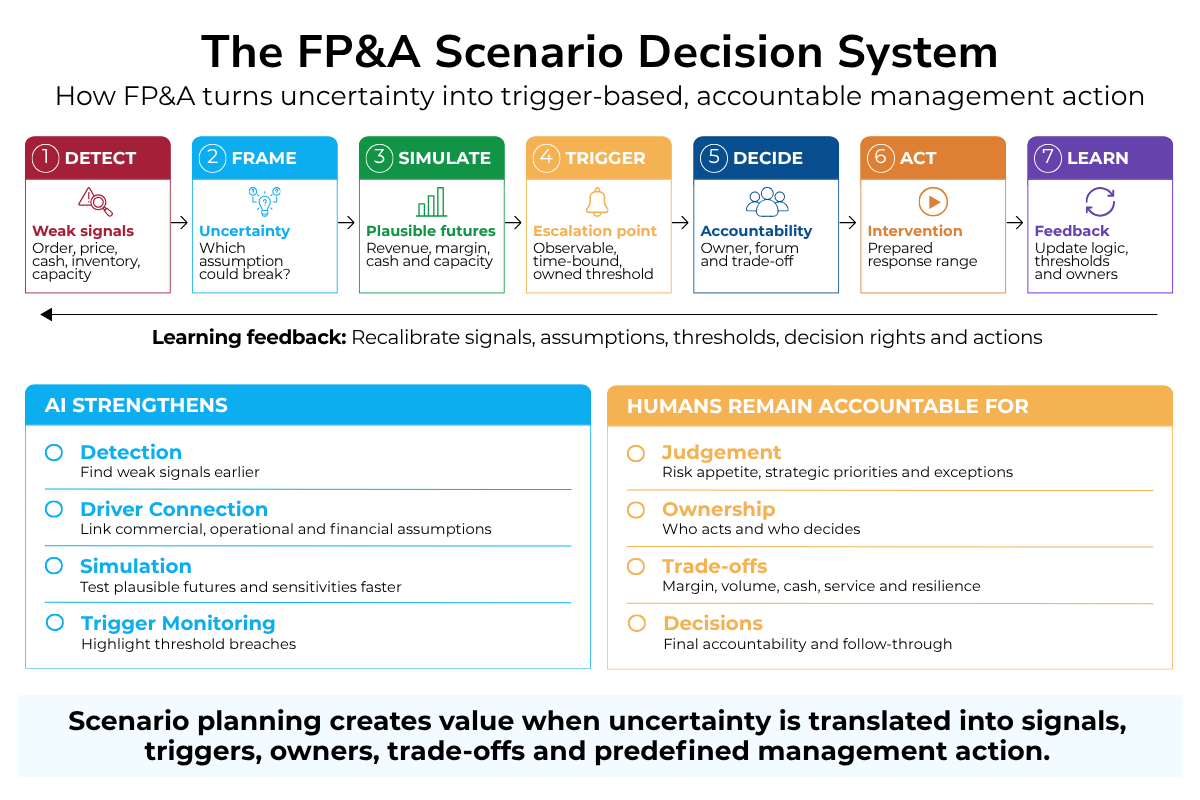
Figure 1. The FP&A Scenario Decision System
Detect is the signal layer. FP&A connects commercial, operational and financial indicators before the financial outcome is fully visible: order intake, quote conversion, customer usage, discount approvals, input-cost movement, inventory days, dispute frequency, DSO trends, supplier exposure or capacity utilisation. AI-enabled analytics can strengthen this layer because weak signals often appear below aggregate reporting. But detection alone does not create control; it only creates earlier evidence.
Frame is the uncertainty layer. FP&A translates a vague concern into a decision-relevant scenario question. "Revenue may be lower" is too broad. "Which customer segments become volume-sensitive if the price increase is implemented?" is more useful. This is consistent with the core purpose of scenario work: not to predict one future, but to make uncertainty discussable and decision-relevant (Schoemaker, 1995; van der Heijden, 2005).
Simulate is the consequence layer. The purpose is not to build a large scenario catalogue, but to compare the few plausible futures that would require different decisions. A scenario should show how a driver shift moves through revenue, margin, working capital, cash, cost and capacity. Predictive and prescriptive analytics can support this step, but they do not eliminate the need to explicitly define objectives, constraints, and assumptions (Bertsimas and Kallus, 2020).
Trigger is the escalation layer. Without triggers, scenario planning remains passive. A trigger defines when management should stop observing and start acting. It should be observable, time-bound and linked to an escalation rule. The test is simple: if the trigger is reached, does the organisation know what happens next?
Decide is the accountability layer. Scenario planning fails when ownership is implicit. Demand scenarios may sit with Sales; margin scenarios with Pricing and Sales; cash scenarios with Treasury, Credit, or Supply Chain; and capacity scenarios with Operations. FP&A does not need to own each lever. Its role is to make the decision right explicit before the scenario materialises. This reflects the management-control view that measures create value when they shape attention, dialogue and action rather than merely describe performance after the fact (Simons, 1995).
Act is the intervention layer. A scenario should be connected to prepared options, not only to financial impact. These options may include segmented pricing, changes to discount corridors, customer prioritisation, inventory rebalancing, credit-term review, supplier renegotiation, liquidity protection, hiring restrictions, capacity adjustments, or service-level changes. The intervention must match the driver, not merely the financial symptom.
Learn is the feedback layer. After action, FP&A tests whether the scenario improved preparedness: whether the signal appeared early enough, whether the trigger was calibrated, whether the owner was clear and whether the intervention improved performance or shifted risk elsewhere. This also reflects a basic AI-governance principle: model-supported decisions require monitoring, accountability and risk management across use, not only technical validation at design (NIST, 2023).
The system makes scenario planning testable. A scenario is not complete when the model is finished. It is complete when management can answer five questions: Which signal matters? Which uncertainty does it represent? Which trigger would change the management agenda? Who owns the response? Which action is prepared? AI can support this system, but it cannot substitute for it. Prediction, explanation and decision-making remain different tasks: a model may identify a pattern without explaining the causal business logic, and it may estimate outcomes without deciding which trade-off management should accept (Shmueli, 2010; Fernández-Loría and Provost, 2022).
3. Practical Example: Price Increase, Demand Risk and Cash Pressure
Consider a company planning a price increase after sustained input-cost pressure. The forecast still shows stable revenue. Margin is expected to recover because the price increase should offset higher costs. On the surface, the case looks manageable.
But the forecast view may hide the real uncertainty. A price increase can change customer behaviour, order timing, discount pressure, receivables, inventory, utilisation and realised profitability. Pricing research shows why this matters: list-price decisions do not automatically translate into realised margin once discounts, rebates, payment terms, service promises and other deductions are considered (Marn, Roegner and Zawada, 2003; Nagle, Hogan and Zale, 2016). Working-capital research adds a second part to the problem: changes in demand, receivables, and inventory affect cash and liquidity, not only revenue and margin (Richards and Laughlin, 1980; Farris and Hutchison, 2002; Deloof, 2003).
A decision-relevant scenario process tests three plausible futures. In the Base Case, the price increase is largely accepted. Contribution margin improves, inventory remains controlled and capacity utilisation stays within range. Management continues with the planned increase, monitors customer behaviour and protects discount discipline.
In the Demand Risk Case, price-sensitive customer segments reduce volume more sharply than expected. Revenue may remain acceptable at the aggregate level for a short period, but order frequency declines, quote conversion weakens and discount requests increase. Margin improvement becomes less certain because a higher unit margin is partly offset by lower volume and commercial concessions.
In the Cash Stress Case, the price increase interacts with working-capital pressure. Customers delay orders, dispute invoices or extend payment behaviour. Inventory rises because the demand plan is not adjusted quickly enough. The price increase may still protect accounting margin while creating liquidity pressure and operational inefficiency.
The FP&A task is not to decide in advance which scenario will occur. It is to define the signals indicating movement from one future to another, the triggers that should change the management agenda, and the actions that should be prepared before the financial impact becomes fully visible.
Detect starts below the aggregate revenue line. FP&A monitors order intake, quote conversion, customer segment volume, discount approvals, churn risk, overdue receivables, dispute frequency, inventory days, and capacity utilisation. AI can detect changes at the customer, product, transaction, and operational levels earlier than standard financial reporting. But a signal is not a conclusion. A decline in order frequency may indicate demand resistance, temporary buying behaviour, customer destocking or channel timing.
Frame turns the issue into sharper questions: Which customer segments are becoming price-sensitive? Is margin improvement driven by real price realisation or temporary mix effects? Are discounts increasing to protect volume? Is inventory rising because the demand plan still assumes pre-price-increase behaviour? Are payment delays linked to customer pressure, invoice disputes or commercial negotiation?
Simulate connects the scenarios across revenue, margin, cash and capacity. A price increase may improve unit margin and still weaken total contribution if volume loss is concentrated in high-utilisation products. It may protect gross margin and still damage cash if receivables and inventory rise together. This is why the simulation should not stop at EBIT impact.
Trigger defines when management should act. A demand-risk trigger may be activated if order volume in price-sensitive segments falls by more than 8 percent for two consecutive weeks. A margin trigger may be activated if discount approvals exceed the agreed corridor for a rolling four-week period. A cash trigger may be activated if DSO rises by seven days while inventory days increase by more than 10 percent. The exact thresholds depend on the business model. The principle is more important than the number: triggers should be observable, time-bound and linked to ownership.
Decide and Act clarify accountability and prepared interventions. Sales may own customer response. Pricing may own discount corridors. Supply Chain may own inventory adjustments. Treasury or Credit may own receivables and liquidity escalation. Operations may own capacity options. FP&A governs the cross-functional decision logic: which trigger matters, who owns the response and which trade-off must be brought to management. Actions may range from maintaining price discipline to segmented pricing, revised customer communication, inventory rebalancing, credit-term review, collection prioritisation or liquidity scenario review.
Learn closes the loop. After the price increase, FP&A should test whether weak signals appeared early enough, whether triggers were calibrated, whether action preceded avoidable margin, cash or capacity risk and whether the intervention improved the system or merely moved the problem elsewhere. The practical question is not: "Which scenario is most accurate?" It is: "At what point would we know that the decision logic has to change?"
4. From Scenarios to Trigger-Based Management Action
Figure 1 describes the scenario decision system. Figure 2 applies that logic to the management handover. Its purpose is to prevent scenarios from remaining alternative financial views. A scenario becomes useful only when it clarifies which matters, which trigger changes in the management agenda, and which actions have been prepared. Ownership and trade-offs then determine whether the response is accountable rather than merely analytical.
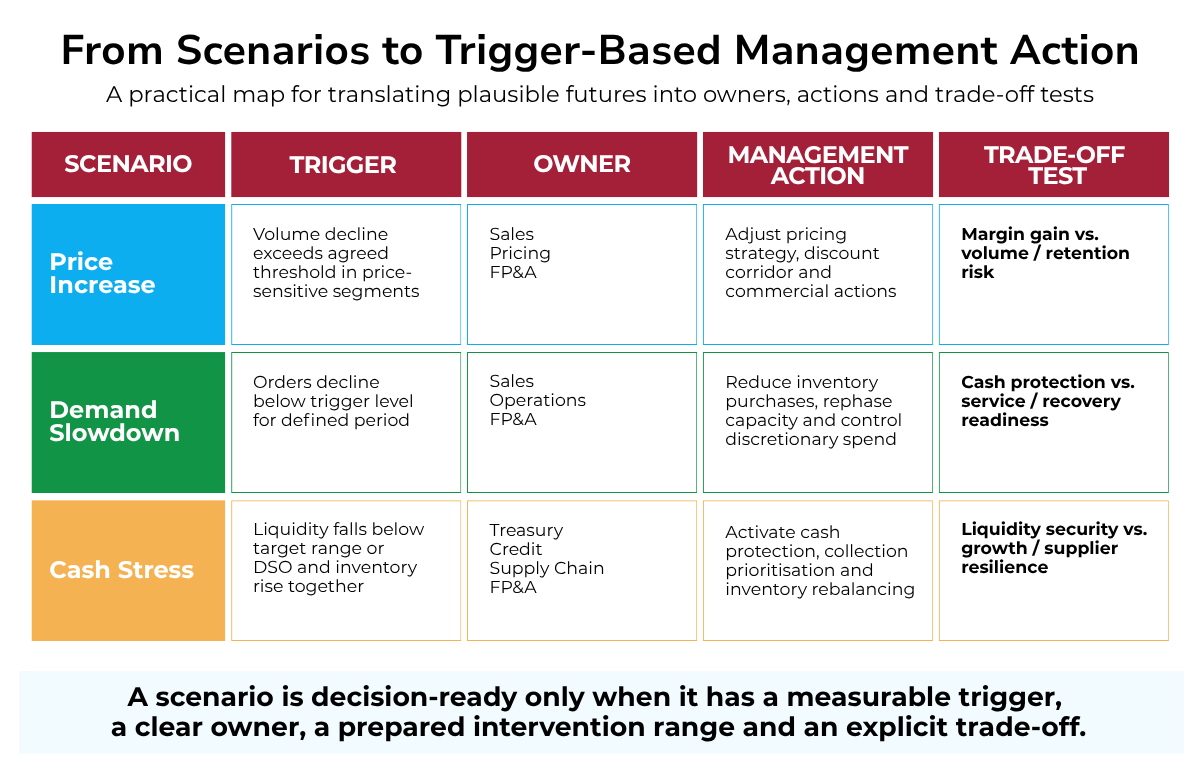
Figure 2. Scenarios to Trigger-Based Management Action
The figure is deliberately simple. Its value is management discipline. Each row forces FP&A and management to move from a scenario statement to a decision statement. A weak scenario statement says: "Demand could decline." A stronger decision statement says: "If demand in the price-sensitive segment falls below the scenario threshold for two consecutive weeks, Sales and FP&A will review segmented pricing and bring a margin-versus-volume recommendation to management." The second statement defines signal, trigger, owner, action and trade-off.
This logic prevents false precision. Scenario planning should not pretend that management can know the future. The purpose of triggers is to define when uncertainty becomes decision-relevant. A trigger should therefore be treated as a management commitment: if this condition is met, the issue moves onto the decision agenda.
For FP&A, triggers should not be only financial. Financial triggers often arrive late. A revenue trigger may confirm that demand has already weakened. An EBIT trigger may confirm that margin loss has already occurred. A liquidity trigger may confirm that cash pressure has already materialised. Scenario planning becomes stronger when FP&A connects financial triggers with operational and commercial lead indicators, such as order frequency, quote conversion, discount behaviour, dispute patterns, inventory movement, supplier exposure, and utilisation.
This is where AI-enabled analytics can help, but only within boundaries. AI can monitor weak signals, identify combinations of indicators and highlight threshold breaches. But it should not turn correlation into automatic action. Prediction, explanation and decision-making remain different management tasks (Shmueli, 2010; Fernández-Loría and Provost, 2022).
Ownership is as important as the trigger itself. A trigger without an owner creates escalation noise. A demand trigger may belong to Sales, but FP&A should ensure that the financial trade-off is explicit. An inventory trigger may belong to Supply Chain, but FP&A should test whether cash release damages service reliability. A DSO trigger may belong to Credit and Sales, but FP&A should distinguish sustainable cash improvement from customer-friction risk.
The action logic should also be bounded. Scenario planning should not define one automatic response for every trigger. It should define a prepared intervention range. Prescriptive analytics can help compare options, but objectives, constraints and risk appetite still have to be defined by management (Bertsimas and Kallus, 2020).
The final design element is the trade-off. Protecting the margin may reduce volume. Releasing cash may weaken service. Tightening credit may strain customer relationships. Reducing capacity may improve short-term efficiency while limiting recovery potential. Scenario planning creates management value when these trade-offs are surfaced before the trigger is reached.
Figure 2 can therefore be used as a practical review template. In a scenario review, FP&A should ask whether every material scenario has five elements: Which signal will indicate that the scenario is starting to materialise? Which trigger moves the issue from monitoring to escalation? Who owns the response? Which intervention range is prepared? Which trade-off must management accept or reject? If these five questions cannot be answered, the scenario is not yet decision-ready.
This is why trigger-based scenario management belongs inside FP&A's management-control role. The task is not to centralise all decisions in Finance. The task is to ensure that uncertain futures are connected to accountable decision points. Performance information creates value when it shapes attention, dialogue, accountability and action, not when it remains a passive report.
5. Governance: Where AI Supports and Management Remains Accountable
Once AI-supported signals, scenarios and triggers become part of management routines, FP&A needs explicit governance around them. The organisation must define which signals are monitored, which thresholds are trusted, which exceptions require human review and which decision rights cannot be delegated to analytics.
This governance requirement is not a technical add-on. It is part of the scenario decision system itself. AI may show that demand softness, discount pressure and rising inventory are appearing together. It may show that a threshold has been crossed. But management still has to decide whether the pattern represents temporary noise, customer resistance, channel timing, operational friction or a structural change in demand.
FP&A's role is therefore to govern the decision logic across functions, not to centralise every decision in Finance. Sales, Pricing, Supply Chain, Operations, Credit, Treasury and business leadership remain accountable for the levers they control. FP&A ensures that the trigger is observable, the owner is clear, the intervention range is prepared and the trade-off is visible before action is taken.
6. Conclusion: From Scenario Decks to Decision Capability
Scenario planning becomes valuable when it changes what management is prepared to do. The practical consequence is clear: scenario planning should not end with a scenario deck. It should end with a trigger-based action map.
For FP&A, uncertainty rarely arrives as a clean financial variance. It appears first as weaker order intake, changing customer behaviour, higher discount pressure, rising inventory, slower collections, supplier exposure, utilisation gaps or conflicting capacity assumptions. By the time the effect is visible in revenue, EBIT or liquidity, the organisation may already have lost decision time.
AI can improve this early-warning capability. It can monitor more signals, connect driver patterns, simulate alternative outcomes and highlight threshold breaches faster than traditional reporting routines. But a faster signal only creates value for management if the organisation has already defined what the signal means, when it should trigger escalation, who owns the response, and which trade-offs management is prepared to accept.
The price-increase example shows why this role is necessary. A price increase may protect unit margins while still weakening demand. It may preserve accounting margins while still creating cash pressure. It may stabilise revenue in aggregate while creating stress in specific customer segments, product groups or capacity pools. A forecast may miss these interactions because it follows the expected path. Scenario planning exposes them because it tests where management decisions would need to change.
The future of scenario planning in FP&A is therefore not more elaborate scenario decks. It is trigger-based decision preparedness. AI strengthens the analytical layer, but management value comes from the operating logic around it: Detect, Frame, Simulate, Trigger, Decide, Act and Learn.
For CFOs and FP&A leaders, the implication is direct. In stable conditions, a forecast may be enough to coordinate expectations. Under uncertainty, the stronger capability is not producing more scenarios, but knowing which decisions will be made when assumptions start to break. This is the practical bridge from scenario planning to governed decision capability.
Continue to Part 7: Decision Governance After AI, which brings the series together by examining decision rights, accountability and governance once AI becomes part of the management process.
References
Bertsimas, D., and Kallus, N. (2020). From predictive to prescriptive analytics. Management Science, 66(3), 1025-1044.
Deloof, M. (2003). Does working capital management affect profitability of Belgian firms? Journal of Business Finance & Accounting, 30(3-4), 573-588.
Farris, M. T., and Hutchison, P. D. (2002). Cash-to-cash: The new supply chain management metric. International Journal of Physical Distribution & Logistics Management, 32(4), 288-298.
Fernández-Loría, C., and Provost, F. (2022). Causal decision making and causal effect estimation are not the same... and why it matters. INFORMS Journal on Data Science, 1(1), 4-16.
Marn, M. V., Roegner, E. V., and Zawada, C. C. (2003). The power of pricing. The McKinsey Quarterly, 1, 26-39.
Nagle, T. T., Hogan, J. E., and Zale, J. (2016). The Strategy and Tactics of Pricing: A Guide to Growing More Profitably (6th ed.). Routledge.
NIST. (2023). Artificial Intelligence Risk Management Framework (AI RMF 1.0). National Institute of Standards and Technology.
Richards, V. D., and Laughlin, E. J. (1980). A cash conversion cycle approach to liquidity analysis. Financial Management, 9(1), 32-38.
Schoemaker, P. J. H. (1995). Scenario planning: A tool for strategic thinking. Sloan Management Review, 36(2), 25-40.
Shmueli, G. (2010). To explain or to predict? Statistical Science, 25(3), 289-310.
Simons, R. (1995). Levers of Control: How Managers Use Innovative Control Systems to Drive Strategic Renewal. Harvard Business School Press.
van der Heijden, K. (2005). Scenarios: The Art of Strategic Conversation (2nd ed.). Wiley.
The full text is available for registered users. Please register to view the rest of the article.
Related articles

Learn how supply chain finance can move beyond variance reporting to shape scenario-based, risk-adjusted decisions before...

Why FP&A teams must balance forecast precision with strategic foresight to avoid being accurately wrong in...

How AI cost dynamics force FP&A to move from forecasting to decision-ready planning.

Why FP&A teams need Minimum Effective Models to reduce forecasting complexity and support faster, better decisions.

In this article, forecasting frequency is examined through the lens of data maturity, leadership behaviour, and...
+
Subscribe to
FP&A Trends Digest

We will regularly update you on the latest trends and developments in FP&A. Take the opportunity to have articles written by finance thought leaders delivered directly to your inbox; watch compelling webinars; connect with like-minded professionals; and become a part of our global community.