

In the dynamics of recent years, marked by AI developments and constant change, the topic of Agile FP&A has become extremely important. FP&A, being the business partner, is required to keep up with today’s fast-moving, uncertain business environment.
The topic touches not only on processes and technology but also on organisational behaviours, collaboration, and decision-making culture. The FP&A Board has met to discuss the challenges and experiences of Agile FP&A in the professional community of finance leaders.
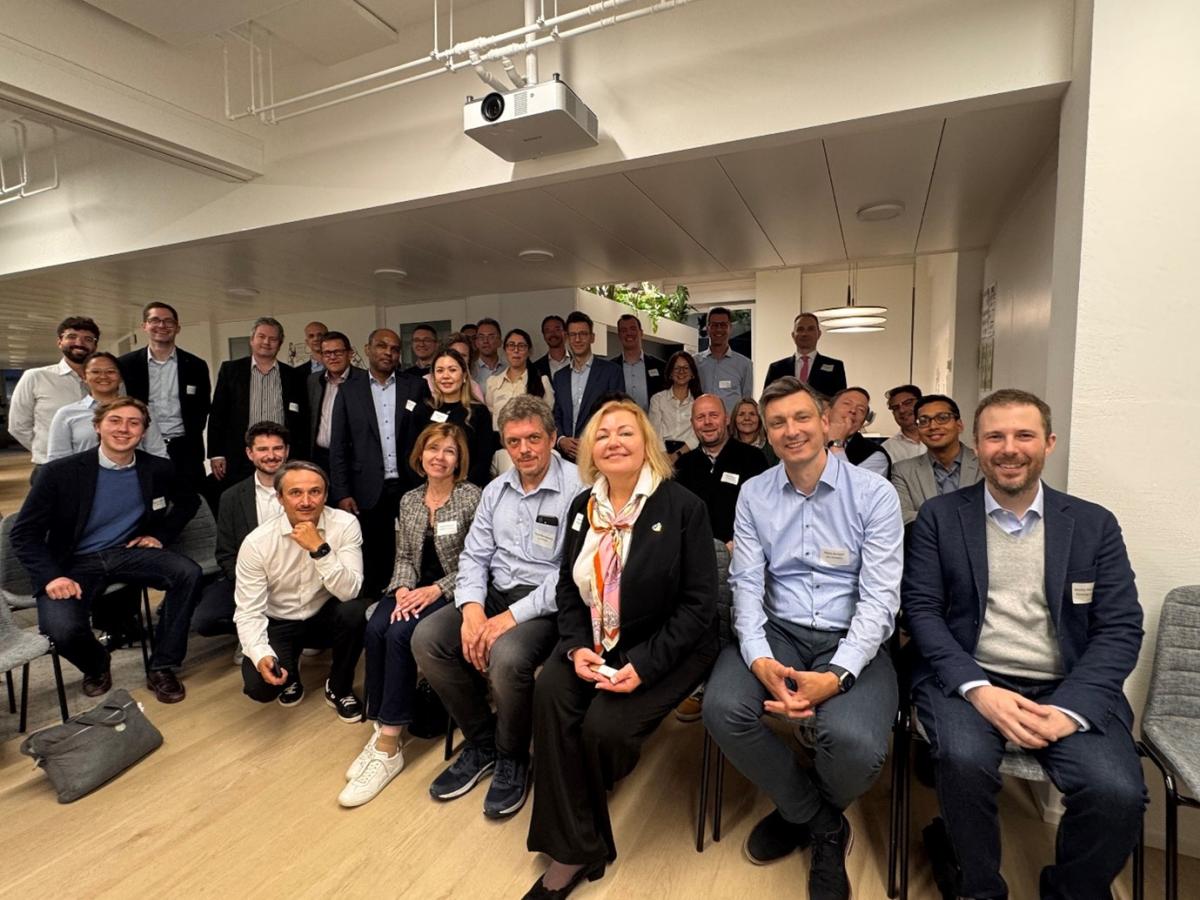
The 19th in-person Zurich FP&A Board meeting was held in the premises of Page Executive on May 6, 2026. 34 FP&A leaders and representatives from Lonza, Mondelez, Takeda Pharmaceuticals, Sulzer, Swiss Post, Triumph, La Preirie, Oriflame, and other companies were welcomed to discuss the Myths and Practices of Agile FP&A.
This Board session was sponsored by Pigment with continued support from Page Executive.
Larysa Melnychuk, CEO and Founder of the FP&A Trends Group, welcomed the finance leaders and provided a brief overview of the International FP&A Board's history, mission, and objectives. Since its creation, the mission of the International FP&A Board has been to guide the development and promotion of best practices in global FP&A and to identify and support new trends, skill sets, and innovations.
Why Is The Topic Important?
Finance and FP&A, in particular, are enablers of business decision-making. What emerged clearly is that integration is as much an organisational challenge as a technology one. As predictability spans continue to shrink, organisations are under increasing pressure to move from static annual planning toward more adaptive and scenario-driven approaches.
Larysa shared a comprehensive definition:
Agile FP&A empowers organisations to quickly adapt to market shifts while maintaining financial stability and shareholder value.
It leverages real-time data and flexible planning to enable quick, informed decision-making.
Discussion started with sharing of initial thoughts on the topic “What’s the key method or process for implementing Agile FP&A?", summarising in one or two keywords. This topic brings up many soft qualities, including mindset, cross-functional collaboration, flexibility, and simplification. This immediately shifted the discussion from tools to organisational capability.
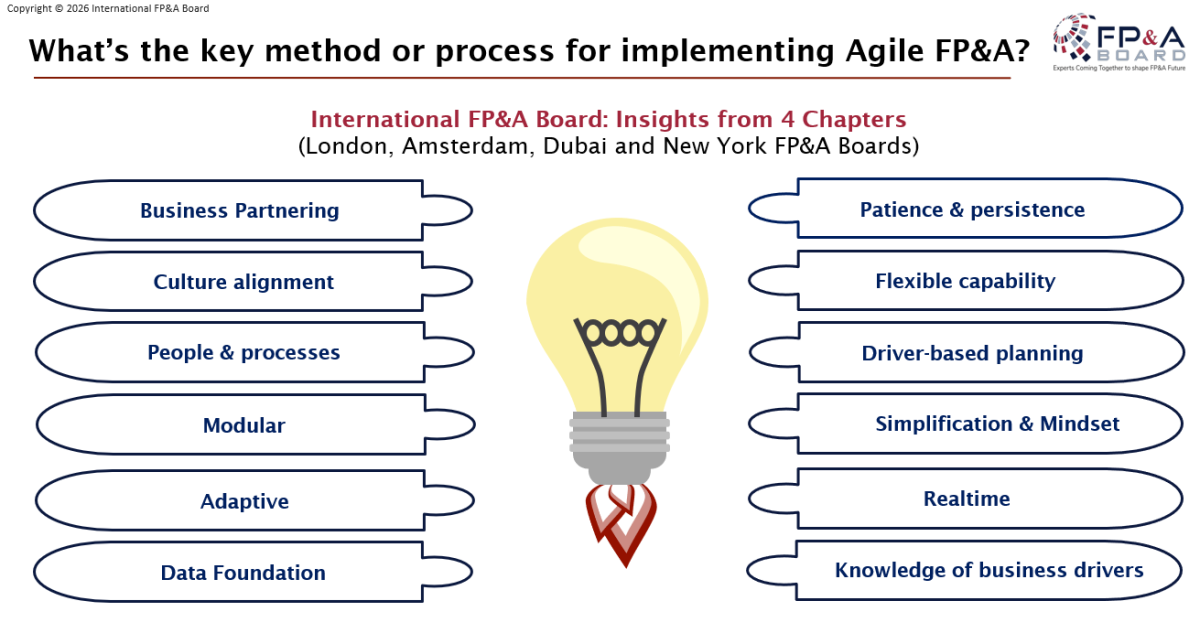
Figure 1
Larysa presented additions from recent FP&A Board Chapters, highlighting similarities and differences in feelings around the topic. Amsterdam and New York focus more on planning and automation, while London and Dubai focus more on the human aspects of change management.
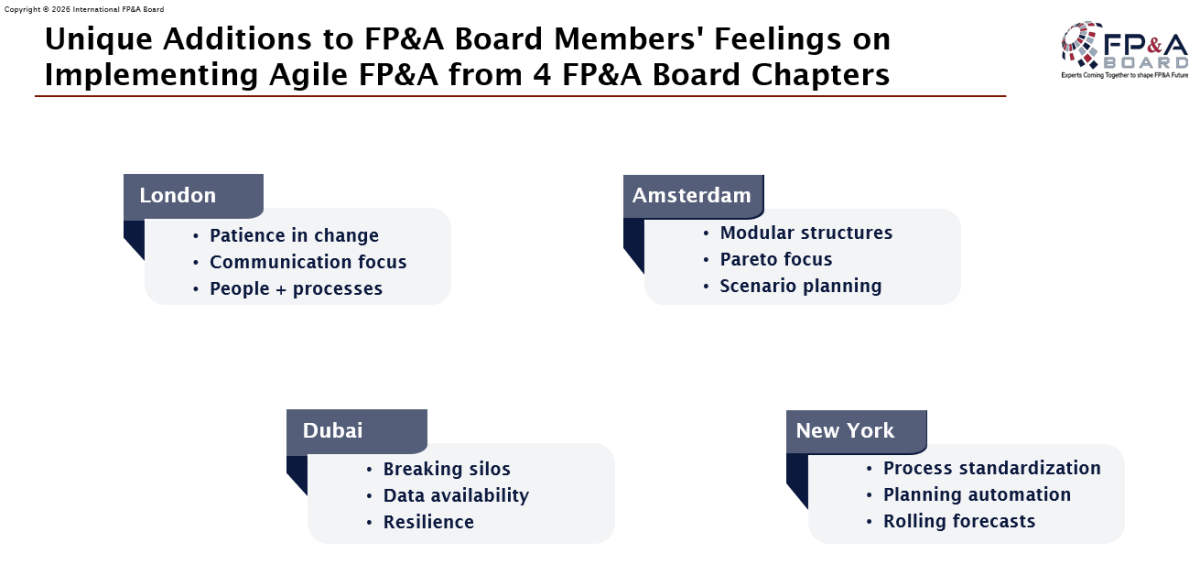
Figure 2
In an environment of uncertainty and low predictability, Scenario Planning plays a much more important role than in times of stability.
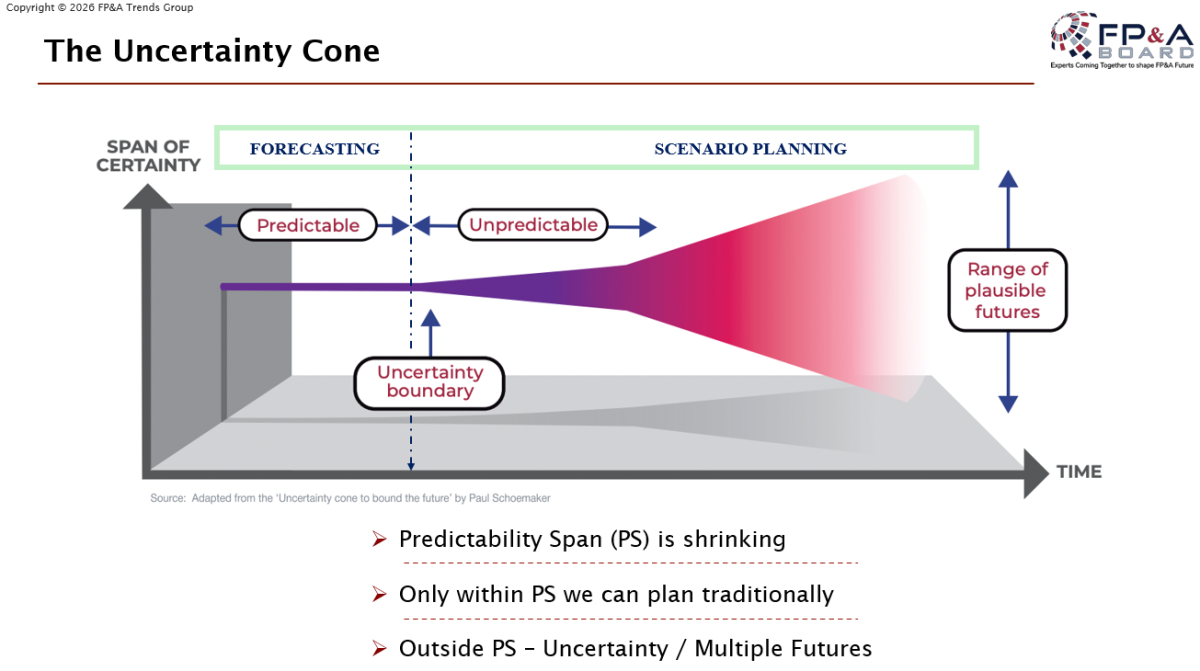
Figure 3
Larysa presented the KPI on how FP&A Agility can be measured: How long does it take to run the Scenarios?
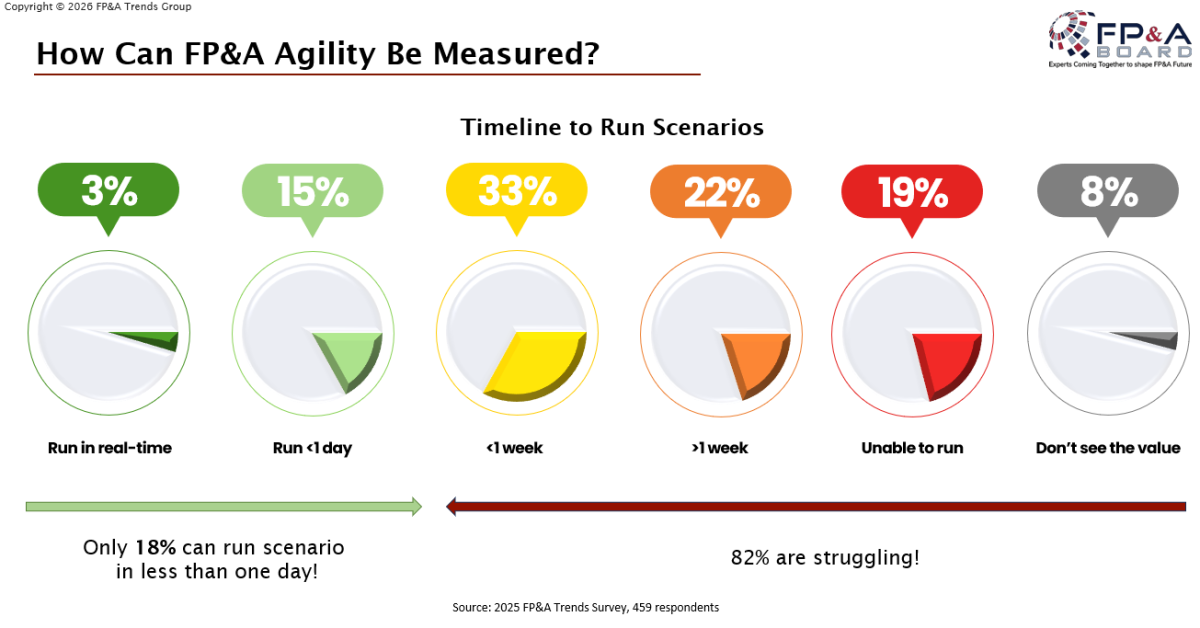
Figure 4
The result shows the level of readiness of companies’ FP&A teams to run scenarios: 82% are struggling! The discussion reinforced that scenario speed is increasingly becoming a measure of organisational agility.
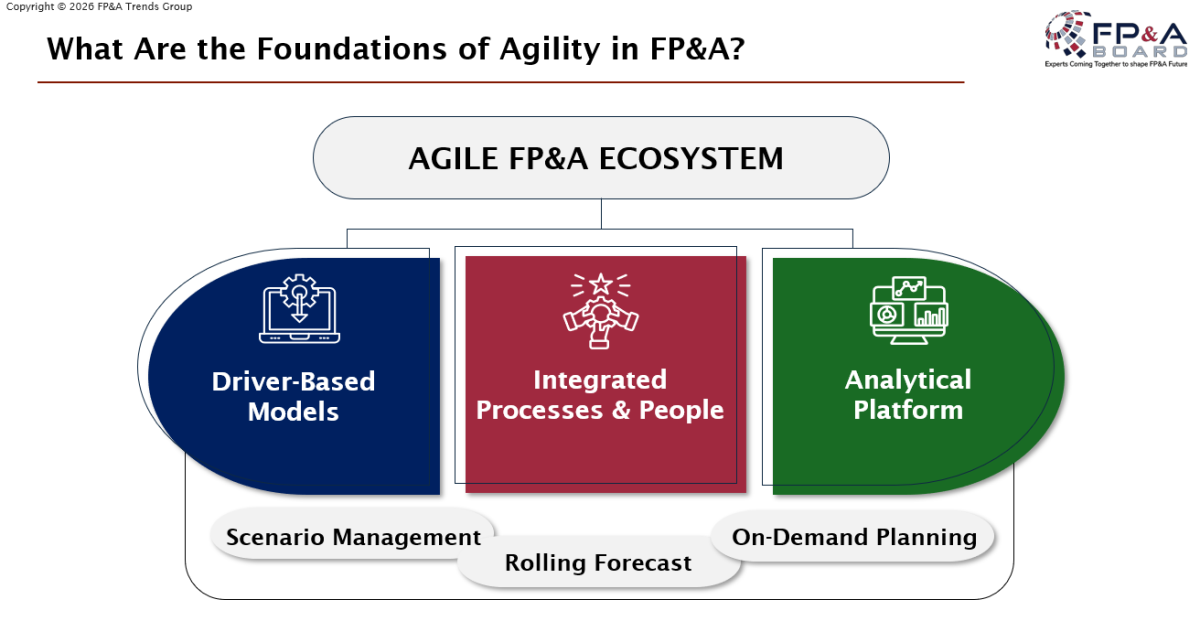
Figure 5
Discussion continued around driver-based models and approaches to driver definition, measurement, and maintenance, along with changes in the planning lifecycle from rolling forecasts to scenario planning and on-demand planning. The discussion also exposed a gap between organisations that talk about driver-based planning and those that have fully embedded it into decision-making.
A key highlight of the meeting was the sharing of practical experiences and case studies by three distinguished professionals:
Jana Kottasova, VP Global Finance, Shared Services, IT, and S4 at Mondelez International, shared her practical perspectives and experience.
Stan Stoyanov, Senior Director, Finance Transformation at Sulzer AG, shared thoughtful reflections on his professional experience across several industries.
Jacques Frey, Regional Sales Lead at Pigment, demonstrated how Agentic AI is beginning to enhance FP&A agility.
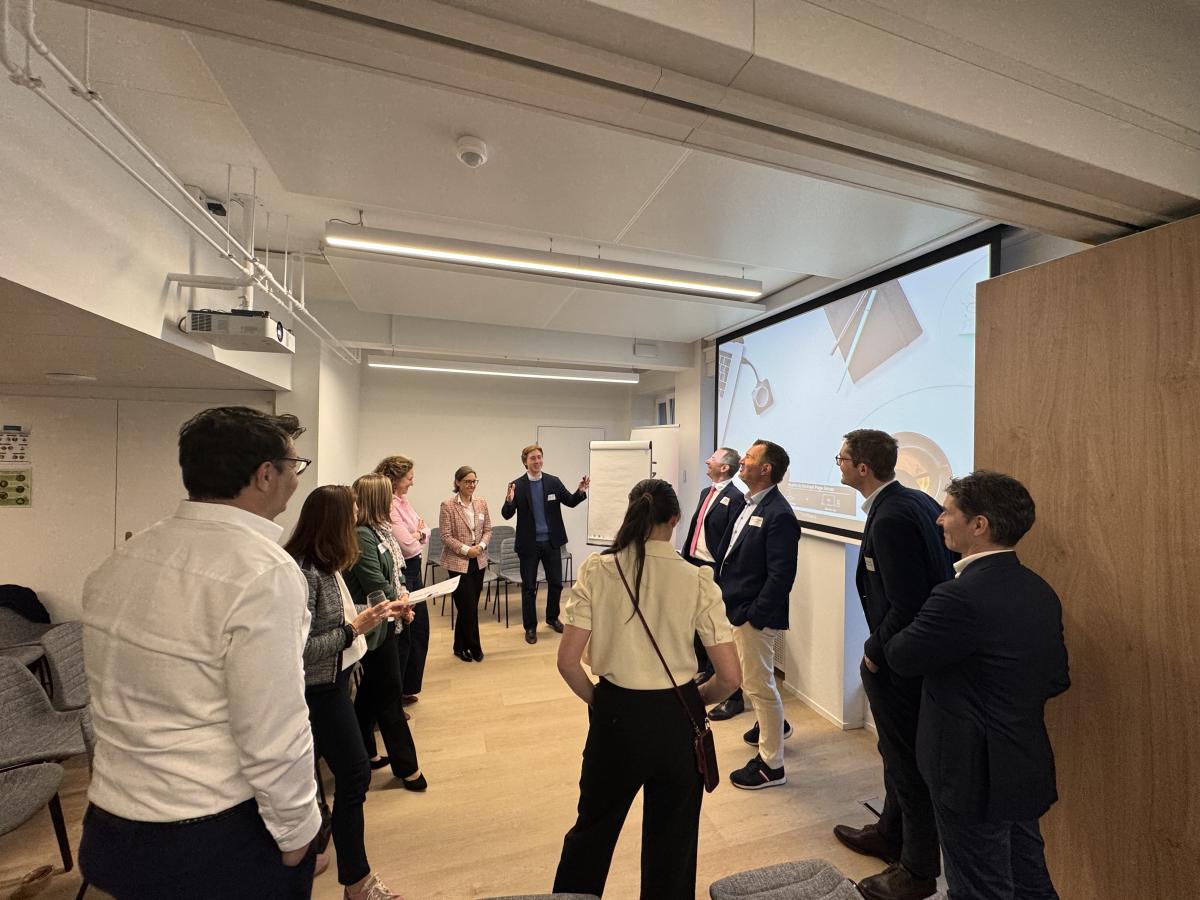
Meeting continued with Group Work brainstorming and sharing insights on the topics:
Topic 1
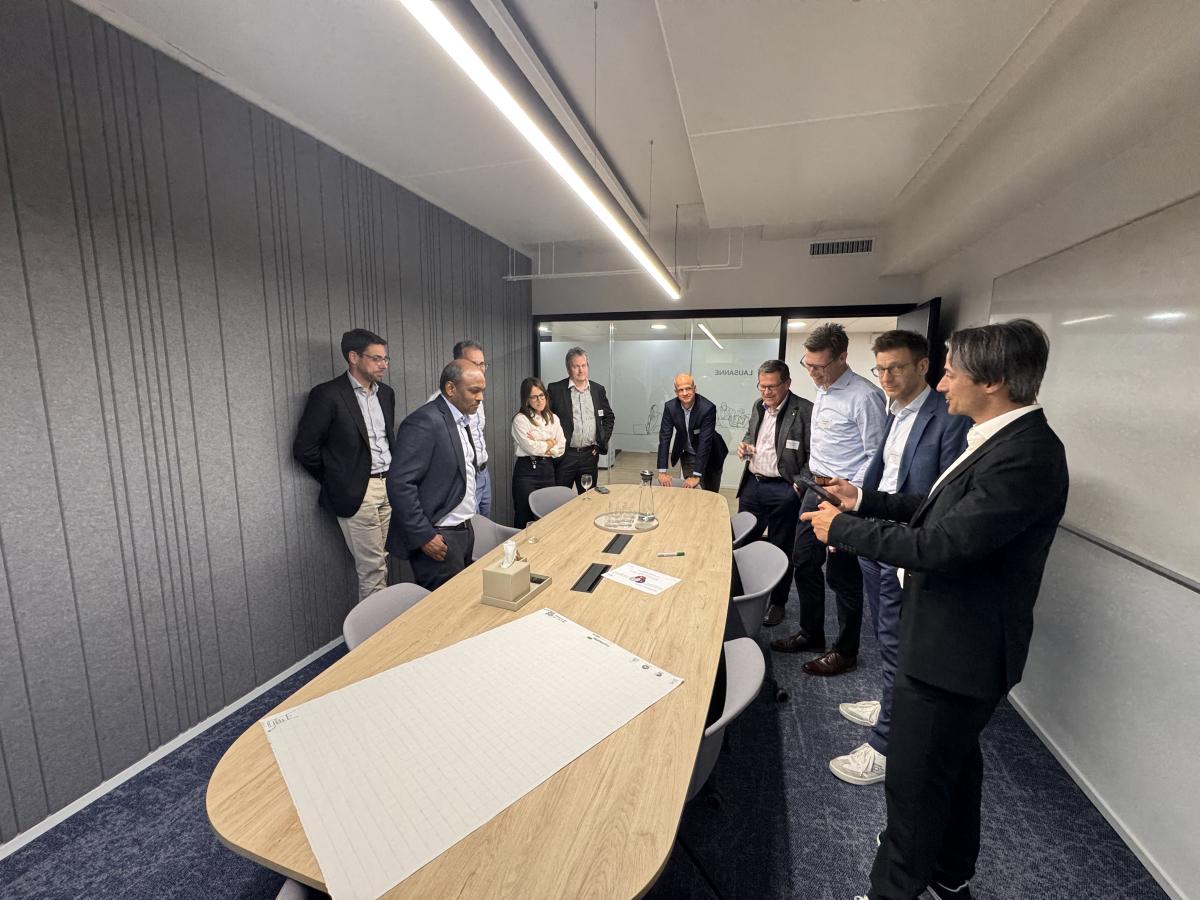
Building a Dynamic Driver-Based Model
How do we identify key drivers from data and create a dynamic, adaptable model?
The group developed a list of major questions to be considered:
What affects the Target?
How can we prove the influence?
What correlations are there?
Comparisons within the Market
Is data available?
What value does the driver bring?
Topic 2
Designing Value-Adding Processes
Who should be involved, how often, and to what level of detail for effective, value-adding processes?
Identify low-value process – stop doing
Define key players/ leadership
Involve an end-to-end process to increase value
Identify challenges
Define the data required
Focus on outcome
Establish a control mechanism, and establish clear KPIs to be measured
Define process owner and accountability
Topic 3
Implementing Technology Platforms for Agility
How can we implement technology to enhance agility and connect it to processes and models?
The group identified important considerations:
Clarity on drivers (define key drivers per function)
Clear mission
Project management and stakeholders
Map the process and define the ownership
Define data sources
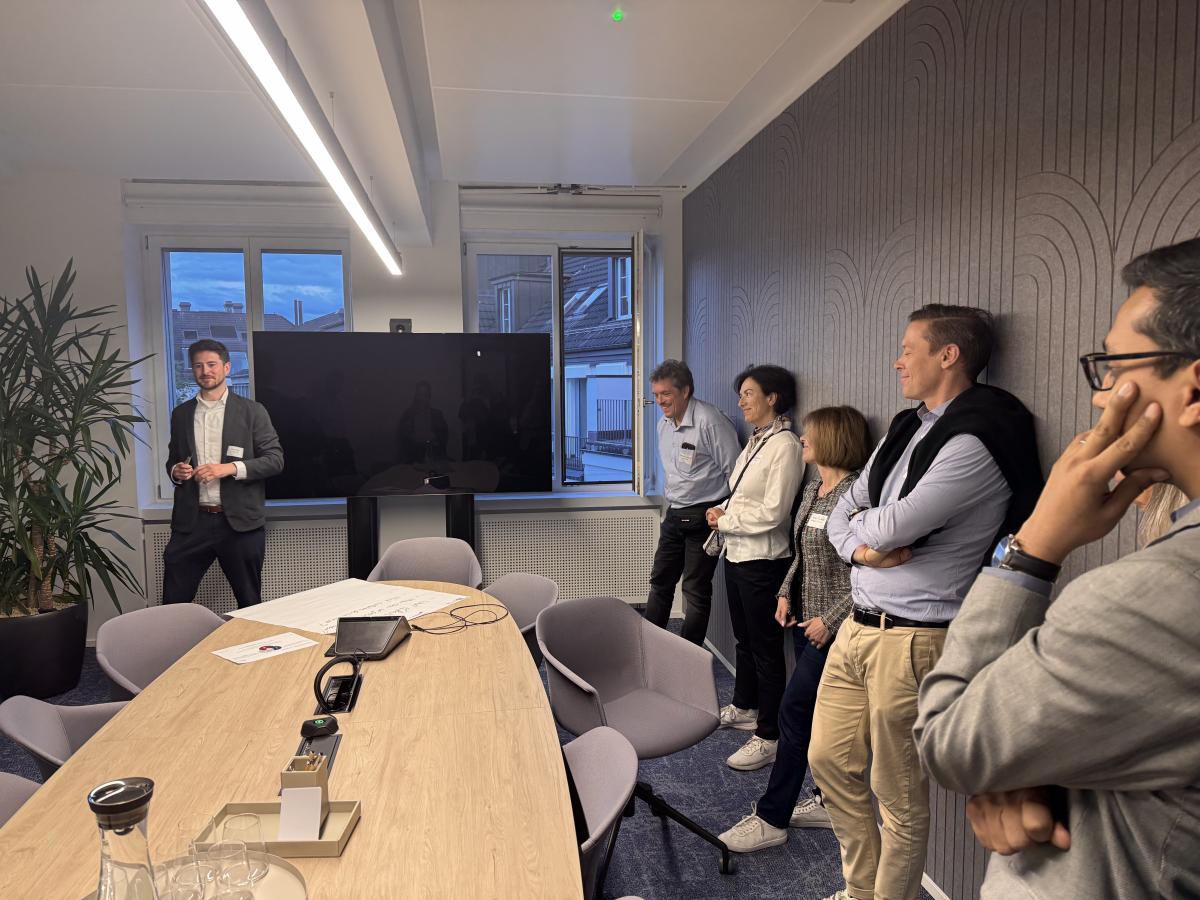
The conversation consistently moved beyond frameworks toward the practical realities of implementation.
Ultimately, the Zurich discussion reinforced that Agile FP&A is not about faster budgeting, but about building the organisational responsiveness needed to operate in continuous uncertainty.