

Introduction
Ten years of the Zurich International FP&A Board. Since its launch on 20 September 2016, the chapter has brought senior finance leaders together to exchange experiences, challenge established thinking and explore how the FP&A function needs to evolve.
On 3 November 2026, Zurich celebrated its 20th face-to-face meeting, the 307th International FP&A Board globally. The session, Leading FP&A Change in the AI Era, was facilitated by Stefan Spiegel, Vice President Finance & Controlling at ETH Zürich. The meeting was made possible with the sponsorship of Pigment and the support of Page Executive.
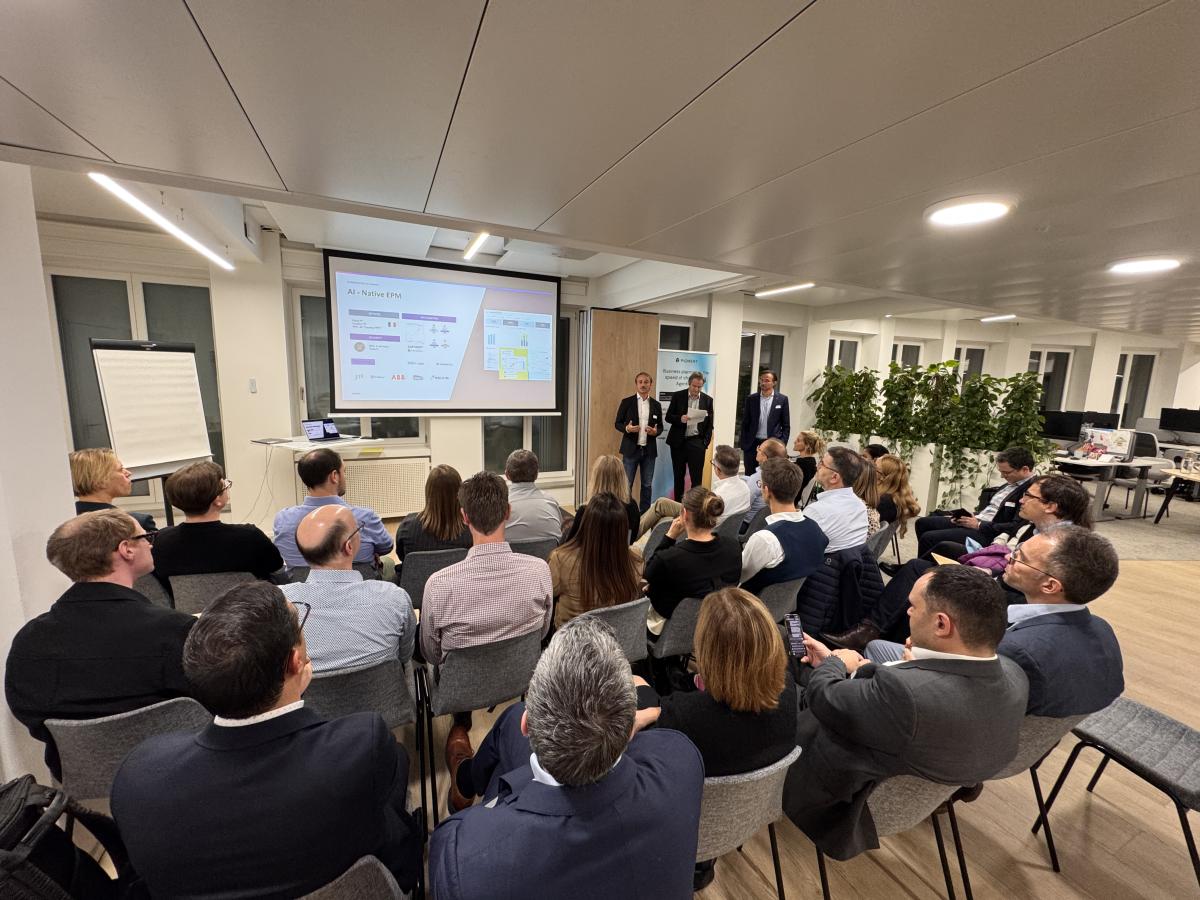
The evening raised a familiar but uncomfortable question: how can organisations expect people to embrace new ways of working when old habits, processes and incentives remain unchanged?
The opening discussion offered a practical starting point. Asked what prevents change from sticking, participants pointed to time, fear, habits, resistance, lack of vision and engagement. One observation was particularly revealing: people may understand why change is needed and still struggle to make it happen.
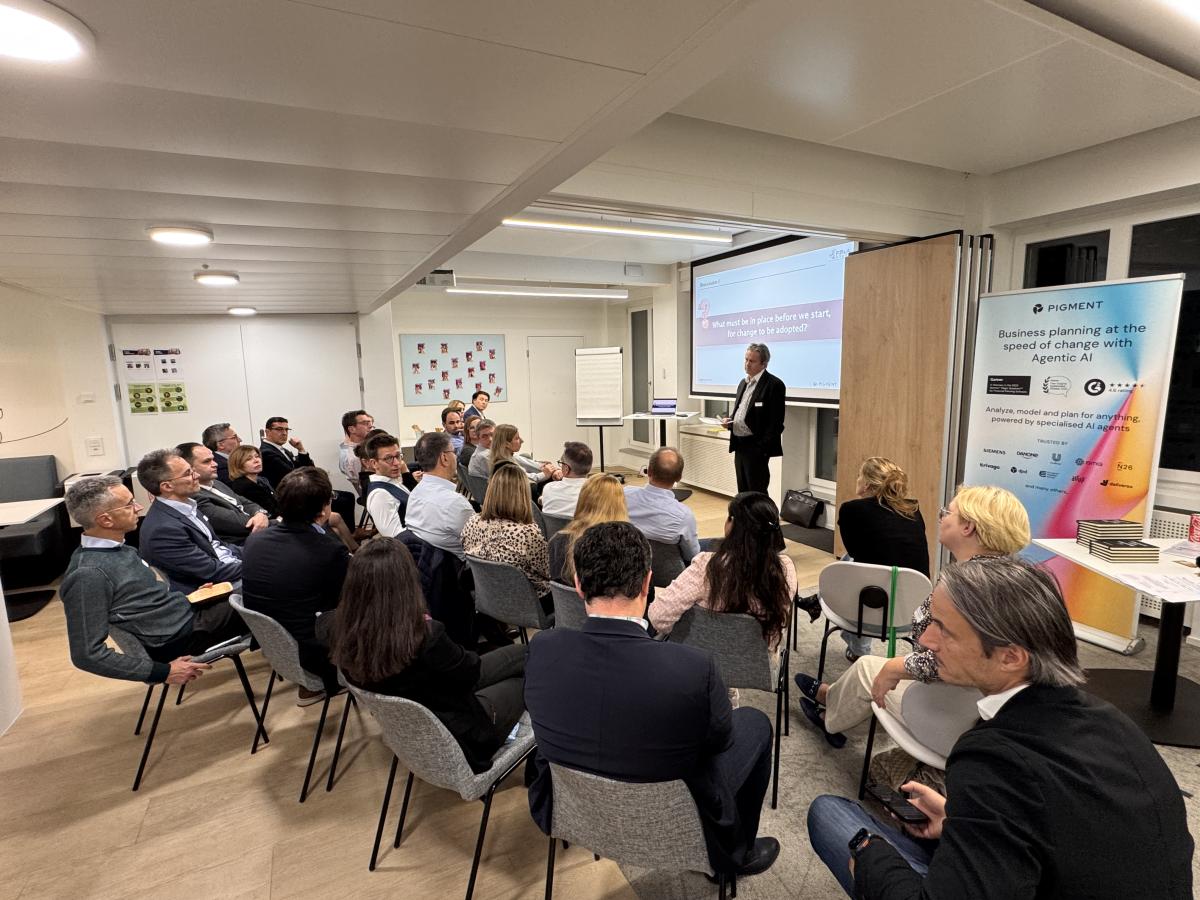
That distinction between understanding change and actually adopting it shaped the discussion.
The Adoption Gap: Technology Moves Faster Than People
The findings from the 2026 FP&A Trends Survey, involving 475 respondents, put the challenge into perspective. Despite years of investment in automation and analytics, FP&A teams still spend 47% of their time collecting and validating data, the same proportion as in 2020. Only 32% is devoted to insight generation and driving action.
The question is not simply whether organisations have better tools, but whether those tools have changed how Finance works.
The survey also revealed that 58% of FP&A transformation priorities concern technology, data and systems, compared with 24% focused on business partnering and team capabilities. Only 7% prioritise developing team skills.
This imbalance matters because technology can be implemented much faster than people can change their established practices.
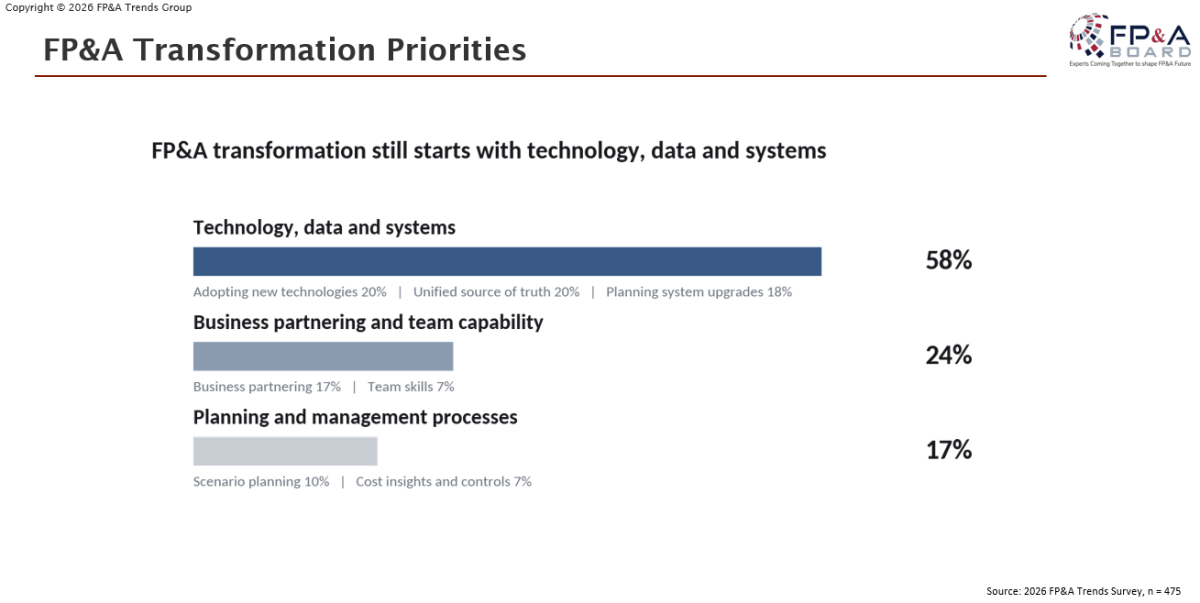
Figure 1
AI introduces another dimension. According to the same survey, 98% of respondents expect AI to affect FP&A, but only 19% report having a formal AI policy in place and followed.
Expectations are high, while the organisational foundations for responsible adoption are still developing.
A separate FP&A Trends webinar poll from June 2025, involving 201 respondents, found that 62% of AI adoption barriers were people-related, including skills gaps, resistance and unclear accountability.
This suggests that organisations are investing heavily in technology, but may not be giving equal attention to preparing people to work differently.
Why Change Is Harder Than It Looks
The FP&A Change Leadership Framework, developed in the 2026 FP&A Trends Insights Paper Managing Change in FP&A, provided a useful structure for the discussion.
It identified five leadership responsibilities: leading the case for change, preparing the organisation, enabling people and capabilities, executing change, and reinforcing the new way of working.
The framework follows a progression from recognition and readiness to confidence, commitment and ownership.
Yet the journey is rarely straightforward. The discussion explored the four underlying forces of FP&A resistance: professional identity, the need for control, unequal perceptions of risk and the competence paradox, where existing tools work well enough for individuals to resist replacing them.
The implication is important. Resistance cannot always be overcome through more training or better communication. Finance leaders must understand what employees believe they may lose through transformation, whether that is expertise, confidence, control or professional relevance.
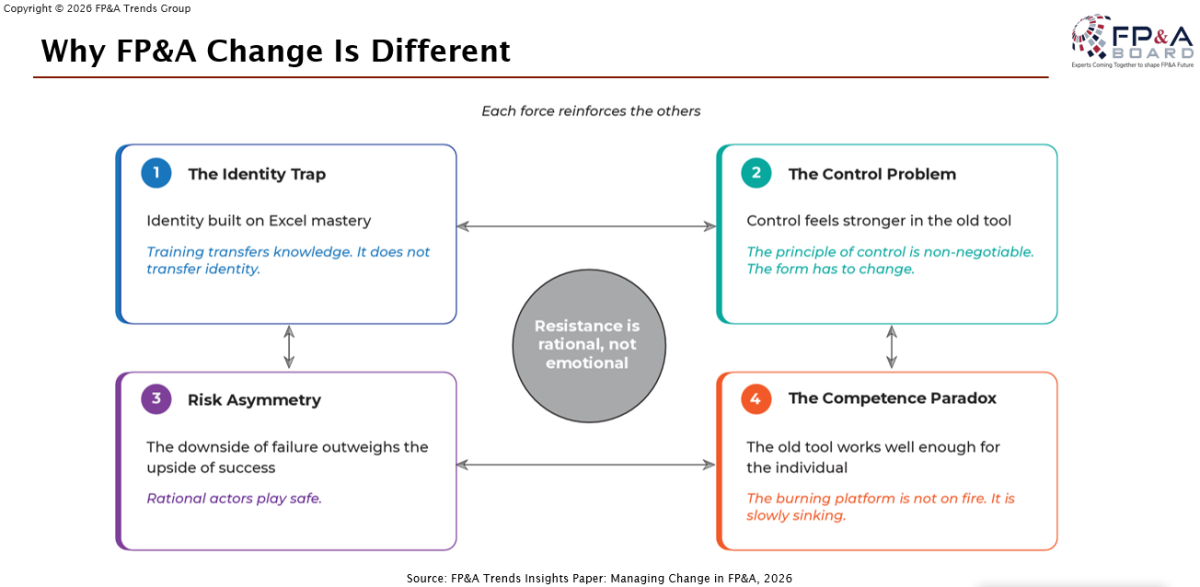
Figure 2
The session also examined the "dangerous middle", where initial enthusiasm gives way to uncertainty. Research from EY and the University of Oxford Saïd Business School found that 75% of transformation turning points occur during planning or early implementation.
This is precisely when leadership support, clear expectations and the willingness to retire old practices become essential.
From Research to Practice: BridgeBio and AI-Native Planning
The discussion moved from change leadership to practical implementation through two presentations.
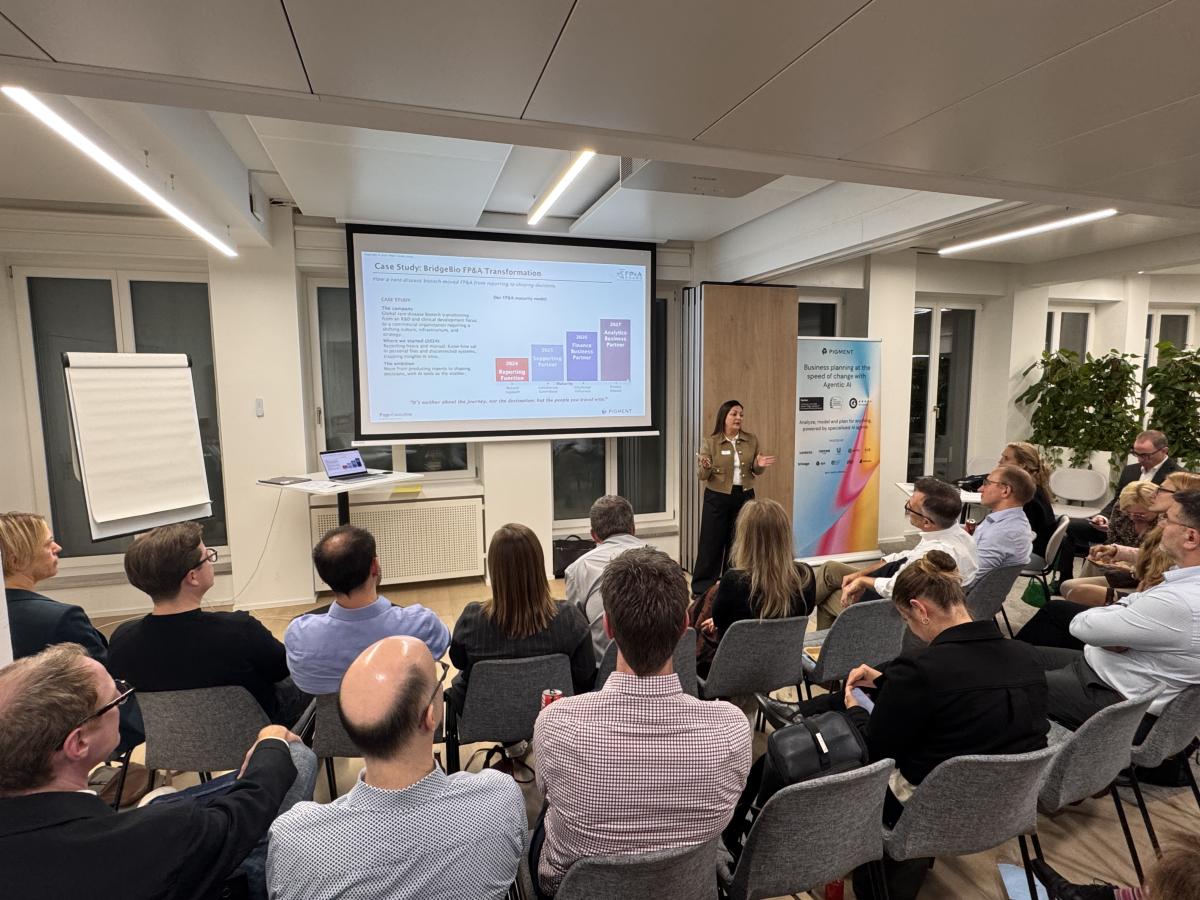
Milagros Bertolino, Director, FP&A International at BridgeBio, presented BridgeBio Case Study on AI Implementation, sharing her team's journey from traditional reporting towards business partnering.
Her case highlighted the importance of treating AI adoption as a people transformation, with a focus on developing new capabilities, reducing manual work and allowing finance professionals to contribute more to business decisions.
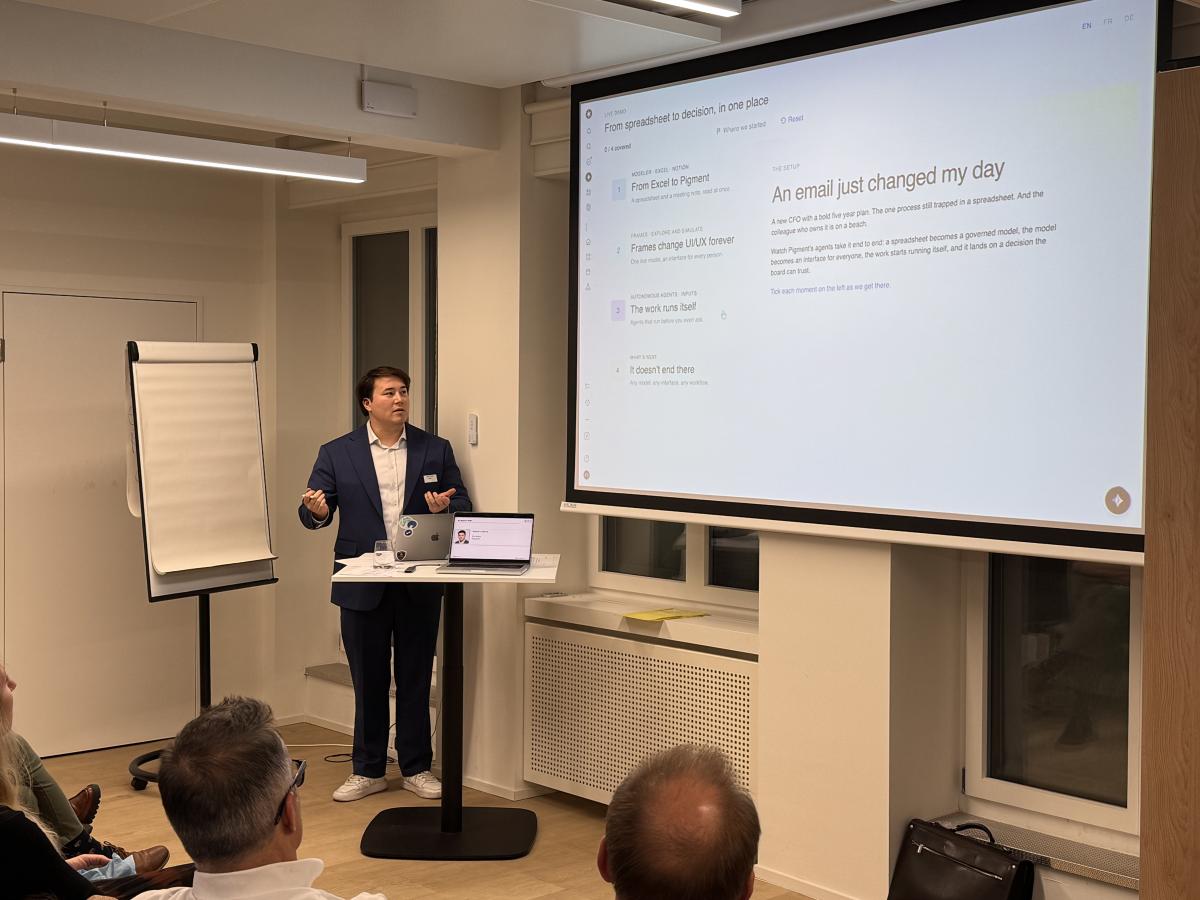
Adrien Lambert, Pre-Sales at Pigment, followed with AI Native EPM, offering a technology perspective on how AI can support modern financial planning and analysis.
Together, the presentations connected the human and technological dimensions of transformation. AI may help FP&A teams work differently, but its contribution depends on reliable data, appropriate governance and the willingness to use new capabilities in everyday decisions.
Group Work: What Zurich Participants Said Needs to Change
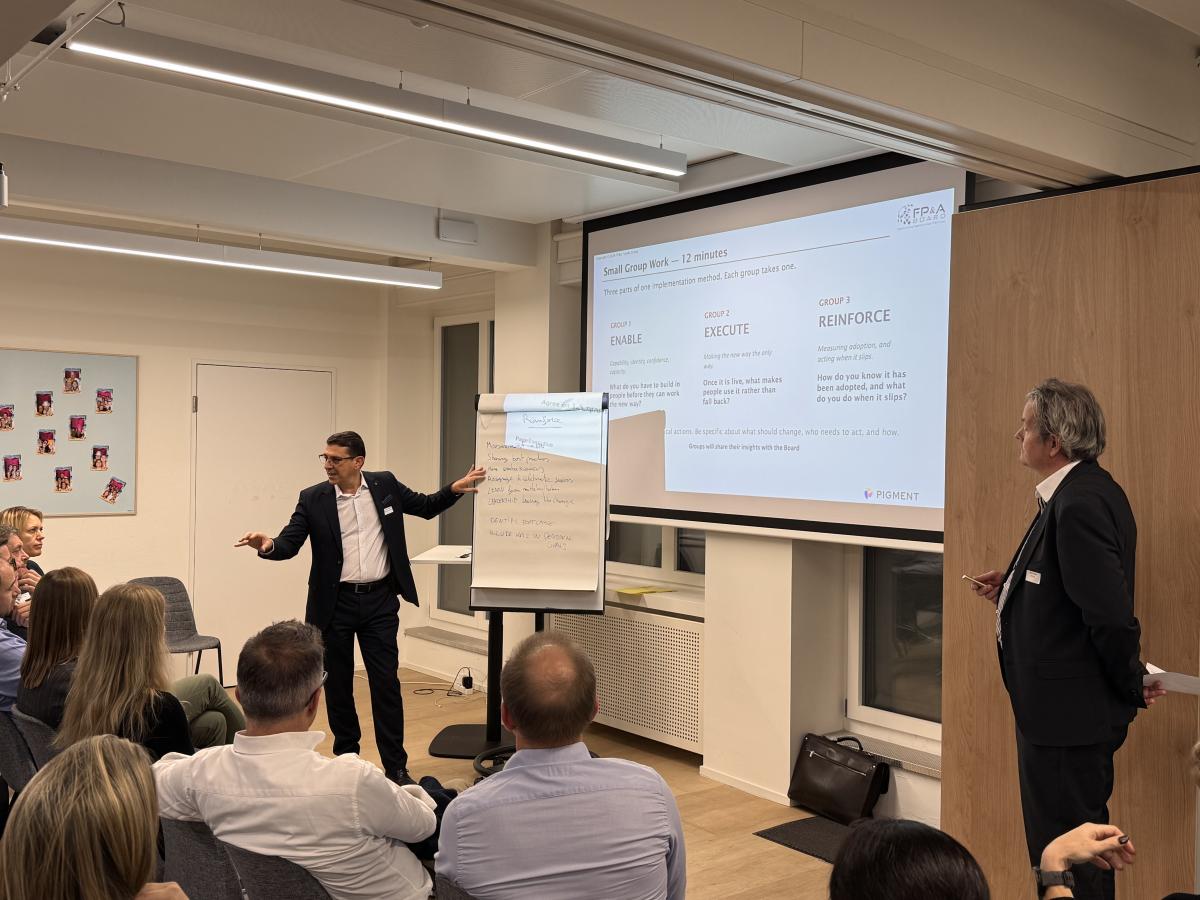
The most practical part of the evening came when participants worked through three stages of transformation: Enable, Execute and Reinforce.
The flipcharts captured both the immediate barriers and the actions participants believed could make change sustainable.
Group 1 — Enable: Give People the Confidence to Change
The group identified the importance of preparing people before expecting them to adopt new practices.
Recorded outputs:
- Give people space to experiment
- Assess upskilling needs
- Raise awareness and provide clarity
- Bring people on board
- Show boundaries and define governance and security
- Communicate expectations
- Connect KPIs with personal goals
- Set priorities
- Create a feedback culture
- Provide coaching and mentoring
The central message was that successful adoption requires more than technical competence. People also need clarity about expectations, the freedom to learn and reassurance about the boundaries within which they can experiment.
Group 2 — Execute: Make the New Way the Normal Way
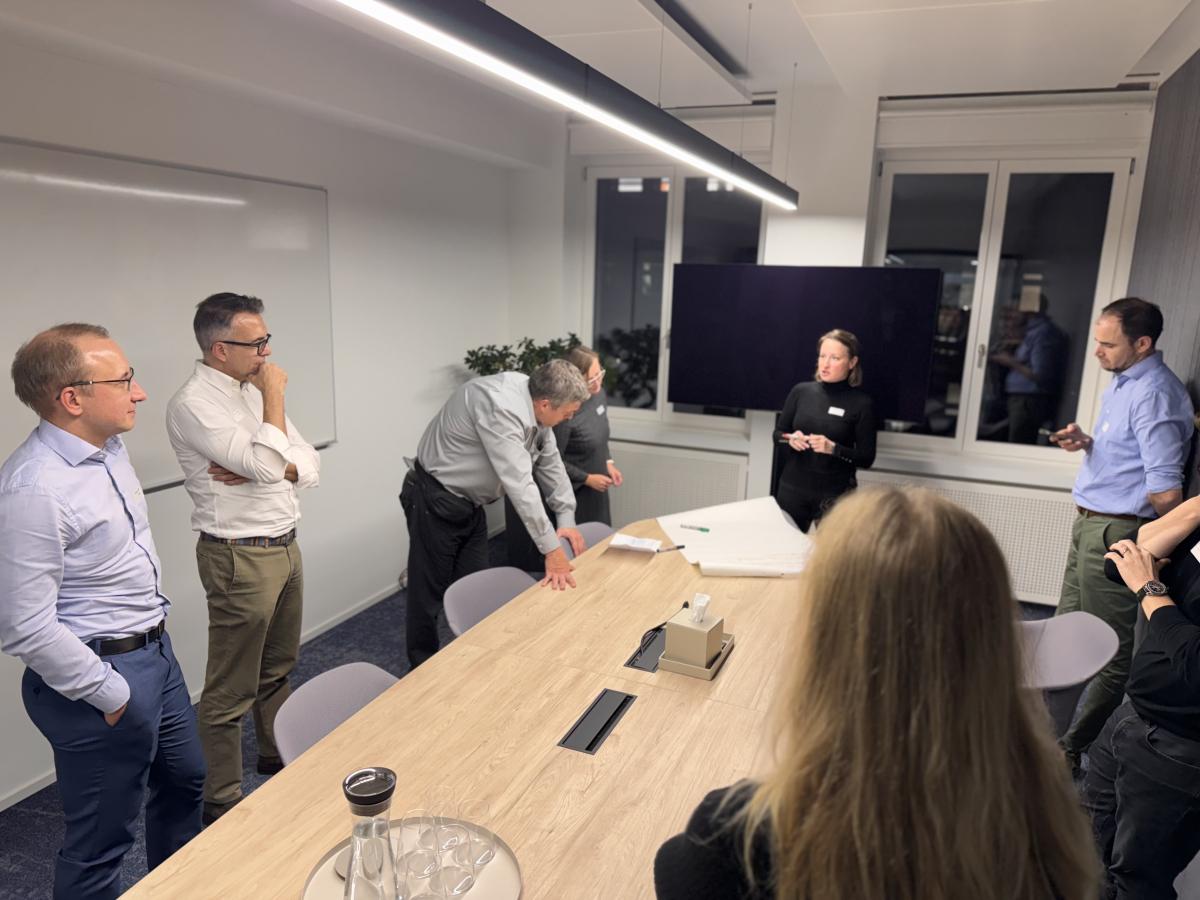
The second group focused on what happens after implementation, when employees can easily return to familiar processes.
Recorded outputs:
- Share successes and benefits to motivate others
- Encourage continuous improvement
- Stop or switch off old processes
- Ensure leaders act as role models
- Transfer and share knowledge
- Train late adopters to close knowledge gaps
- Maintain persistence
- Share practical tips and small improvements
- Prioritise initiatives and maintain focus
- Communicate clearly and systematically
- Create business value
One recommendation stood out: stop the old processes.
When employees are expected to maintain existing routines alongside new systems, transformation becomes additional work rather than an improvement.
Leadership behaviour matters here. If managers continue requesting old reports, using established spreadsheets or rewarding outdated practices, employees have little reason to change.

Group 3 — Reinforce: Measure Whether Change Has Taken Hold
The third group considered how organisations can maintain momentum once the new process is established.
Recorded outputs:
- Measure adoption through KPIs
- Share best practices
- Appoint ambassadors
- Recognise and celebrate successes
- Learn from mistakes and failures
- Ensure leadership demonstrates the change
- Identify root causes when adoption weakens
- Include adoption KPIs in personal goals
The discussion highlighted a distinction between implementation and sustained adoption.
A system going live does not prove that people are using it effectively. Organisations need to track adoption, recognise progress and investigate why employees return to previous practices.
Across the three groups, a consistent picture emerged:
- people need confidence and support;
- processes must make the new approach practical;
- data and governance must provide trust;
- technology must demonstrate value through actual use.
The message was not to accelerate implementation at any cost, but to ensure that the organisation changes with the technology.
Conclusion: Making Change Last
The Zurich Board's tenth anniversary offered an opportunity to reflect on how far FP&A has progressed. Yet the discussions revealed that some of the most persistent transformation challenges remain remarkably familiar.
Fear, habits, uncertainty and resistance are not new. What has changed is the speed at which technology, particularly AI, is creating new possibilities for Finance.
The next priority for FP&A leaders is therefore not simply introducing more sophisticated tools. It is building teams that can use them confidently, establishing processes that support new behaviours and measuring whether transformation creates business value.
Zurich's strongest practical lesson was also its simplest: organisations cannot build a new way of working while continuing to preserve and reward the old one.