

In this article, the author examines how FP&A teams can implement trustworthy agentic AI by matching...

The Real Barrier to Agentic AI in FP&A: It’s Not the Technology
March 31, 2026

Nowadays, it’s difficult to find a finance person who hasn’t used a large language model in some way. It summarises emails for us, explains forecast changes, drafts board commentary, answers policy questions, or simply checks our grammar. And yet, not that many finance professionals have already experienced working with Agentic AI in FP&A.
There’s an important difference between LLMs and agents. LLMs help us generate insights and narratives. Agents, however, can act. They can execute tasks, trigger workflows, pull data from ERP systems, run forecasts, detect anomalies, and escalate exceptions. Typically, agents work with LLMs to create an end-to-end process from analysis to action.
So, if agentic AI is such a big topic in FP&A today, why are so many companies either not starting or not seeing the expected outcome from AI implementation?
It’s not always about the technology itself; everything starts with readiness.
Imagine a rolling forecast that adjusts automatically when key drivers change. In a service business, for example, churn is often a key revenue driver. If several large clients terminate their agreements, the forecast could be updated immediately instead of waiting for the next manual cycle.
An agent could handle the recalculation in the background, while an LLM provides a short explanation of what changed compared to yesterday — for instance, highlighting the largest clients lost by location or industry.
The technology itself isn’t the difficult part. The real question is whether the data is reliable and whether the team trusts the output received.
Agentic AI FP&A Readiness
There are three areas that stand out. As shown in Figure 1, the successful implementation of agentic AI in FP&A depends on three interconnected readiness pillars.
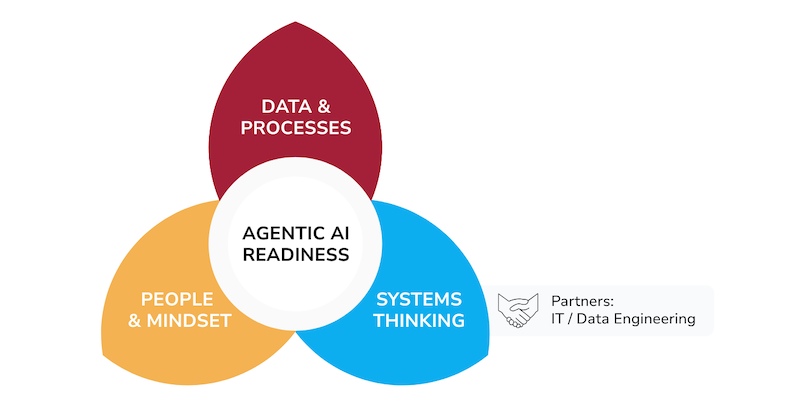
Figure 1. Three Pillars of Agentic AI Readiness in FP&A
1. Data & Processes
We’ve been talking about data quality and standardisation for years. And yet, many companies still struggle with it. The good news is that LLMs can handle data in different formats. The bad news is that data quality still matters.
For agents to work, companies should have consistent definitions across departments and a single source of truth. The more manual manipulation the data requires, the less likely agentic AI is to succeed.
The data doesn’t need to be perfect. But it does need to be consistent and governed.
2. Systems Thinking
Agentic AI works best where end-to-end processes are clearly established and documented.
Every agent needs to have an owner. Exceptions need to be defined in advance. Escalation paths must be clear. And most importantly, governance must be in place.
Finance is one of the most audited functions. If we can’t explain how a number was generated or why a workflow was triggered, trust disappears very quickly.
The companies that succeed are those that treat agents as part of their operating model, recognising that transformation requires clear communication, alignment across departments, and the right mindset.
And of course, none of this works without collaboration between FP&A, IT, and the business.
3. People & Culture Readiness
This is the obvious one — and yet the hardest.
We often underestimate how much transformation depends on people and their mindset. Clean data and well-documented processes are important, but without the right mindset and alignment, no transformation will succeed.
To ensure teams are ready, we should start by setting up the right culture. Experiments can happen only when people feel psychological safety — a secure environment to try, fail, and learn from mistakes.
Figure 2 illustrates the layered structure of people readiness — starting with culture as the foundation and building up through mindset, capacity, and talent.
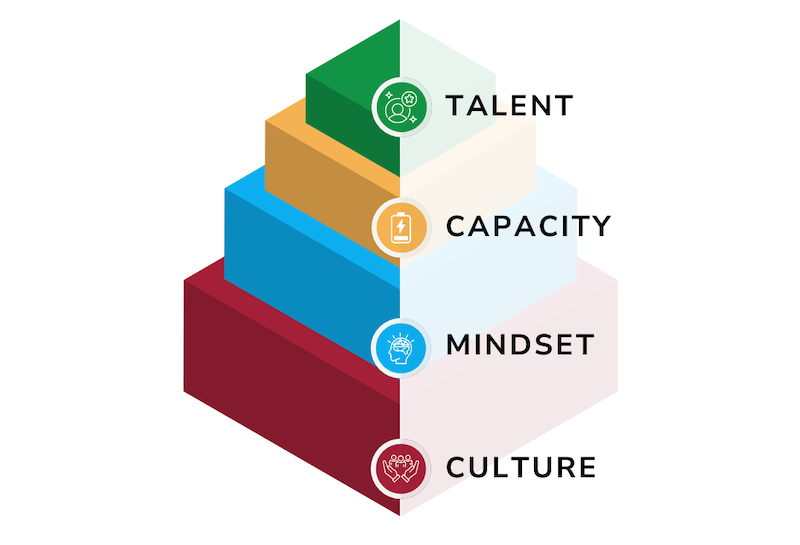
Figure 2. The People Readiness Pyramid for Agentic AI in FP&A
The next pillar is mindset. Not everyone will feel excitement from using AI. Some are just comfortable with the current ways of working. And that’s fine. Identify people with a forward-looking growth mindset, those who like improving processes and see AI as an enabler, not a threat. Let them become owners of agents.
Culture and mindset are important, but they are not enough. People need time. If teams are fully occupied with operational work, there is no room to experiment. Consider ways to increase capacity by either using (non-AI) automations or hiring temporary staff to do operational work.
And finally, talent — in many cases, developing talent internally works better than hiring externally. Internal team members understand the data, know the business context, and can clearly define the nuances that are often omitted in official documentation. They can become strong owners of agents and manage exceptions responsibly.
As in many other transformation projects, the biggest challenge with AI is not the technology itself; the biggest challenge is human resistance to change.
Final Thought
Agentic AI in FP&A is not only a technology project, but also an operating model shift. Companies that invest not only in technology but also in people will see quicker wins from AI.
To start with AI in FP&A, keep it simple:
- Identify the right people in the team and free up their capacity to experiment
- Assign clear ownership — every agent should have their accountable owner
- Start with routine, rule-based processes where the end-to-end process is well established
- Do not forget to celebrate early wins. It will keep the team motivated and stakeholders informed
- Finally, iterate and scale: measure both time saved and quality improved
Most importantly, we are not changing what we do in FP&A; we are changing how we do it.
The full text is available for registered users. Please register to view the rest of the article.
Related articles

In this article, discover how Agentic AI is revolutionising FP&A by automating forecasting, budgeting, and variance...

In this article, the authors show how AI agents can turn messy earnings call transcripts into...

In this article, Ashok Manthena reflects on what 2025 really delivered for AI in FP&A —...

Mastering AI in FP&A isn’t just about technology — it’s about overcoming human resistance to change...

Join the Digital North American FP&A Circle on December 9th to explore how teams are moving...
+
Subscribe to
FP&A Trends Digest

We will regularly update you on the latest trends and developments in FP&A. Take the opportunity to have articles written by finance thought leaders delivered directly to your inbox; watch compelling webinars; connect with like-minded professionals; and become a part of our global community.