In this article, the author explains how AI in FP&A can evolve from automation to a...

AI as a Governed Collaborator: Lessons from a Real Decision System — Part 2 of 3
February 24, 2026

Introduction
Part 1 introduced a six-stage maturity model for AI in FP&A and argued that the key unlock is governance: AI may propose and test, but humans retain authority, accountability, and an audit trail for material decisions. This part shows what that looks like in practice.
Case Study: Governed AI Collaboration in a Decision System
The Home Hedge Fund is an evolving project to experiment with the latest techniques in these volatile, regime-shifting conditions. This article serves as a concrete example of how AI can act as a governed collaborator in a decision system.
The point is not investment performance; it is the operating pattern: (A) sense the operating environment and adjust stance, and (B) improve models over time under explicit gates; a pattern that transfers directly to FP&A model management.
Baseline System
A working package already existed to interrogate roughly a decade of market history and produce a disciplined, risk-controlled portfolio recommendation. It was useful, repeatable, and governed, but it implicitly assumed the environment was stable enough for its policy to remain appropriate.
The Trigger
It became clear that the operating environment can shift quickly; models that assume stability become fragile. The system needed two additional capabilities:
1. Operating-environment sensing with policy switching, and
2. Controlled model improvement over time without losing oversight.
Two Techniques Identified Through Research
Research identified two techniques to support these capabilities. The labels can sound technical; the underlying ideas are simple:
Operating-environment sensing (sometimes implemented via ‘regime detection’): compress many indicators into a small number of states (e.g., aggressive / moderate / defensive), then switch stance when the state changes.
Controlled model improvement loop (sometimes called a Darwin-Gödel Machine, DGM): generate candidate model changes, test them, accumulate evidence, and promote only those that pass defined criteria and explicit human approval.
AI as a Strategic Collaborator
I used AI to help propose the integration strategy, architecture, and test gates; for example, it helped propose the two-loop structure, suggested candidate tests, and assisted with implementation and debugging, while I retained explicit human approval for any promoted change.
Governance note: AI was used to define and improve the decision system (under version control and gates), not for its live operation without oversight.
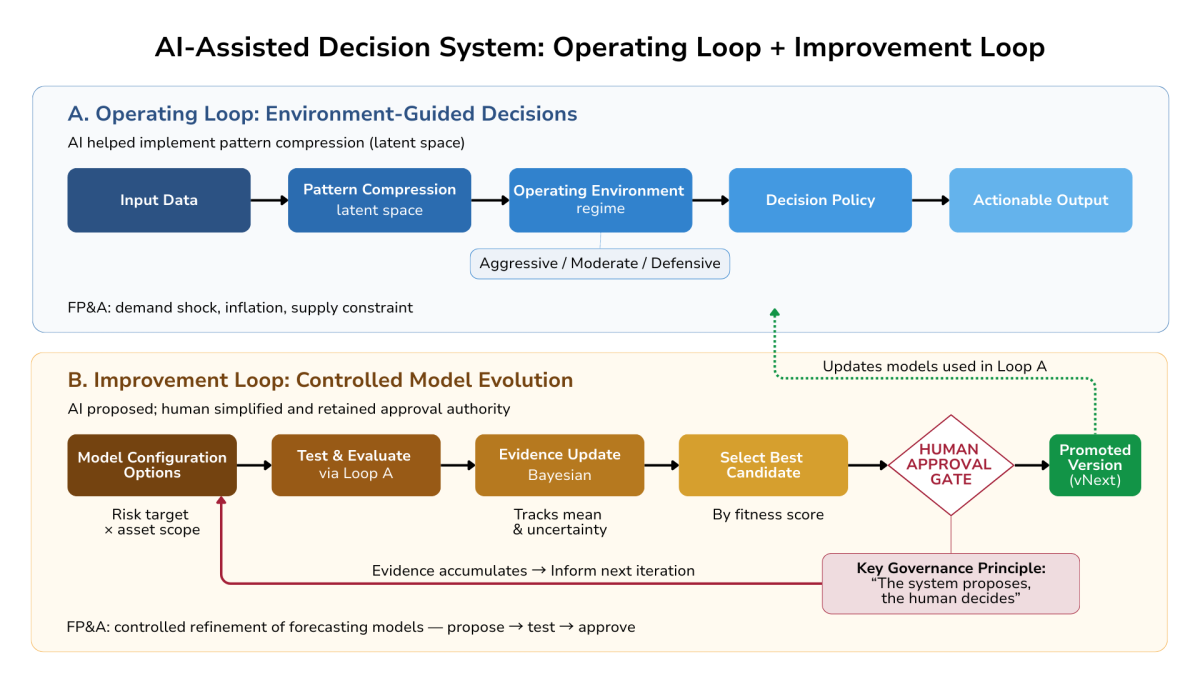
Figure 1: Two-loop architecture, developed with the help of AI
Panel A: environment-guided decisions.
Panel B: controlled model evolution with a human approval gate.
In FP&A terms, Panel A corresponds to recognising shifts in the operating environment; Panel B corresponds to disciplined refinement of forecasting models (propose → test → approve).
Example 1: Operating-Environment Sensing
In the hedge-fund example, the system infers market “states” solely from price behaviour. It summarises patterns in multi-asset price movements over time and groups them into three broad states (aggressive / moderate / defensive). A smoothing step reduces rapid back-and-forth switches so state changes reflect sustained shifts rather than noise.
Result: the system detects regime shifts and adjusts its stance accordingly.
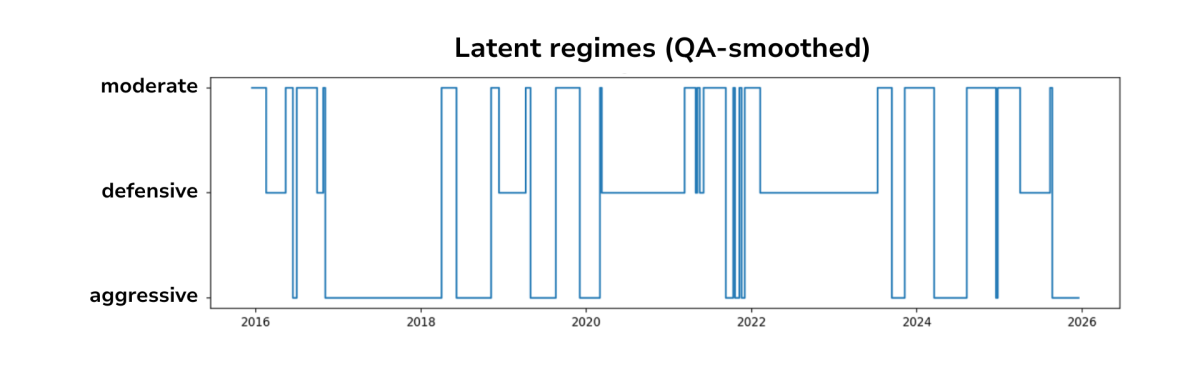
Figure 2: Operating-environment regimes (smoothed)
FP&A analogue: apply the same “state sensing + controlled switching” idea to business and macro signals (demand shock, inflation regime, supply constraints, credit tightening) to switch planning assumptions and guardrails (e.g., discount policy, safety stock, hiring-freeze thresholds) in a controlled way.
Example 2: Controlled Model Improvement Loop
The improvement loop generates candidate model changes and qualifies adoption using explicit tests and constraints. It combines exploratory search (try candidates) with disciplined acceptance (only promote what passes).
In my experience, AI initially proposed an over-elaborate design. The useful outcome came from iteration: insisting on a simpler process appropriate for the context, while retaining strong gates.
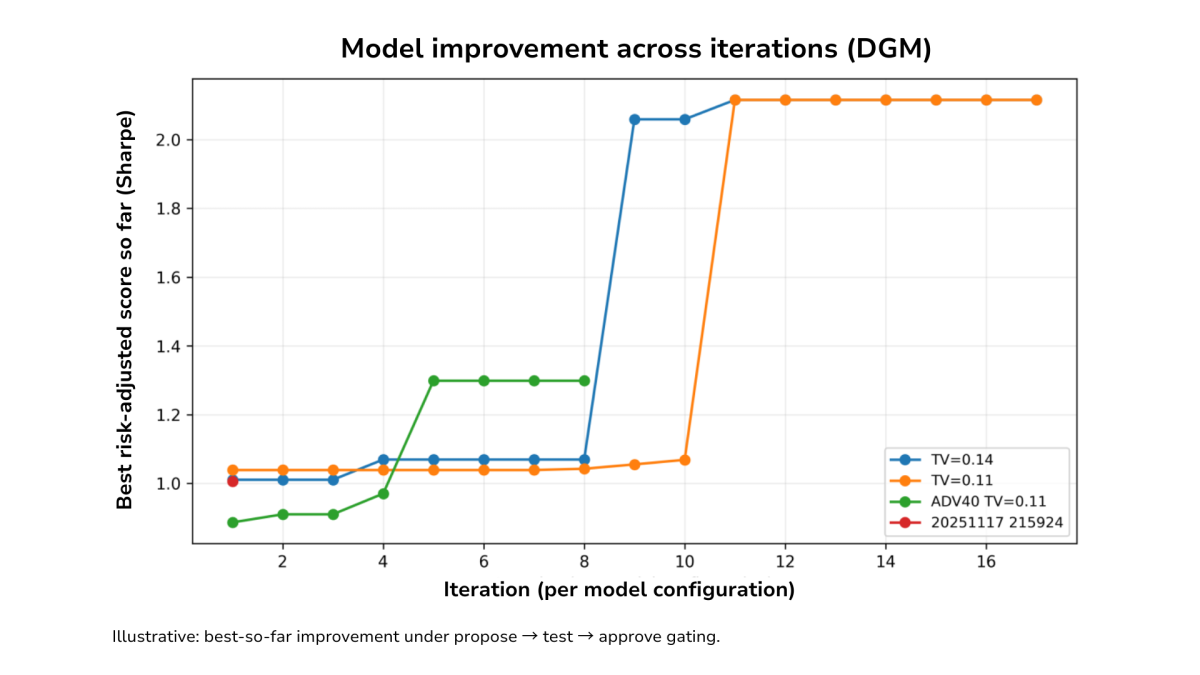
Figure 3: Controlled model improvement over iterations (illustrative)
The system proposes candidate model configurations, tests them, updates evidence, and retains the best-so-far risk-adjusted score.
Promotion to the next production version requires explicit human approval (propose → test → approve).
Closing Observation on the Collaboration Process
- AI contributed to technique discovery, implementation support, and iteration speed.
- The human contributed context, prioritisation, and the discipline to reject over-engineering.
- Governance principle: propose, do not impose; authority and accountability remain explicit.
- Core takeaway: a strategic partnership is achievable when roles, tests, and approval gates are designed deliberately.
Implications for Finance Leaders
These are actionable insights for senior finance professionals, drawn from this project.
Accessibility Shift
Techniques once reserved for specialist teams are becoming more accessible due to a combination of: (a) better open-source libraries and cloud services, and (b) LLM-based assistance that accelerates prototyping, integration, and documentation. This does not remove the need for judgment, data discipline, or governance.
Applied to FP&A, the same pattern supports demand forecasting, scenario modelling, and risk sensing, e.g., detecting operating states and switching forecast drivers; evolving driver models under version control.
Governance Principles
- Maintain manual approval gates for decisions with material consequences.
- Use versioning and rollback; document tests and acceptance criteria.
- Governance enables scale; it does not limit value.
Cultural Requirement
Leaders must learn to brief AI effectively, challenge suggestions, and override when judgment matters. Treat early projects as training in the collaboration process, not just a means of producing outputs.
Practical Starting Point
- Start with a bounded planning problem and a clear definition of success.
- Run propose → test → approve cycles with explicit checks.
- Document what works: prompts, review process, controls, and governance structures.
Possible Failure Modes (and How to Avoid Them)
Here is a set of possible weaknesses and their remedies, drafted with AI assistance and then edited for practicality and governance.
Chasing the wrong “win”
What happens: the AI improves one metric (for example, forecast accuracy) but makes the model jumpy, opaque, or hard to run in the real planning cycle.
Fix: agree upfront what “better” means (e.g., accuracy, stability and explainability), and only accept changes that meet those criteria.Models quietly go stale
What happens: the world changes (new pricing, new channel mix, supply shocks) and performance degrades without anyone noticing.
Fix: monitor forecast error and key drivers; trigger alerts and scheduled re-checks.Missing sudden shocks because the model is “smoothed” too much
What happens: smoothing reduces noise, but it can also blunt real turning points (a COVID-style shock).
Fix: tune smoothing so it does not hide rapid shifts, and keep a simple “shock alarm” that flags abrupt moves even if the main model stays calm.People resist it because it feels like a threat
What happens: teams ignore the system, block it, or let it run ungoverned out of frustration.
Fix: make roles explicit (AI proposes, humans decide), and reward safe, well-controlled experimentation rather than punishing it.Improving the model until it only works on the past
What happens: repeated tweaking produces something that looks great in hindsight but fails in the next quarter.
Fix: test changes on data the model has not seen, require meaningful improvement before promotion, and add independent review for anything material.
Closing
AI as a strategic partner is about the amplification of human judgement, not its replacement. Trust is earned through demonstrated value and maintained through governance.
CFO opportunity: design the partnership deliberately, rather than letting it be shaped by vendors or accidents.
The full text is available for registered users. Please register to view the rest of the article.
Related articles


In this article, Juniper Networks shares two practical GenAI use cases in Finance that redefine finance...

In this article, explore how Digital Twin FP&A unlocks smarter budgeting, real-time forecasting, and collaborative financial...

In this article, the author explores how AI-driven tools are shifting FP&A from manual processes to...
+
Subscribe to
FP&A Trends Digest
We will regularly update you on the latest trends and developments in FP&A. Take the opportunity to have articles written by finance thought leaders delivered directly to your inbox; watch compelling webinars; connect with like-minded professionals; and become a part of our global community.