

Agentic AI is reshaping FP&A by automating repeatable finance workflows while raising new questions about governance...

Who's in Charge? Governance, Trust, and the Human-in-the-Loop in AI Finance — Part 2 of 2
July 16, 2026

In Part 1, we explored how agentic AI, systems that don't just answer questions but take autonomous action, is beginning to reshape the FP&A function. Continuous close, real-time scenario planning, auto-generated variance commentary: the productivity case is compelling.
But capability without accountability is risk wearing a suit.
This second part tackles the harder question: when AI agents become active participants in your financial processes, how do you maintain control, ensure auditability, and decide where human judgment must remain in the loop?
The Accountability Gap
Let’s start by addressing the elephant in the room that you won’t see in any agentic AI sales pitch deck: agentic systems create accountability gaps that traditional finance governance wasn't designed to handle.
Consider this, for example: an AI agent tasked with managing working capital identifies a pattern in late payments from a mid-tier customer and autonomously tightens its credit terms. It's acting within its parameters. The logic is sound. But the account manager had context the agent didn't, that the customer is in the middle of a contract renewal conversation worth three times the at-risk receivable.
Here is another example: Current board reports, financials, and commentary are automated by AI and communicated to the CEO in advance. One of the highlights of the current quarter is the acquisition of a regional competitor, which is almost finalised. Financials are in; however, off-balance-sheet financing has not yet been entered. AI generates commentary with flashing red signs due to unforeseen liquidity declines, prompting the CEO to call the executive team and board members immediately. The agent performed as expected; however, the missing piece caused a loss of trust in people and the system, which might be very hard to repair.
The agent wasn't wrong in looking at it with limited context, but overall, it was a bad call. And in finance, being incomplete at scale can be expensive.
This isn't an argument against agentic AI. It's an argument for designing the human-in-the-loop and appropriate guardrails before deployment, not after something goes sideways.
A Framework for Trust: The Three Layers
Leading organisations thinking carefully about AI governance in finance are adopting a layered model of autonomy:
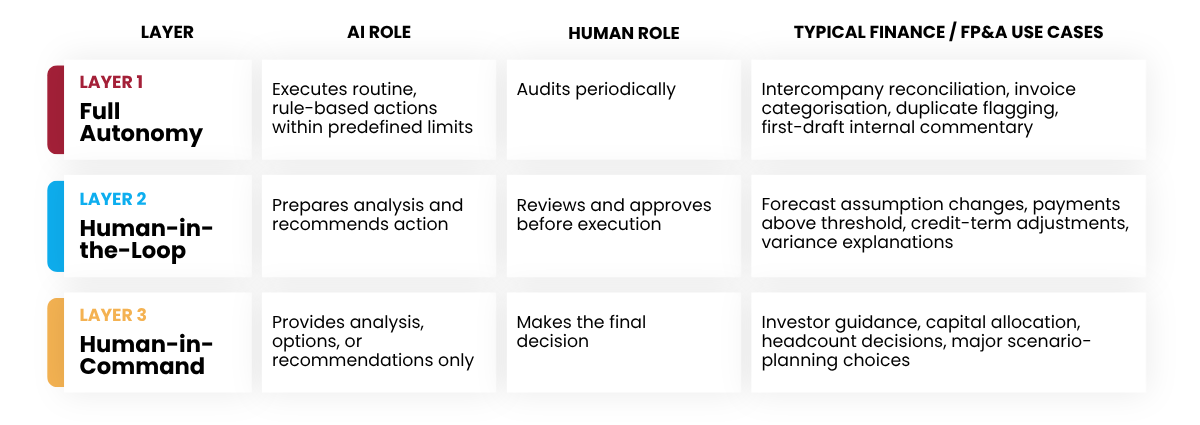
Figure 1. Three Layers of AI Governance in Finance
The goal isn't to keep AI confined to Layer 1 forever. It's to be intentional and explicit about which layer each workflow belongs in and to revisit those assignments as trust is established and validated.
Auditability: The Non-Negotiable
The finance world operates under regulatory requirements, audit trails, and fiduciary duties. That means as the form and design of work changes, it also needs to be explainable.
Every consequential action an AI agent takes should produce a log that answers four questions:
What action was taken?
Why - what data and reasoning led to it?
Who authorised it (human, or defined policy)?
What was the downstream effect?
This isn't just a nice-to-have. As AI governance regulations accelerate, such as the EU AI Act, which classifies certain financial AI applications as high-risk, requiring human oversight and documentation, auditability will become a compliance requirement, not just a best practice.
Practically, this means finance leaders should be asking vendors hard questions: Can you show me a decision log? Can your system explain, in plain language, why it took a specific action? What happens when it's wrong, and how do we trace it?
The Talent Question Nobody Wants to Ask
There's a big implication of agentic finance that also needs to be considered: if agents handle many tasks such as reconciliation, variance commentary, and routine forecasting, what does the FP&A analyst actually do?
The honest answer is that some transactional roles do shrink. But the demand for AI-savvy finance professionals, people who can design agent workflows, interpret AI outputs critically, ask better questions, and communicate insight to business partners, is growing faster than the supply.
McKinsey’s 2025 article “How finance teams are putting AI to work today” [1] found that finance teams using AI spend 20–30% less time crunching data, with the saved time redirected toward business partnering and strategy execution. The analysts who thrived were those who moved from producing information to interpreting and challenging it.
The FP&A professional of the next decade is not competing with AI. They are deciding what AI should be trusted to do, and hold it accountable when it falls short.
Where to Start
For finance leaders who want to move thoughtfully rather than reactively, three practical starting points:
Map your workflows by layer. Before deploying any agentic tool, explicitly categorise each workflow: full autonomy, human-in-the-loop, or human-in-command. Make this a cross-functional conversation with finance, legal, IT, Operations, and internal audit, who should all have a seat at the table.
Demand auditability as a procurement criterion. When evaluating AI finance tools, auditability and explainability should be weighted alongside capability. A system that can't show its work is a liability, regardless of how impressive the demo looks.
Invest in AI fluency, not just AI tools. The highest-leverage thing a finance leader can do right now is develop the team's capacity to work with AI critically, understanding its limitations, interrogating its outputs, and knowing when to override it. This is an investment in training and culture, not just in software.
The Bigger Picture
Agentic AI in finance isn't just a modern marvel for boosting productivity; it's also a governance challenge that has yet to be fully understood.
The organisations that will get the most value from it and take on the least risk are the ones that treat human oversight not as a bottleneck to automate away, but as a design principle to embed from the start.
Source:
McKinsey’s 2025 article “How finance teams are putting AI to work today” https://www.mckinsey.com/capabilities/strategy-and-corporate-finance/our-insights/how-finance-teams-are-putting-ai-to-work-today
The full text is available for registered users. Please register to view the rest of the article.
Related articles

FP&A Agent Managers will become essential as AI agents move from task automation into forecasting, scenario...

AI in FP&A creates value when earlier analytical signals are connected to governance, ownership, escalation, and...

In this article, the author examines how FP&A teams can implement trustworthy agentic AI by matching...

In this article, the author explains how AI in FP&A can evolve from automation to a...

FP&A leaders must redesign talent pipelines before AI automates the early-career tasks where finance judgement was...
+
Subscribe to
FP&A Trends Digest

We will regularly update you on the latest trends and developments in FP&A. Take the opportunity to have articles written by finance thought leaders delivered directly to your inbox; watch compelling webinars; connect with like-minded professionals; and become a part of our global community.