

In this article, we summarise key insights from the latest FP&A Trends webinar on how finance...

Future of Finance: What Agentic AI Means for Finance — Part 1 of 2
July 14, 2026

You probably have heard about AI agents by now; there's a version that answers your questions, and then there's a version that doesn't wait to be asked.
Most finance teams are still getting comfortable with the first kind, AI that summarises reports, drafts variance commentary, or builds a forecast from historical data. But what's emerging at the frontier of enterprise AI is something categorically different: agentic AI, systems that don't just respond to prompts but pursue goals, take actions, and operate across tools with minimal human intervention.
For FP&A professionals, this isn't a distant future; it is arriving faster than most finance functions are prepared for.
What Does "Agentic" Actually Mean?
The term gets used a lot, so it's important to define and understand it.
An AI agent is a system that can:
Gather from its environment (read data, emails, dashboards, ERP outputs)
Plan a sequence of steps to achieve a goal
Act by executing those steps using tools like APIs, spreadsheets, or databases
Iterate adjusting based on its findings
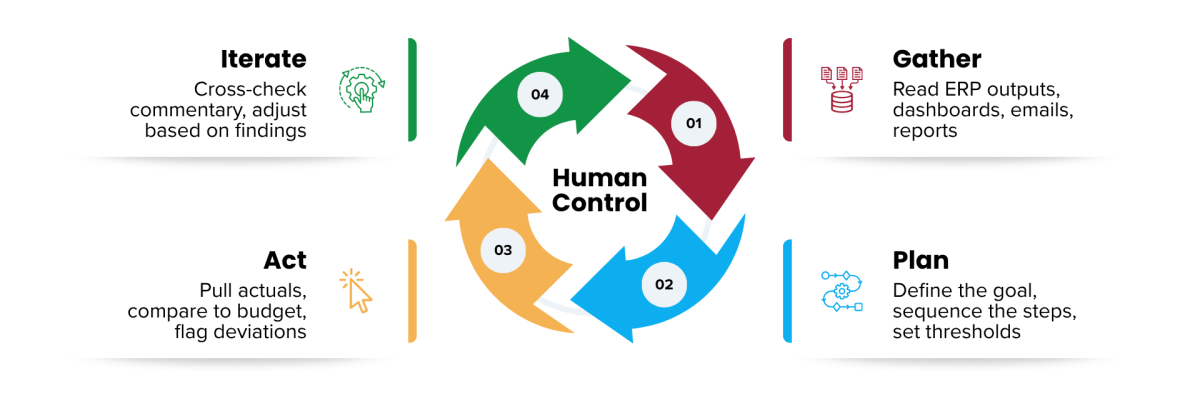
Figure 1. The Agentic AI Loop in Finance
If you compare that to a standard large language model (LLM) like ChatGPT or Copilot in its basic form: you prompt it, it responds, the loop ends. An agent keeps going. It might be given a goal, for example, "Prepare the month-end variance report for the EMEA region, flag anything above 10% deviation, and draft an explanation for the CFO" and then work through a chain of steps autonomously: pulling actuals from the ERP, comparing to budget, identifying variances, cross-referencing prior period commentary, and producing a structured output.
Why FP&A Is a Natural Fit
Finance, for the most part, is built on repeatable processes with clear success criteria. Month-end close follows a sequence. Variance analysis has rules. A rolling forecast has inputs and outputs that don't change from cycle to cycle. These are exactly the kinds of structured, goal-oriented workflows that AI agents are designed to handle.
According to the 2026 FP&A Trends Survey [1], 47% of FP&A time is now spent on data collection and validation, which is the highest figure in five years. That is exactly the type of work that Agentic AI thrives in: high-effort, low-judgment, and repetitive work.
Early deployments are already showing what's possible. Established Finance software players are utilising their stockpiles of data and existing Machine Learning models to build their own agents within their ecosystems. NVIDIA’s 2026 State of AI in Financial Services report [2] found that 42% of respondents are already using or assessing agentic AI, especially for internal process optimisation, task orchestration, and regulatory compliance or risk monitoring. At the provider level, BlackLine [3] has announced agentic AI capabilities across record-to-report and invoice-to-cash, including anomaly detection, automated commentary, variance explanations, AR payment forecasting, and remittance processing.
Three Agentic Workflows Worth Watching
1. Continuous Close
Traditional month-end close is a recurring, tight deadline, high-stress period of reconciliation and reporting. Agents make the close continuous: reconciliations happen in real time, exceptions are flagged immediately, and by the time the calendar hits month-end, most of the work is already done.
2. Narrative Generation at Scale
Variance commentary is one of the most time-consuming and sometimes not the most insightful parts of the FP&A cycle. Agents can now generate first-draft commentary that is contextually aware: they know what the budget assumption was, what macro conditions changed, and what the business unit head said in last week's QBR. The analyst reviews and refines rather than writes from scratch.
3. Scenario Planning on Demand
Rather than running three fixed scenarios (base, upside, downside), agentic systems can run continuous scenario modelling, updating assumptions dynamically as new data arrives. For example, interest rate changes, FX moves, sales pipeline shifts and surfacing the scenarios most relevant to current conditions.
Even though the job functions addressed are not new, these agents will only improve with time, which will make way for mass adoption. At the end, these agents give the FP&A teams real time visibility and insights, making them ever more relevant to the decision makers.
The Accountability Question Underneath the Capability
What makes agentic AI genuinely thought-provoking for finance leaders is that it doesn't just change how work gets done; it might change who or what is accountable for it.
When an agent books a journal entry, flags a vendor for review, or adjusts a forecast assumption, the action is real. The downstream effects are real. But the judgment that produced it was not a human's.
This is manageable, with the right governance frameworks. But most finance functions haven't built them yet.
That's the subject of Part 2: how leading organisations are designing human-in-the-loop controls, auditability standards, and trust frameworks for a world where AI agents are active participants in the financial close.
Next: "Who's in Charge? Governance, Trust, and the Human-in-the-Loop in AI Finance"
Sources:
1. 2026 FP&A Trends Survey: https://fpa-trends.com/fp-research/2026-fpa-trends-survey-readiness-gap-how-al-testing-fpas-foundations
2. NVIDIA, State of AI in Financial Services: https://www.nvidia.com/en-us/industries/finance/ai-financial-services-report/
3. BlackLine, BlackLine Expands Agentic AI Capabilities to Accelerate Future-Ready Financial Operations: https://www.blackline.com/about/press-releases/2025/blackline-expands-agentic-ai-capabilities-to-accelerate-future-ready-financial-operations/
The full text is available for registered users. Please register to view the rest of the article.
Related articles

In this article, the author explains why agentic AI adoption in FP&A depends less on technology...

In this article, the author examines how FP&A teams can implement trustworthy agentic AI by matching...

AI in FP&A creates value when earlier analytical signals are connected to governance, ownership, escalation, and...

In this article, the authors outline a structured AI maturity model for finance, showing how organisations...

AI in FP&A creates real value only when finance redesigns its operating model around governed data...
+
Subscribe to
FP&A Trends Digest

We will regularly update you on the latest trends and developments in FP&A. Take the opportunity to have articles written by finance thought leaders delivered directly to your inbox; watch compelling webinars; connect with like-minded professionals; and become a part of our global community.