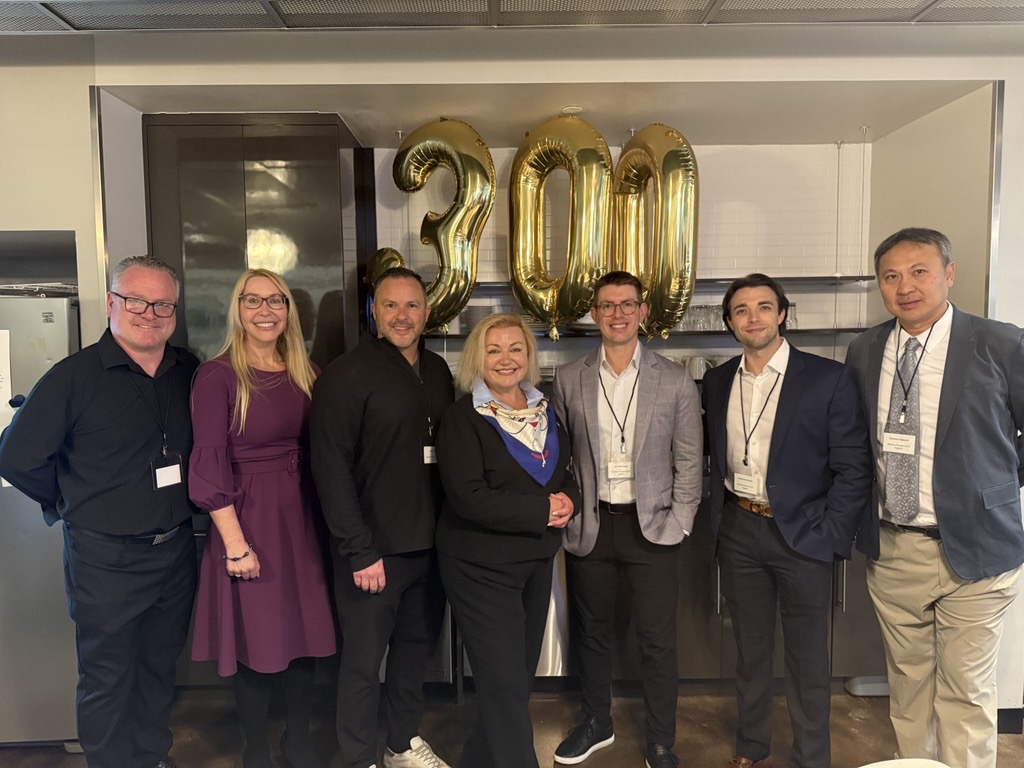

The Seattle FP&A Board met on March 19 for a session focused on Dynamic Shift: Mastering Predictive Planning & Forecasting. This event was particularly significant for us, as it marked the 300th International FP&A Board meeting globally — an important milestone in the development of the global FP&A community.
Hosted at Redmond Center Regus, the event brought together senior finance professionals for an open and practical exchange on how to strengthen planning agility, enhance forecasting capabilities, and leverage AI-driven insights in today’s increasingly uncertain environment. The session was facilitated by Larysa Melnychuk, Founder and CEO of the International FP&A Board and FP&A Trends Group.
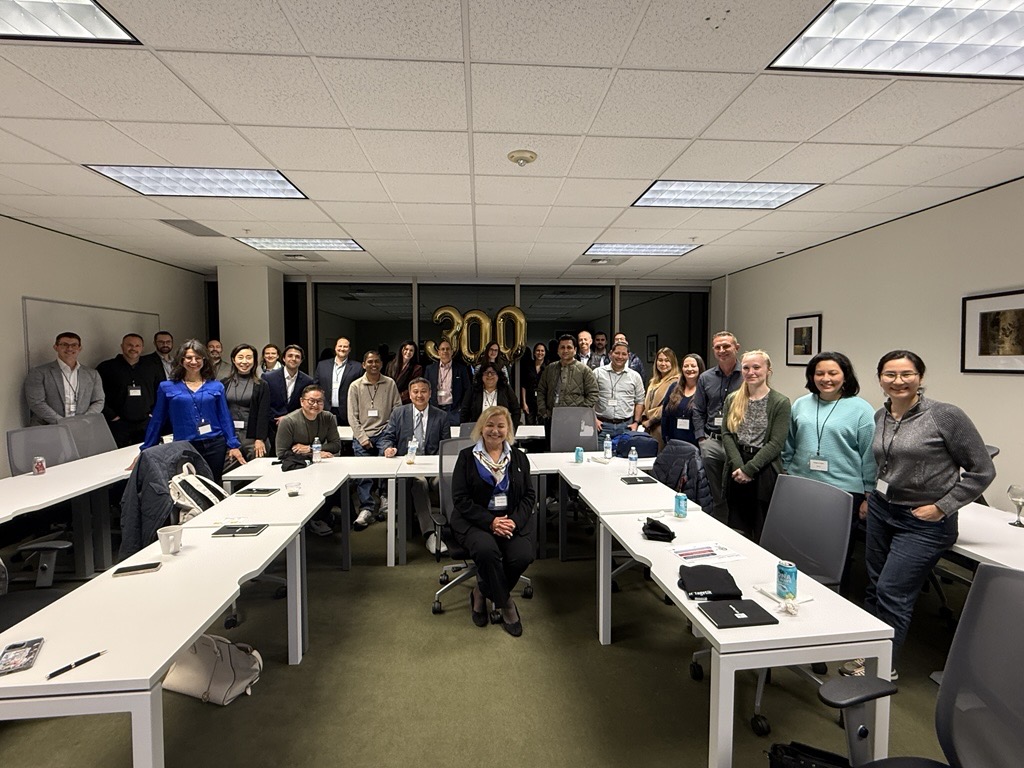
We would like to sincerely thank CCH Tagetik, the event sponsor, as well as IWG and Seattle Search Group, our partners, for their continued support and contribution to making this session possible.
Opening Reflections from Participants
To open the discussion, participants were asked:
“In one word, what is the biggest impact Predictive Planning & Forecasting could have on your FP&A?”
The responses captured a range of expectations, including readiness, effectiveness, modernisation, speed, accuracy, efficiency, foresight, decision support, and capacity.
These reflections are broadly consistent with insights from other FP&A Board chapters, where themes such as speed, accuracy, and efficiency also feature prominently.
A Structural Shift: From Planning Cycles to Continuous Adaptation
At the core of the presentation was the transition from traditional planning — structured around fixed cycles and historical data — to a continuous, adaptive approach driven by real-time insights.
Traditional FP&A models, often fragmented and Excel-centric, were designed for relatively stable environments. However, as highlighted during the session, this model is no longer sufficient. Predictive FP&A introduces integrated data, driver-based logic, and on-demand collaboration, enabling organisations to respond dynamically rather than react retrospectively.
This shift redefines FP&A’s role from monitoring performance to actively shaping future outcomes.
The Agility Gap in FP&A
The concept of Predictability Span highlighted a key structural challenge: the timeframe within which forecasts remain reliable is shrinking. Beyond this horizon, uncertainty increases and planning must shift from a single forecast to managing multiple scenarios.
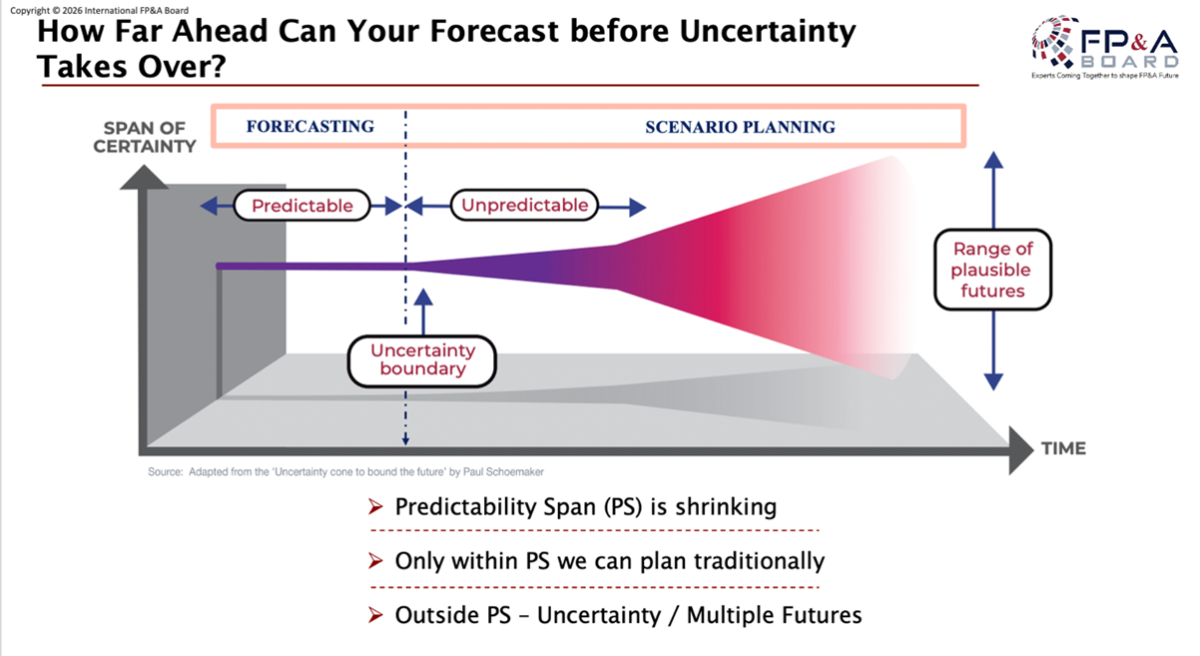
Figure 1
This reinforces the need for continuous, scenario-based planning rather than periodic forecasting cycles.
Despite this need, the data shows a clear capability gap. Only 18% of organisations can run scenarios within one day, while 82% are too slow or unable to do so.
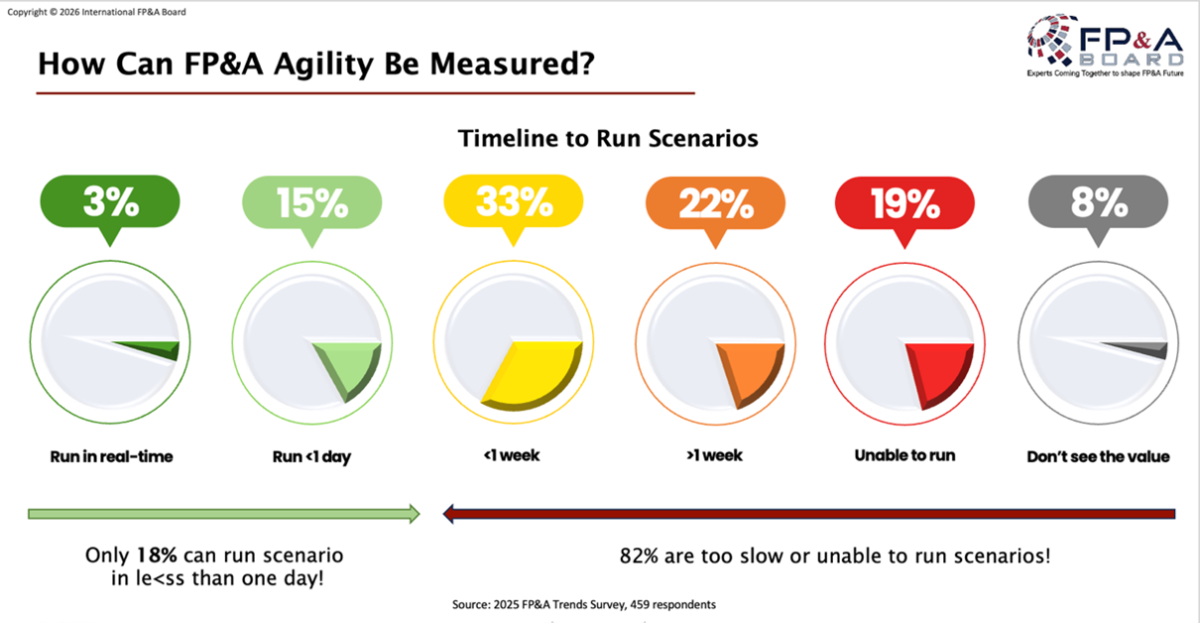
Figure 2
At the same time, almost 46% of FP&A time is spent on data collection and validation, limiting the ability to generate insights and support decisions. This gap between ambition and execution remains one of the most critical challenges for FP&A.
What does it actually take to build a more agile FP&A function in practice?
The Agile FP&A Ecosystem provided a useful lens, bringing together the interconnected elements
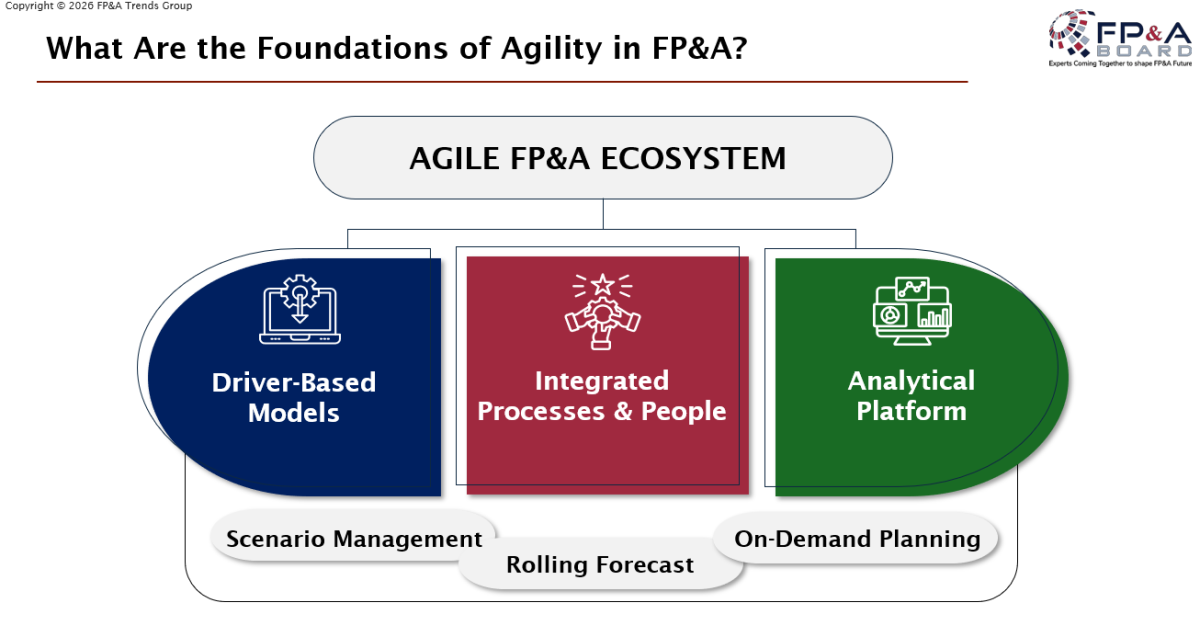
Figure 3
What stood out in the discussion was that these elements cannot be developed in isolation. Participants emphasised that agility comes from how well these components work together, rather than from any single tool or initiative.
Driver-based planning is one of a foundational element of predictive FP&A. Rather than relying on static assumptions, organisations are encouraged to identify the key business drivers that explain the majority of performance outcomes, often following the Pareto principle.
However, the 2025 FP&A Trends Survey shows that only 17% of organisations fully use driver-based models, while 40% rely on partially calculated approaches, and 12% do not use them at all. This highlights a clear opportunity to improve how financial and operational drivers are linked in forecasting.
Building on driver-based models, the discussion turned to how AI/ML enhances Predictive Planning & Forecasting outcomes.
The data shared during the session clearly showed that organisations using AI/ML outperform others across several dimensions.
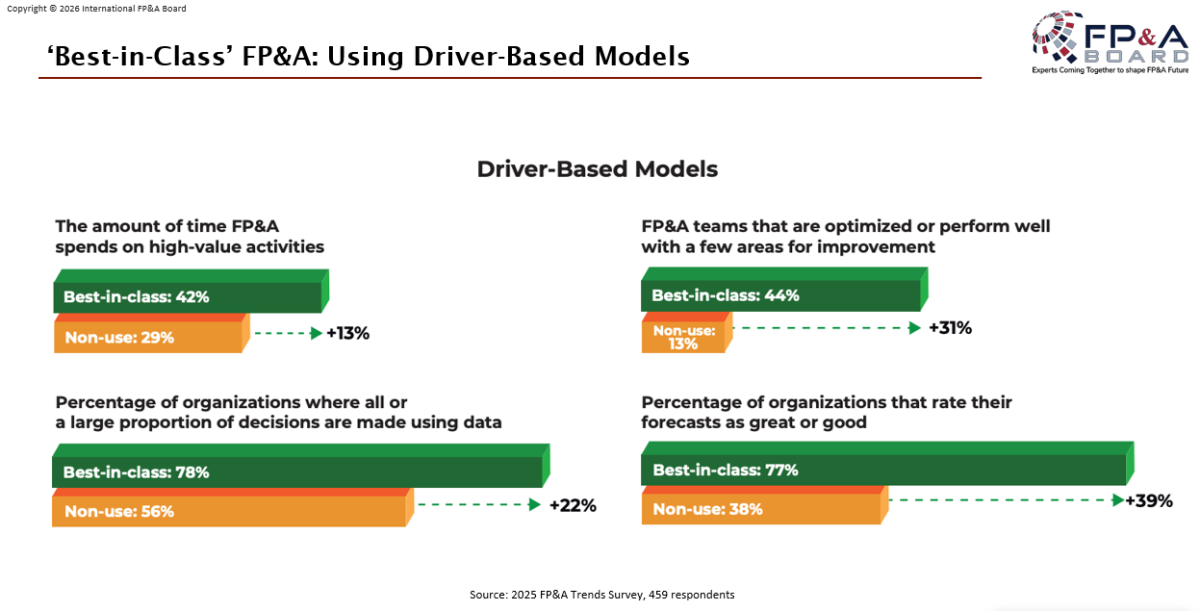
Figure 4
This highlights that AI/ML is not only a technological enhancement, but also a driver of better decision-making quality and forecasting effectiveness.
At the same time, adoption remains uneven. While best-in-class performance is already visible, 2025 FP&A Trends Survey shows that only a small proportion of organisations are actively using AI/ML, with many still in early stages or without clear plans for adoption.
This broader picture was reflected in the Seattle discussion. When participants were asked how AI is currently used within their FP&A functions, the responses showed a mixed landscape.
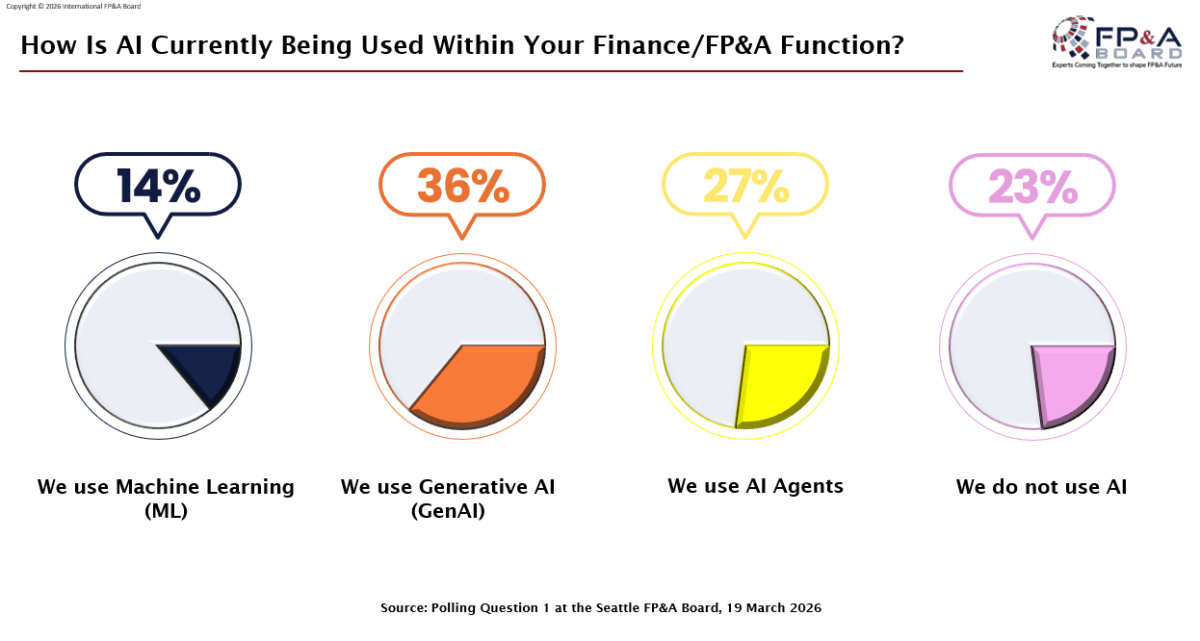
Figure 5
What Are the Most Critical Factors for PPF Implementation?
Building on this, the conversation turned to what organisations need to put in place to successfully implement Predictive Planning & Forecasting. Five critical dimensions were highlighted:
Data – moving from fragmented to integrated, reliable, and real-time information
Models – evolving toward connected, driver-based, powered by Predictive Analytics
Processes – shifting from disconnected, calendar-based cycles to harmonised top-down & bottom-up and collaborative planning
Decision-making – becoming faster, more dynamic, and insight-driven
Technology – moving beyond Excel-centric environments to integrated platforms with AI/ML capabilities
These dimensions define what needs to change, but not all organisations are at the same stage of development. To address this, the PPF Maturity Model provides a structured view of progression across five levels, from Basic to Leading, covering the same core areas: data, drivers, models, processes, skills, and technology.
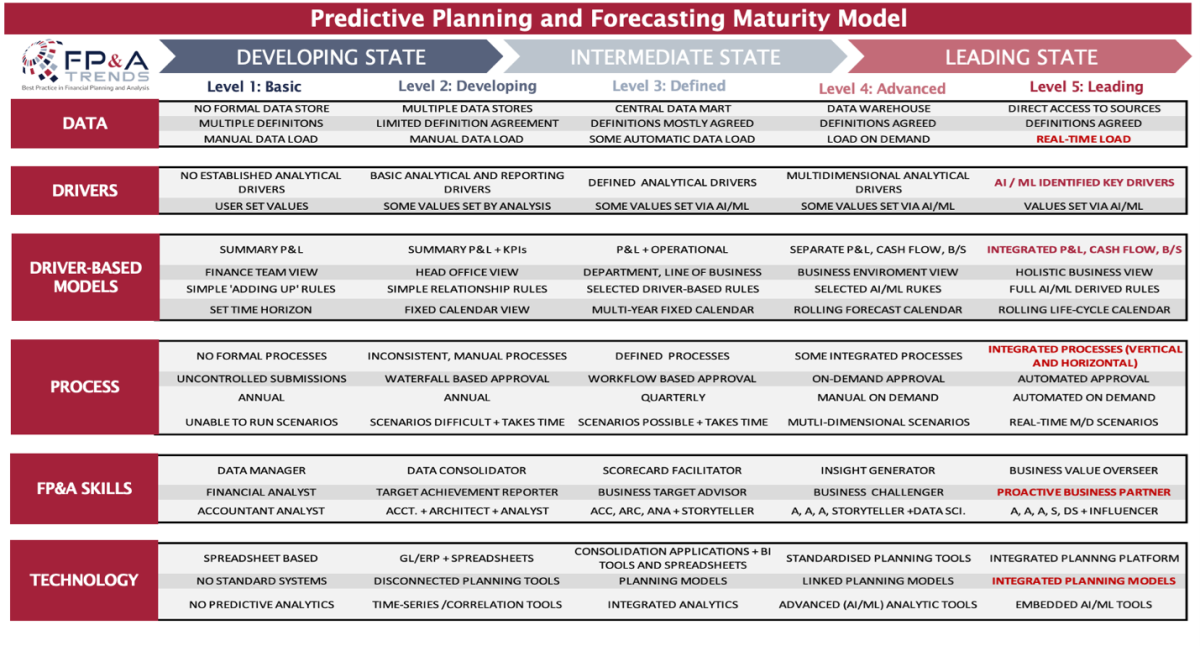
Figure 6
We would like to thank our speakers for their valuable contributions.
Sonia Moscatelli, VP Finance at Expedia Group, shared practical insights in her presentation “Predictive Planning in Matrixed Organizations”, highlighting the challenges and real-life approaches to implementing predictive planning in complex environments.
Dominic Nguyen, Technology Sales Manager at Wolters Kluwer CCH Tagetik, presented “Bringing Agentic AI to Finance”, demonstrating how Agentic AI can support and enhance FP&A processes.
Group Work: From Concepts to Action
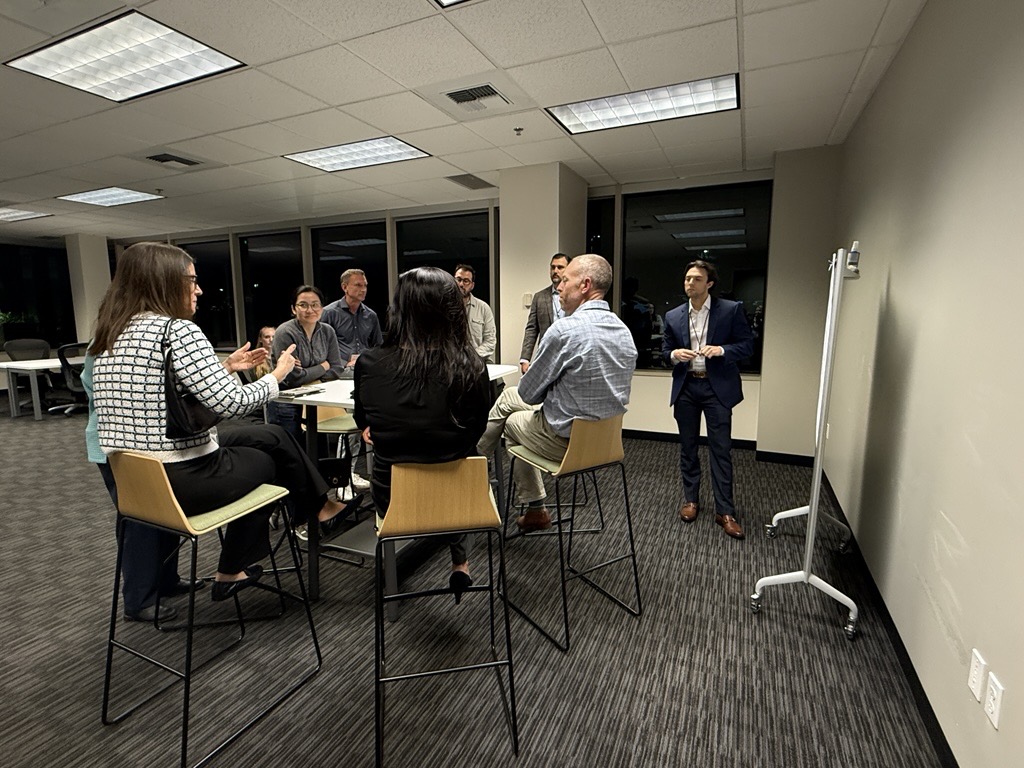
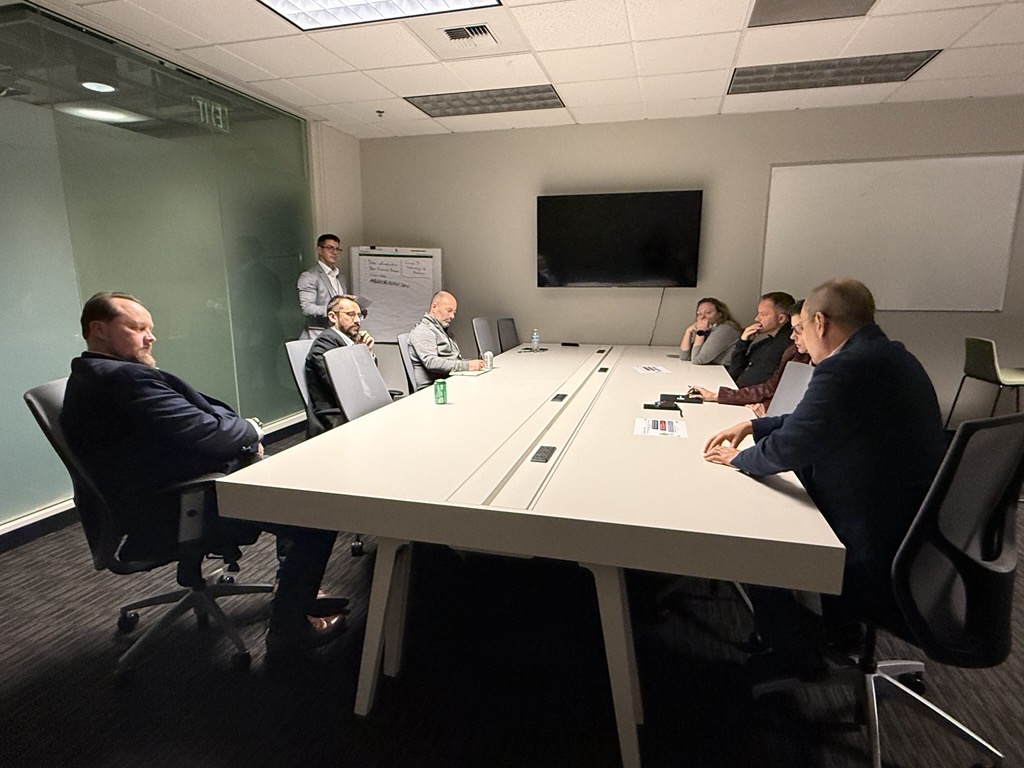
The session concluded with an interactive group exercise, where participants explored the practical steps their organisations need to take to move toward the Leading stage in Predictive Planning & Forecasting.
The discussion was structured around three key areas: driver-based model development, process improvement, and technology & analytics.
Group 1: Dynamic Driver-Based Model Development
Participants outlined a structured and iterative approach to building driver-based models:
- Assess which drivers should be used
- Rank drivers based on impact
- Iterate and refine continuously
- Monitor and validate outputs
- Link analysis to business goals
- Translate insights into actions
- Communicate through storytelling
This sequence highlights that driver-based planning is not a one-time design exercise, but an ongoing cycle linking data, analysis, and decision-making.

Group 2: Process Improvement
The second group focused on strengthening planning processes to enable agility:
- Cross-functional collaboration
- Ensuring Finance has a “seat at the table”
- Alignment on key metrics
- Establishing data guardrails and architecture
- Improving data accuracy
- Gaining buy-in on best practices
- Eliminating bottlenecks
- Leveraging data warehouse connectivity
- Anticipating future needs
These insights reinforce that Predictive Planning & Forecasting requires not only better models, but also stronger alignment, governance, and collaboration across the organisation.
Group 3: Technology and Analytics
The third group highlighted foundational capabilities required to support predictive FP&A:
- Robust data infrastructure
- Inclusion of non-financial drivers
- Clean, accessible, and high-quality data
- Adoption of modern EPM solutions
- Strong validation processes
This reflects the importance of building a reliable and scalable data and technology foundation to enable advanced analytics and forecasting.
What stood out in Seattle is that the focus was not only on frameworks, but on how to operationalise them. The discussion moved beyond “what good looks like” to defining how to get there.
As FP&A continues to evolve, Predictive Planning & Forecasting will increasingly define the function’s ability to support decision-making in uncertain environments. The Seattle session reinforced that success will depend not on individual tools or initiatives, but on the ability to connect all elements into a cohesive, agile FP&A capability.