

This article presents a practical framework for FP&A leaders to drive disciplined internal capital allocation decisions...

Investment Discipline: How FP&A Connects Future Strategy with Past Returns
August 6, 2026

As FP&A began its first stage of transformation a few years ago, a key part of the conversation was around investments. The conversation centred around whether organisations are making investments efficiently and making adequate/ acceptable returns. However, as time has progressed, investment analytics and optimisation have proven difficult to crack, and organisations have scaled back systemic efforts. In this article, we explore some of the challenges, why investment analytics are important, and what can be done to improve the process.
Before looking at the challenges, it is useful to recognise that not all investments are the same. FP&A is often asked to evaluate very different types of spend, each with different time horizons, success measures, and return profiles.
The Types of Investments FP&A Needs to Evaluate
Companies make investments in multiple areas, for example:
Advertising, Marketing and Promotion
New product development and launches
New team hiring and staff additions
Capital investments, including technology
Why Investment Analytics Are Difficult
Figure 1 summarises the most common barriers. Each of these barriers affects FP&A’s ability to compare investments, track outcomes, and use past results to improve future decisions.
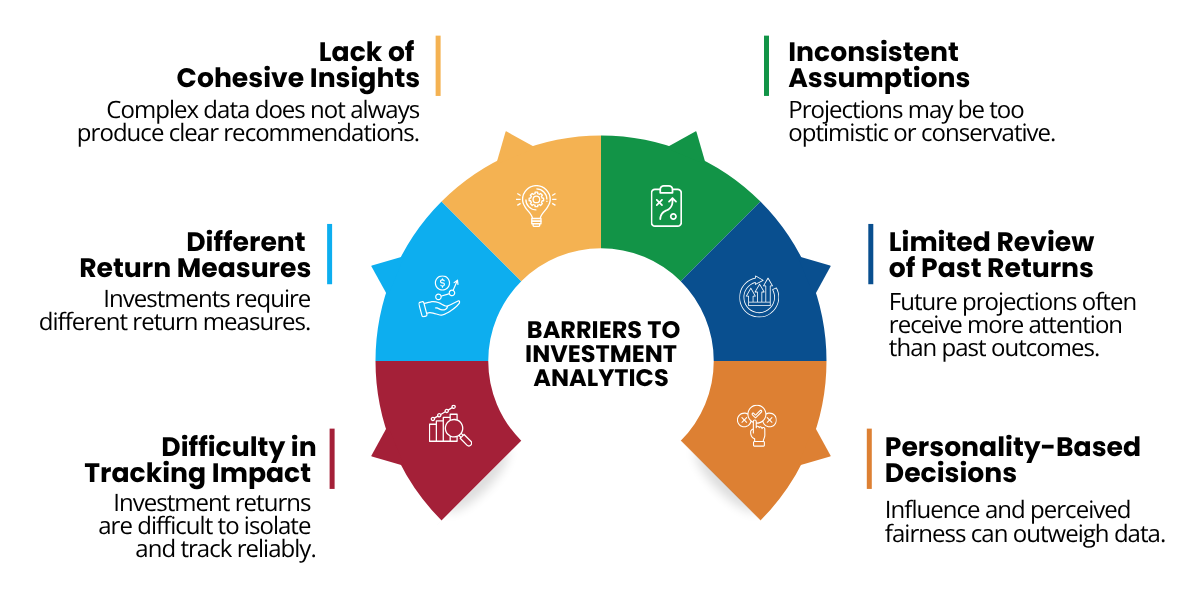
Figure 1. Common Barriers to Investment Analytics
Difficulty in Tracking Impact: This is probably the single biggest challenge in reviewing investment profitability. The work needed to track an investment and its returns isn’t easy or straightforward. For example, it's tough to estimate the impact an advertising campaign has on sales/revenues. It is somewhat easier to track returns from new products and new teams, but that information is typically recorded outside the regular financial systems for reporting and planning. Some of the information needed to conduct this analysis is available only at the granular data level and might not support a comprehensive profitability view. For example, the data may show that a deposit is paying 3% and earning 4% from transfer pricing, but might not necessarily attribute costs correctly – did the deposit originate from a marketing campaign and its associated costs, or from a branch and its associated costs?
Different Measurement Methods: for example, some investments require capital/capex, while others are opex-heavy. So how do you compare the returns of an investment that requires, e.g., a $1mm capital investment vs an investment that requires a $1mm opex investment? In banking, for example, if you were to invest in either capex / opex that generated $100mm in loans/deposits, the return calculations are not comparable. In certain cases, payback may be more appropriate, while in other cases, NPV/IRR/Return on capital may be more appropriate.
Lack of Cohesive Insights: At the end of the day, any analytics run needs to tell a story and provide recommendations. Sometimes the underlying data can be difficult to manage, and teams struggle to use it efficiently to generate insights and recommendations.
Inconsistent Assumptions: Typically, future investments are reviewed during a Budget/Strategic planning exercise. One of the challenges with forecasting future investments, especially in larger organisations, is whether the assumptions are consistent across the organisation and whether they are too optimistic in some cases/ too conservative in others.
Limited Review of Past Returns: The number of people working on investment analytics and returns is limited. Teams often struggle with allocating time between future returns and reviewing past investments. My view is that reviewing past returns helps inform future investments by providing a basis for developing confidence in projections.
Personality-Based Decisions: In most organisations, there is a bias towards fairness across different parts of the organisation, or towards investment decisions driven by the most influential people and what they think. This, unfortunately, tends to discourage FP&A teams who put significant effort towards generating analytics and data and are overruled by other factors.
Why Investment Analytics Matter
Making decisions based on hard data: Analysing investments builds an inherent discipline within the organisation to look at numbers, returns and data while making investment decisions.
Using past results to inform the future: One of the best outcomes of analysing past results is that they can inform future decisions and analytics. They help FP&A evaluate which investments are most likely to succeed and can act as a tie-breaker when choosing between competing investment options.
How FP&A Can Make Investment Analytics More Impactful
The following steps can help FP&A make investment analytics more practical and impactful:
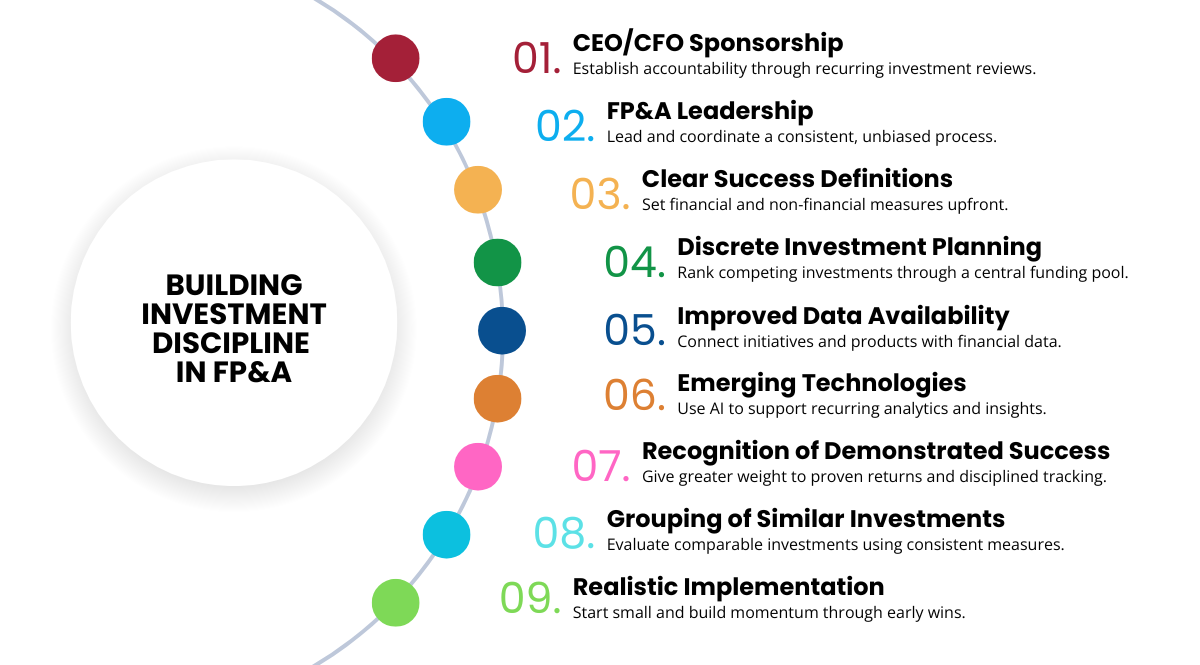
Figure 2. Building Investment Discipline in FP&A
CEO/CFO Sponsorship: This is the single most important step to make investment analytics impactful. It has to start with the CEO/CFO, and they have to question business leaders about metrics and outcomes. The CFO has to be convinced and then s/he has to get the CEO's buy-in. The second step is to ideally have a recurring forum where past investment results are analysed and future investments are optimised and prioritised. Using the results of past investments to evaluate future opportunities will go a long way in pushing data and initiative ownership across the organisation. Holding leaders accountable in these forums for commitments made on initiatives and investments will also go a long way in ensuring realistic projections in the future. These forums will also shine a light on inconsistent ways of measuring returns.
FP&A Leadership: FP&A, especially Corporate FP&A, plays a central role in investment evaluation. FP&A needs to take the lead in setting up the process, running it with clear timelines, defining terms clearly, and getting it off the ground. A central team running this ensures a lack of bias between divisions. The FP&A team must be the central hub, running the process and coordinating with the CEO/CFO and LOB leadership.
Clear Success Definitions: When a project or initiative is evaluated for investment, it's key to define what returns and success would look like. Having financial and non-financial indicators, such as Net Promoter Scores, customer satisfaction, and response times, would be a good way to start.
Discrete Investment Planning: An organisation can give business lines targets that assume only a certain level of investments are funded. A central fund can be held in which the remaining investments can be ranked. In one of my past organisations, we used to hold the last 5-10% of investments in a central pool, and the business units that showed the best returns on those investments could access a larger share of investments.
Improved Data Availability: Data has come a long way in the last few years. Most organisations have a data warehouse/data lake where most of the data resides. Once an investment optimisation process takes hold, it could be as simple as having a field that is an initiative number or a product code. Change management during the launch of a new product/ initiative is key to tracking results. Even if not perfect, it's important to start data tracking, as it will, over time, inform data management for future improvements. Linking initiative/product investments to financial data so that the P&L/Balance sheet can be viewed as a collection of multiple initiatives is another elegant solution.
Emerging Technologies: AI advancements have now made it easier to access data and analyse it. A regular data analytics pack using AI can be created much more easily than in the past. AI can also be used to generate automated data analytics and insights.
Recognition of Demonstrated Success: As investment discipline takes hold, a higher score could be given to investments that have been made in the past and have demonstrated financial and strategic success. Similarly, divisions that have shown discipline in tracking past returns and demonstrating success should get a higher score for their investments. This will promote a healthy organisational culture and drive discipline.
Grouping of Similar Investments: Another solution is to group similar investments and evaluate them together. A multi-variable score that takes capital used, payback period, and NPV into account is another way to evaluate investments that differ in nature and returns.
Realistic Implementation: Starting an investment optimisation process is never straightforward and there will be bumps along the way. The organisation must not be discouraged by early challenges and must embed a culture of investment evaluation across the organisation. Start small and deliver small wins. Once momentum builds, more challenging evaluations can be taken on.
Conclusion
While investment optimisation and evaluation have hit roadblocks in the past, it's time to make a fresh attempt at solving this challenge. The first step is for FP&A to lead the process, with clear definitions and success measures. Senior leadership (such as the CEO/CFO) sponsorship and buy-in are the next key steps. A culture of evaluating the success of past and current investments can help inform sharper decisions in the future to drive future capital allocation.
Data and AI enhancements have made the analytics and data compilation much easier than in the past. These should be embraced to build a virtuous cycle of reviewing past investments and using that information to drive future investments. Embedding an investment-optimisation culture is key to driving superior returns for organisations.
The full text is available for registered users. Please register to view the rest of the article.
Related articles

This article shows how FP&A leaders can apply a multi-level investment framework to align strategy, risk...

Discover how FP&A professionals can optimise working capital through actionable strategies, aligned KPIs, and a cash-focused...

In this article, the author outlines how the five essential FP&A team roles can contribute to...

In this article, learn how FP&A teams can turn marginal revenue and cost data into actionable...

In this article, learn how FP&A leaders can use the Growth and Profitability Matrix to balance...
+
Subscribe to
FP&A Trends Digest

We will regularly update you on the latest trends and developments in FP&A. Take the opportunity to have articles written by finance thought leaders delivered directly to your inbox; watch compelling webinars; connect with like-minded professionals; and become a part of our global community.