

In this article, finance professionals learn which AI tools matter most for FP&A, how to use...

20 Practical AI Prompts Every FP&A Professional Should Use — Part 3 of 3
April 2, 2026

This is the final part of a three-part series on getting started with Artificial Intelligence (AI). I am writing this for FP&A and finance professionals at all levels because I am blown away, first, by the incredible technology we now have available, and second, by how little my fellow finance professionals are using it.
So far, we have introduced AI in Part 1, how it works, and how to prompt it in Part 2.
In this final part, we now provide some examples of how I have used LLMs for FP&A tasks.
3.1. Practical Examples for FP&A
According to the FP&A Trends Survey, 46% of professionals see automation as the biggest opportunity. Predictive forecasting sits slightly lower, at 34%. Here are 20 examples covering both of the above as well as variance analysis, board reporting, and stakeholder communication.
These are not perfect, but I wanted to share examples of what I use. I have used a variety of frameworks/styles. You should adapt them to your context and the LLM model that you are using. By experimenting, you will start to see differences in outputs as you tweak the way you write your prompt.
Variance Analysis & Monthly Close
These are the easiest starting points, and they are tasks we all spend too much time on.
Example 1: Revenue Variance Commentary
Prompt:
Context: Our Q3 revenue was 8% below budget. Drivers: Enterprise (-12% due to two delayed deals), Mid-market (+3% on strong conversion), and SMB (-15% on churn). Objective: Draft a three-paragraph board-level narrative. Reasoning: Analyse the interplay between these segments. Specifically, think through how the enterprise delays impact our Q4 pipeline and if the Mid-market strength is scalable enough to offset SMB churn. Evaluation: Review your draft. Does it sound too defensive? Ensure it highlights the proactive steps we are taking to mitigate further SMB churn. |
Example 2: Cost Variance Explanation
Prompt:
| Act as an FP&A manager, explaining variances to department heads (R). Marketing spend was 23% over budget this quarter. The overspend breaks down as: paid acquisition +£X (approved mid-quarter to capture opportunity), events +£Y (unbudgeted trade show), headcount +£Z (earlier-than-planned hire) (C). Write an explanation that acknowledges the overspend while providing context on ROI where applicable (T). Email format, 200 words maximum, constructive tone (F). |
Example 3: Variance Bridge Narrative
Prompt:
| I have an EBITDA bridge showing: Budget £Xm → Volume impact -£A → Price/mix +£B → Cost savings +£C → FX -£D → Actual £Ym. Write a narrative that walks through each bridge component in plain English, suitable for a CFO who wants to understand the story quickly. One sentence per component, then a concluding insight. |
Forecasting & Planning
The 2025 FP&A Trends Survey reveals that 63% of organisations struggle to predict beyond six months and only 17% use fully driver-based models. AI won't fix your data quality or model structure. However, it can help you document assumptions, stress-test logic, and communicate forecasts more effectively.
Example 4: Forecast Assumptions Documentation
Prompt:
| Act as an FP&A director, preparing forecast documentation (R). We're building the 2026 annual plan for a B2B software company with these characteristics: current ARR growth 25%, gross margin 78%, sales cycle 90 days, NRR 105% (C). Create a structured list of key assumptions I should document for revenue, headcount, and operating expenses (T). Format as a checklist with a brief rationale for why each assumption matters (F). |
Example 5: Rolling Forecast Narrative
Prompt:
| Our rolling forecast shows full-year revenue now expected at index 94 vs the original budget of 100. Q1-Q2 actual was 96; Q3-Q4 forecast is 92. The primary driver is the slower-than-expected conversion of the enterprise pipeline. Write a one-paragraph executive summary explaining the forecast change and its implications for the full year, suitable for the weekly leadership update. |
Example 6: Headcount Planning Framework
Prompt:
| Act as an FP&A partner supporting HR (R). We need to build a headcount planning model for a 200-person company expecting 30% revenue growth (C). What metrics and ratios should we track to ensure headcount scales appropriately? Include productivity metrics, span of control considerations, and leading indicators (T). Present as a framework with 3-4 metrics per functional area (Sales, Engineering, G&A) (F). |
Board & Executive Reporting
Once we have done the analysis and revised our forecasts, we need to present them to the leadership group.
Here are some examples of what I do next:
Example 7: Executive Summary for Board Pack
Prompt:
<system_instruction> <context> <task> <constraints> <bridge> |
Example 8: KPI Dashboard Commentary
Prompt:
| I have a SaaS metrics dashboard showing: ARR growth of 22% (target 30%), Net Revenue Retention of 103% (target 110%), CAC Payback of 18 months (target 15), and Gross Margin of 76% (target 78%). Write a brief commentary for each metric: one sentence on performance; one sentence on the 'so what'. Format ready to paste each chart in PowerPoint below. |
Example 9: Investor Update Draft
Prompt:
| Act as a CFO at a Series B startup (R). We need to send our quarterly investor update. Performance summary: revenue ahead of plan, burn slightly higher due to accelerated hiring, 18 months runway, key hire made (VP Sales) (C). Draft the financial section of the investor update (T). Three paragraphs: performance vs plan, use of funds, forward outlook. Confident but not promotional. Investors appreciate candour (F). |
Scenario Planning & Sensitivity Analysis
Scenario planning is one of the most powerful capabilities FP&A teams can develop, yet many organisations still struggle to run scenarios quickly and consistently.
According to the FP&A Trends Survey, only 22% of teams can run scenarios within a day, and 21% can't run them at all. AI can help structure your thinking and draft scenario narratives, even if the modelling itself requires your existing tools.
Example 10: Scenario Framework Design (optimised for ChatGPT)
Prompt:
Context: We are a B2B software company with 70% recurring revenue, 200 Objective: Define the assumption framework for all three scenarios. Cover: Reasoning: Before setting the numbers, think through the dependencies between Evaluation: Review the three scenarios. Would a sophisticated investor find |
Why this works: Scenario design is a reasoning-heavy task. The Reasoning step forces ChatGPT to consider the logical relationships between assumptions before building the table, rather than filling in numbers that ‘look right’ independently.
Example 11: Recession Planning (Optimised for Gemini)
Prompt:
Data Source: Our current annual cost structure (indexed, budget base = 100): Action: Create a tiered cost-reduction framework showing which levers to pull Technical Constraints: Answer Style: A table for each tier showing: specific action, estimated |
Why this works: Recession contingency planning is a structured, data-driven exercise. Gemini’s D.A.T.A. framework works well here because the task needs clear data boundaries, a sharp action, and specific technical constraints to avoid generic ‘cut costs’ advice.
Example 12: Sensitivity Analysis Narrative
Prompt:
| I've run sensitivity analysis on our 3-year model. Key findings: EBITDA is most sensitive to gross margin (1% change = £Xm impact), followed by revenue growth (1% = £Ym), then headcount timing (1 month delay = £Zm). Write a paragraph explaining these sensitivities to the board, focusing on which variables we have most control over and where risk management should focus. |
Stakeholder Communication
The FP&A Trends Survey found that only 11% of organisations have fully aligned strategic, financial, and operational planning. Better communication with business partners is essential to closing that gap.
Example 13: Budget Feedback to Department Heads (Optimised for ChatGPT)
Prompt:
Context: I am an FP&A business partner. A department head has submitted a 2027 Objective: Draft an email that pushes back constructively on the budget request Reasoning: Think about the dynamics here. This person believes in their growth Evaluation: Review the draft. Does it acknowledge their ambition genuinely? |
Example 14: Explaining Finance Concepts to Non-Finance Stakeholders
Prompt:
| Act as an FP&A manager who excels at making finance accessible (R). Our Head of Product doesn't understand why we capitalise software development costs and how it affects their P&L (C). Write a brief explanation using an analogy they'd understand - maybe comparing it to how they think about product features (T). Conversational tone, no jargon, under 150 words (F). |
Example 15: Monthly Business Review Prep
Prompt:
| I'm preparing for monthly business reviews with department heads. For each function (Sales, Marketing, Engineering, Customer Success), suggest 3-4 questions I should ask based on their financial performance. The goal is to understand drivers, not interrogate. Questions should uncover insights that help improve forecasting accuracy. |
Modelling & Analysis Support
I feel that the power of AI in financial modelling is criminally understated. These are pure logic problems where AI thrives. I am finding myself increasingly reliant on AI to accelerate and enhance the way I work. As I have progressed in my career, I do not have the time to build these models; I need to spend more time on strategic tasks. This is where AI has really helped me. Not only does it save me time, but it also creates better models than I ever could.
Example 16: Excel Formula Generation
Prompt:
| You are an Excel expert specialising in financial modelling (R). I have a revenue model where Column A is month, Column B is starting ARR, Column C is new business, Column D is expansion, Column E is churn (as negative), and Column F should calculate ending ARR (C). Write a formula for Column F that calculates the ending ARR. Also, write a formula for Column G that calculates month-over-month growth rate (T). Provide only the formulas, assuming row 2 is the first data row (F). |
Example 17: Model Structure Review
Prompt:
| Act as a financial modelling expert (R) I'm building a 3-statement model for a manufacturing company. I have: P&L with revenue build-up by product, balance sheet with working capital assumptions, but I'm struggling with the cash flow statement linkages (C) Walk me through how the three statements should connect, specifically the working capital to cash flow bridge (T) Step-by-step explanation with specific line items (F) |
Example 18: Cohort Analysis Framework
Prompt:
| Act as a SaaS finance expert (R) I want to build a customer cohort analysis to understand revenue retention over time. We have monthly data on customer start dates and their monthly revenue (C) Describe the structure I need: what the rows and columns should represent, how to calculate retention rates, and what visualisations would be most useful for the board (T) Practical guidance I can implement in Excel (F) |
Example 19: Build System Formulae
This comes back to my full circle – here’s how I started with LLMs and the one that got me started. Unfortunately, my first prompt was not very good:
Write a DAX measure for Opening ARR in my Power BI model
It was vague, gave the model very little context about my data set, and forced it to guess everything from table and field names to business logic.
Prompt:
| Act as a Power BI expert specialising in SaaS financial modelling and DAX (R) I am building an ARR Waterfall. I have already loaded my data and created the relationships (C) My fact table is named 'Subscriptions' and contains: [CustomerID], [StartDate], [EndDate], and [ARR_Amount]. My date table is named 'Calendar' and is marked as a date table. "Opening ARR" is defined as the total ARR active on the very last day of the previous period. Write the DAX measure for [Opening ARR]. The formula needs to calculate the total [ARR_Amount] for subscriptions that started before the selected period and ends after the start of the selected period. Please ensure it handles the time intelligence correctly so it works dynamically, whether I view the report by Month or Quarter. (T) Provide the clean DAX code, with comments that explain the logic step by step. (F) |
The above is by no means perfect, but here’s why it works…
The Context - By explicitly naming the tables ('Subscriptions' and 'Calendar') and columns, you prevent the AI from hallucinating generic names like Table1 or [Value]
The Logic - Specifying that Opening ARR = "active on the last day of the previous period" prevents the AI from giving you a simple SAMEPERIODLASTYEAR calculation, which is often wrong for SaaS waterfalls that require precise daily recognition
The Output - Asking for "comments explaining the logic" helps you audit the code. This avoids the ‘black box’. AI can generate formulas that look correct but contain subtle logic errors.
Example 20: FP&A Transformation Roadmap
We’ve all been there. We’ve started in a new team, and the FP&A function is a bit of a mess. There are a lot of obvious things to go after, but where do we start? This is where the FP&A Trends Maturity Model is particularly helpful. It grounds your thoughts and helps you set your aspirations, define your roadmap and prioritise your initiatives.
Disclaimer: I do not know whether it is possible to create a single prompt that gives you the complete answer. I use LLMs as a companion to bounce ideas and refine my approach. After collecting my initial data and analysis on the current state issues, I will upload it and create the following prompt (optimised for Claude):
<background> I am the Head of FP&A at a £500m manufacturing firm, currently in a "Developing" maturity state </background> |
As mentioned above, this will be the first of many ‘chain of thought’ prompts to build and refine your approach. For example, you could then go on to prompt:
| My biggest concern is the team culture. They are excellent at Excel manipulation but uncomfortable with influence and storytelling. Based on the 'People' gap you identified, draft a Training & Upskilling Curriculum for the next 6 months to shift them from 'Data Processors' to 'Finance Business Partners' |
3.2. Research Like a Pro with Perplexity
For FP&A, Perplexity solves a significant problem: getting market data and benchmarks with verifiable sources. Given that only 17% of organisations report good data quality (FP&A Trends Survey), having citable external sources becomes even more important for validating assumptions.
Example: Industry Benchmarking
Prompt:
| What are typical SaaS metrics for Series B companies with ARR between $10M-$30M? Include: revenue growth rate, gross margin, net revenue retention, sales efficiency, and burn multiple. Cite sources - ideally from Bessemer, OpenView, or KeyBanc reports. |
Example: Competitor Analysis
Prompt:
| Summarise the financial performance of [public competitor] over the last four quarters. Include revenue growth, margin trends, and any guidance commentary from earnings calls. Cite the source for each data point. |
Example: Macroeconomic Context
Prompt:
| What are the current consensus forecasts for UK GDP growth, inflation, and interest rates for 2025-2026? Include sources from Bank of England, IMF, or major investment banks. |
Using Deep Research: For comprehensive analysis like market sizing or competitive landscapes, select "Deep Research" mode. It will spend several minutes synthesising multiple sources - perfect for a board presentation context or investment memo preparation.
3.3. Advanced Techniques
Chain-of-Thought for Complex Analysis
Force the AI to show its working - useful for validating logic:
Prompt:
| Walk me through, step by step, how you would calculate the implied valuation multiple from these assumptions. Show your working at each stage. |
Stress-Testing Your Own Work
Prompt:
| I'm presenting this forecast to the board. What are the three most likely questions or challenges they'll raise? How should I prepare to address them? |
Tip – I often ask the LLM to play the role of a McKinsey/ Big4 partner for a robust and external perspective
Alternative Perspectives
Prompt:
| Play devil's advocate. I'm forecasting 30% revenue growth next year based on these assumptions. What could go wrong? What am I potentially missing? |
3.4 Which Framework Should You Use?
To make this practical, Figure 1 provides a simple decision framework for selecting the right AI tool based on the type of FP&A task.
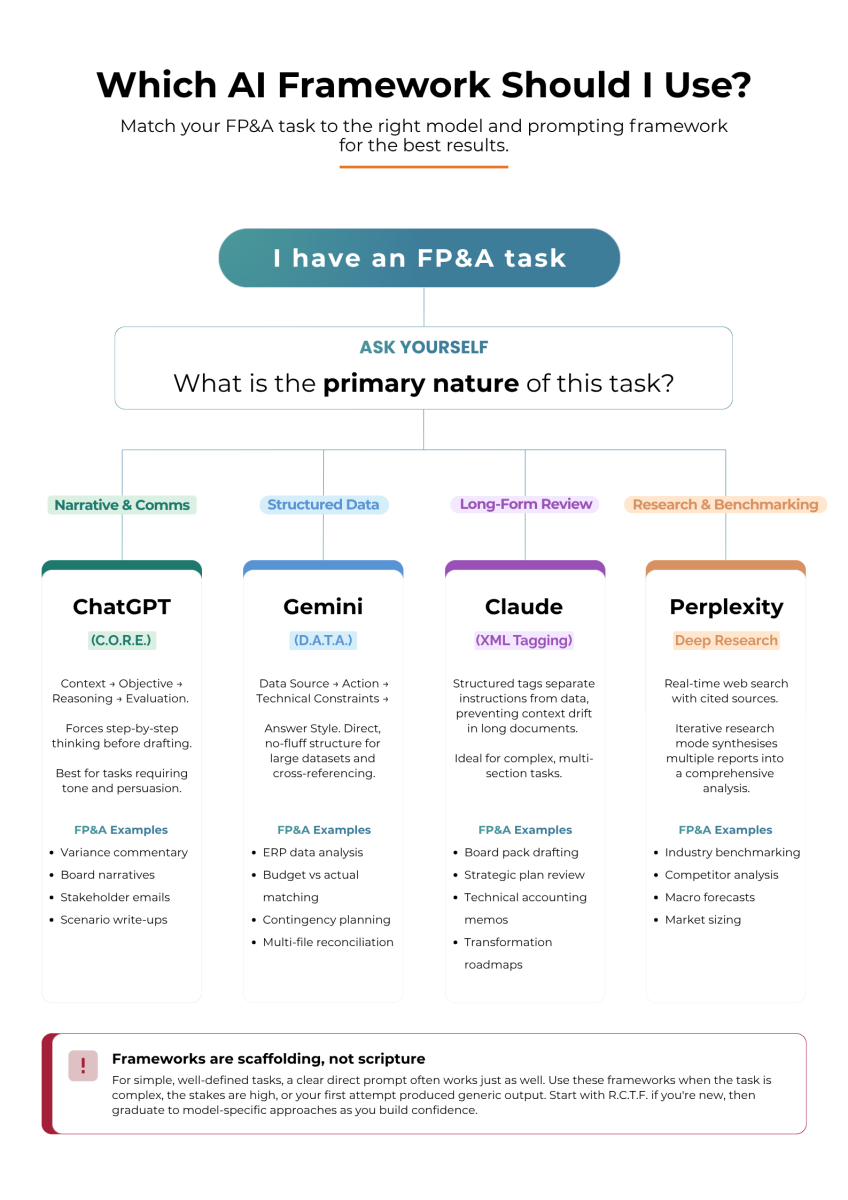
Figure 1. Framework for Selecting the Right AI Tool
As shown in Figure 1, the choice of tool depends on whether the task requires structured modelling (e.g. forecasting or variance analysis), data interpretation, or exploratory thinking. For FP&A teams, the goal is not to standardise on one tool, but to match the tool to the specific decision context.
3.4. Final Words to Conclude This Series
I have been using AI as my superpower. It has hugely improved my productivity. It has also reduced my reliance on IT folks. Most importantly, it is fairly idiot proof. The way I see things, if you don’t learn this superpower, your colleagues and competitors will.
The full text is available for registered users. Please register to view the rest of the article.
Related articles

In this article, the author explains how FP&A professionals can structure AI prompts using modern reasoning...

In this article, the author explores how AI-driven tools are shifting FP&A from manual processes to...

In this article, the author explains how AI is transforming FP&A from a reporting function into...

In this article, explore how FP&A professionals can turn the AI boom into a strategic advantage...

Drawing on insights from over 270 International FP&A Board meetings worldwide, annual FP&A Trends Survey data...
+
Subscribe to
FP&A Trends Digest

We will regularly update you on the latest trends and developments in FP&A. Take the opportunity to have articles written by finance thought leaders delivered directly to your inbox; watch compelling webinars; connect with like-minded professionals; and become a part of our global community.