
Agentic Planning helps CFOs move beyond Excel-based driver models by combining AI-enabled speed with stronger FP&A...

AI-Enabled FP&A Orchestration: Evolution, Gaps & Pathways
October 6, 2026

When you watch a symphony orchestra, you can see the conductor, the musicians and the instruments, but what is really magical is the invisible architecture that keeps them together: coordination.
FP&A is just the same. We can be described as a symphony. The conductor is FP&A itself: setting direction, owning the decision, and remaining accountable for the outcome. The musicians are our analysts and finance teams: providing the judgement and business context that no system can ever replace. The instruments are our AI agents and data systems: continuous, scalable, and built to run in parallel.
Every great performance relies on a hidden layer of coordination. In finance, it is not just about the tools or the talent alone; it is the coordinated orchestration of resources that determines the quality of our output. What has fundamentally changed is that our instruments are now intelligent. The real question is whether these intelligent tools can do more than just execute scripts and help us become better strategic orchestrators. That represents a critical evolutionary step toward maturity, mapping exactly where each of us stands on the curve.
The Maturity Curve
The maturity curve defines three distinct stages of FP&A evolution, what each one signifies, and what it takes to get there:
Stage 1: Control (Reactive) — Stable but reactive, prioritising historical accuracy over real-time adaptation. Basic data integration consolidates information, but insights remain fleeting, unorganised, and difficult to retain or retrieve over time.
Stage 2: Agility (Scenario-Driven) — Dynamic and scenario-driven, integrating real-time drivers and scenario modelling. Data integration and scenario modelling work together to enable rapid "what-if" analysis, rather than relying on static plans. Teams at this stage still depend on human intervention to link insights to actions.
Stage 3: Orchestration (Continuous Learning) — Self-improving and autonomous, introducing advanced learning capabilities centred on systematic logging, long-term retention, and seamless retrieval across extended periods. A third capability appears here: continuous learning layered on top of data integration and scenario elasticity. The system doesn't just model scenarios — it systematically refines its own judgement over time and intelligently coordinates resources.
Figure 1 illustrates this progression from Control to Agility and, ultimately, Strategic Orchestration.
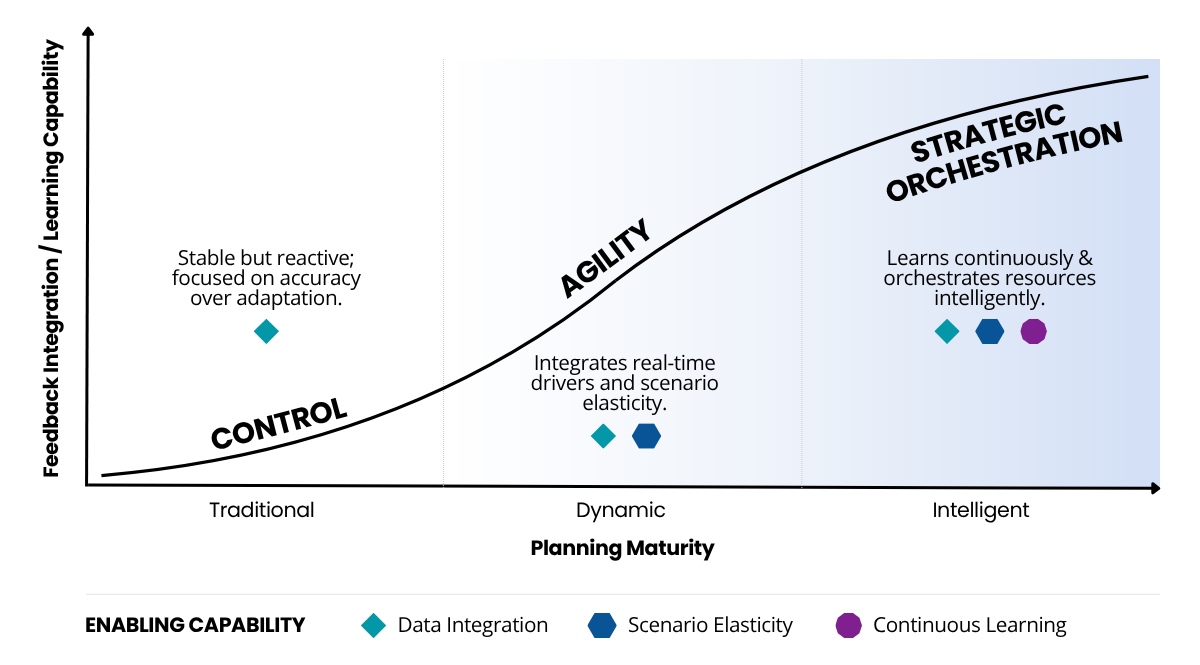
Figure 1. FP&A Maturity Curve: From Control to Strategic Orchestration [4]
According to the 2026 FP&A Trends Survey, only 2% of FP&A teams consider themselves fully optimised. The vast majority sit comfortably at Stage 2 — having data integration and scenario modelling in place, but lacking the continuous learning loop that defines true Orchestration. That gap is the real story worth examining.
The Three Gates: Why We're Stuck
Three structural barriers explain why finance teams are stuck at Stage 2, and none of them are actually about the AI technology itself:
Gate 1: The Source of Truth Paradox — One number split across a dozen systems, locked in a perpetual debate over a static baseline. If finance and operations cannot agree on a unified baseline, no amount of AI can fix the underlying discrepancy.
Gate 2: The Context Void — Data is frequently decoupled from relationships, with governance defined after deployment rather than before. Without that connective structure, an AI agent doesn't fail loudly —it becomes confidently wrong.
Gate 3: The Trust Deficit — A "black box" model offering zero visibility into model reasoning, with the ownership of outcomes left undefined. Finance is an accountability function first. Any figure presented to the board must have a clear, defensible rationale, regardless of its accuracy.
These are the three gates standing between Agility and Orchestration. They are entirely solvable barriers, not permanent roadblocks.
RPA vs. Agentic AI: A Shift in Capability
It is worth pausing to examine why agentic AI, specifically, is uniquely suited to closing these gaps, distinguishing it from the traditional automation most finance teams already know.
Traditional Robotic Process Automation (RPA) operates on standard inputs, fixed rules, and predictable outputs; it excels at highly repeatable processes like the monthly close or invoice matching. But a large share of real FP&A work is not standardised. Explaining a complex budget variance, conducting investment due diligence, or managing volatile cloud spend all demand human-like judgement and reasoning across relationships that defy fixed rule sets. RPA breaks at the exact moment an input changes shape.
Agentic AI, by contrast, is designed to reason across ambiguous inputs, interpret relevant context and recommend actions rather than simply execute fixed rules.That is precisely why it is well-suited to the parts of finance that have successfully resisted automation until now.
How Teams Are Building This: A Four-Layer Framework
Solving this orchestration challenge doesn't require reinventing the wheel. It relies on a single practical framework composed of four distinct layers, illustrated through two examples drawn from real implementations and described in generalised terms to preserve confidentiality:
The Four-Layer Architecture
The Data Layer: Every signal feeds in continuously, preserving context rather than forcing teams to rebuild it cycle after cycle.
The Forecasting Layer: The prediction hub holding core models and scenarios. It runs on actual, live usage rather than last month's static numbers, with each cycle sharpening the next.
The LLM Reasoning Layer: The interpretation layer featuring dynamic charts and conversational reasoning. This is where the system reads a forecast deviation and recommends a precise action, not just a raw number.
The Agentic Action Layer: The execution layer that carries out actions within strict, human-approved boundaries. It automatically routes tasks to the correct owner and closes the loop before the next cycle begins.
Note: The first two layers are where the system gets smarter; the last two are where that intelligence transforms into operational action.
Agentic action does not imply unrestricted autonomy. In this framework, the agent may recommend a specific action, such as flagging a cost anomaly or suggesting a reallocation, and may execute low-risk, reversible actions within predefined limits. Anything with a material financial or operational impact requires human approval before execution. Accountability for the final outcome always rests with the human who approved or configured the workflow, not with the system itself.
Example 1: Planning and Analytics (Rolling Forecasts)
The Flow: Actuals, pipeline signals, and rolling plans feed directly into the Data Layer. The Forecasting Layer continuously compares forecasts against actuals, flagging anomalies early. The LLM Reasoning Layer steps in to provide detailed causal analysis and draft the board narrative. Finally, the Agentic Action Layer triggers the reforecast, pushes updated data, or escalates exceptions to the right owner.
The Impact: Increased forecasting accuracy, dramatically reduced turnaround times, and a financial system that learns dynamically through causal factors over time.
Example 2: Cloud Spend Management (FinOps)
The Flow: In an area where delayed decisions lead directly to wasteful spending, live usage and billing data feed into the Data Layer with structural context intact. The model runs directly on live consumption and ties back explicitly to product lines. LLM reasoning flags margin variances and recommends specific reallocation strategies. Agentic action routes the fix directly to engineering before the billing cycle closes.
The Impact: A massive reduction in decision latency, from anomaly identification to decision to action, thus keeping cloud spend firmly in check.
In both cases, the framework achieves the exact same outcome: it closes the dangerous gap between signal and action. You do not need all four layers operational on day one; start with one signal, one model, and one alert — that is more than enough to prove immediate value.
Conclusion
Orchestration is more than a technical upgrade; it bridges the gap between signal and action, enhancing both decision speed and quality. While technology continues to advance, true advantage will go to organisations that establish the necessary data, governance, and decision architecture to use it responsibly.
References
2. https://cmr.berkeley.edu/2025/08/adoption-of-ai-and-agentic-systems-value-challenges-and-pathways/
3. 2026 FP&A Trends Survey: https://fpa-trends.com/fp-research/2026-fpa-trends-survey-how-ai-testing-fpas-foundations
4. Chopra, A. (2026). "Rethinking FP&A in the Age of AI." California Management Review. Most FP&A teams sit in the Dynamic zone today — with orchestration as the next horizon.
The full text is available for registered users. Please register to view the rest of the article.
Related articles

Agentic Planning helps CFOs move beyond Excel-based driver models by combining AI-enabled speed with stronger FP&A...

Agentic AI is reshaping FP&A by automating repeatable finance workflows while raising new questions about governance...

AI in FP&A creates value when earlier analytical signals are connected to governance, ownership, escalation, and...

FP&A leaders must redesign talent pipelines before AI automates the early-career tasks where finance judgement was...

Agentic AI may remove Finance from the decision chain. Explore how FP&A can shift from insight...
+
Subscribe to
FP&A Trends Digest

We will regularly update you on the latest trends and developments in FP&A. Take the opportunity to have articles written by finance thought leaders delivered directly to your inbox; watch compelling webinars; connect with like-minded professionals; and become a part of our global community.