

In this article, the author explains why agentic AI adoption in FP&A depends less on technology...

When AI Becomes the Interpreter: What’s Left for FP&A?
June 2, 2026

“Does technology cause us, or do we cause it?”
Stanisław Lem, Summa Technologiae (1964)
The Wrong Conversation
I recently spent many months in a debate, many Finance functions are currently having: Excel or a purpose-built FP&A system. What I came away with was not a verdict on which tool is right, but a much larger question: what is Finance actually for?
According to the 2025 FP&A Trends Survey, 45% of organisations still rely primarily on spreadsheets such as Excel for planning, underscoring how deeply embedded they remain.
Finance functions are currently split across three camps. The first believes Excel, properly used, remains the right tool. The second has invested in purpose-built FP&A platforms with proper data architecture and more rigorous modelling capability. The third, the fastest growing, sees no need for that investment: layer Claude or Copilot on top of Excel, close the gap for a fraction of the cost, and move on. LinkedIn will happily serve you a hundred articles making that case.
All three camps, however different they feel from the inside, share a fundamental assumption: that Finance remains the author of the narrative. The analysis lives in Finance’s tools, is built by Finance’s people, and is delivered on Finance’s terms. The FP&A platform is further down the same road rather than a different road entirely. The AI-assisted spreadsheet is smarter than a regular one; the model is unchanged. Finance is still the intermediary, the interpreter, the delivery mechanism.
But consider this. I once sat in a budget meeting where a senior director said, quite openly, that he never looked at the management accounts. The finance team were fuming afterwards, though nobody had said anything at the time. What struck me was not the comment itself but what it revealed: that a significant portion of what Finance produces does not actually inform the decisions being made. The insight, though delivered, is not reaching anyone. For years, we assumed this to be a business partnering issue, or perhaps a reporting one: if only we could produce a better pack next time. I wonder, though, whether the failure is baked into the model itself, and, if so, whether none of the three camps is asking the right question.
The Destination Nobody Is Looking At
It is worth being precise about what we mean by AI, because the term is doing a lot of work in this conversation and not always accurately. An FP&A platform, Excel, or even Excel with a bit of AI thrown on top, is fundamentally automation. They make FP&A faster, more accurate, and less dependent on manual effort. That is valuable, and not a small thing. But automation still requires Finance to operate it, interpret it, and deliver the output. It is a better engine for the same journey.
To understand why agentic AI is different, it helps to be concrete about what actually changes. Today, the business leader has a question. They do not have access to the data, or the tools to interrogate it, or the time to navigate a spreadsheet to find the answer. So they ask Finance. Finance goes to the data, builds or updates a model, interprets what it is saying, formats it into something presentable, and delivers it back, usually in a report, a deck, or a meeting. The business leader receives the output, asks follow-up questions, and the cycle repeats. The Finance person is the essential link between the question and the answer.
In the agentic AI model, that chain looks entirely different. The business leader asks the question directly, in plain language, to a system that has access to all the relevant data, understands the business context, and can reason across it in real time. The system surfaces the answer, models the scenario, and delivers the insight at the moment the decision is being made. The chain no longer runs through Finance. The Finance person is not slower or less skilled. They are simply not in the chain at all.
This shift fundamentally changes how decisions are made. As shown in Figure 1, the role of Finance moves from being the central link in the decision chain to being removed from it entirely.
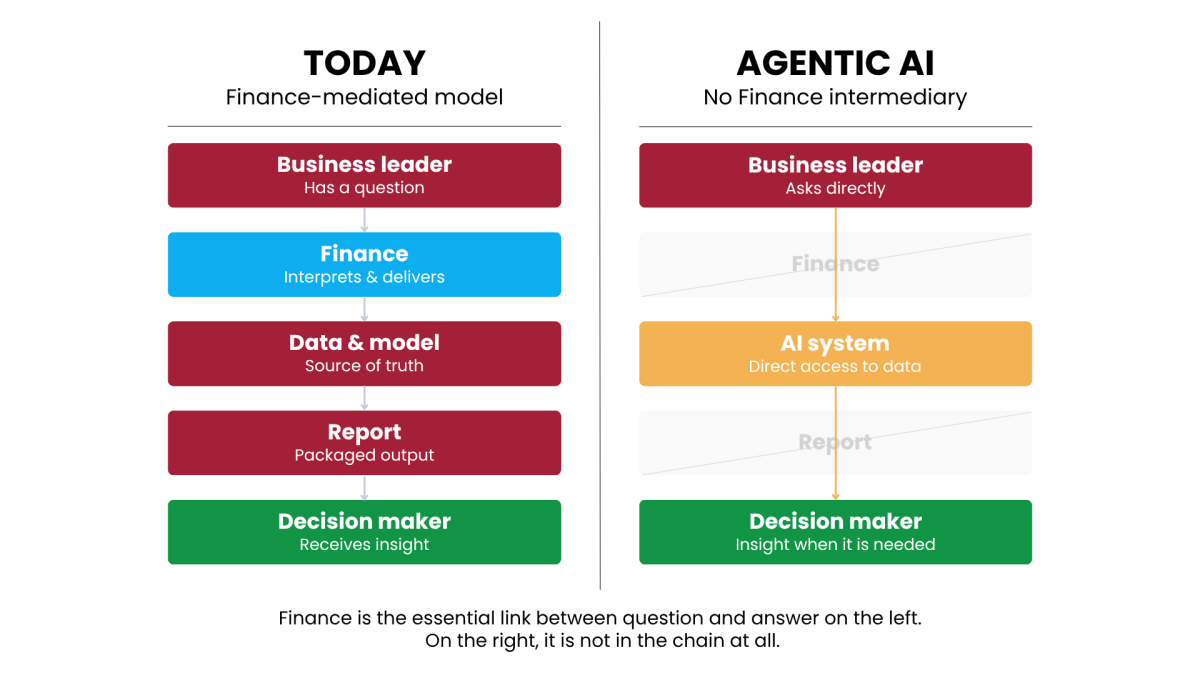
Figure 1. From Finance-Mediated Insight to Direct AI-Driven Decision-Making
What really changes is not about speed or efficiency; it is the removal of Finance as the intermediary. On the left, Finance owns the data, interprets it, and delivers insight. On the right, this layer disappears. The business leader interacts directly with the system and receives the answers in real time.
The Real Question
There is a reason the Excel camp is so resilient, and it is not really about the tool. As long as Finance holds the spreadsheet, Finance holds the narrative. The AI layer over Excel is the same instinct dressed up in more sophisticated language. The machine assists, but Finance still controls the output. The fear underneath all three camps is the same: if the machine does everything, what exactly are we for? That is the question nobody in the Excel debate is asking, because asking it out loud means admitting that the role many of us have built careers around may not survive the answer. But it is the only question worth asking.
The first route is that Finance becomes the architect of the infrastructure. We design the data environment, embed the business logic, define the questions the AI agent should be asking and the guardrails it should be operating within. It is consequential work that requires a thorough understanding of both the data flows and the decisions they drive. But it also means Finance is no longer in the room. The narrative belongs to the machine. We built the system; someone else tells the story.
For Finance professionals moving in this direction, the practical starting point is not a data science qualification. It means becoming an active participant in data architecture decisions: designing cost centre hierarchies, setting consistent revenue definitions across entities, and determining how driver data is structured and maintained upstream. Finance does not always formally own this work. But it is the function best placed to know what the data needs to deliver, and if it is not in that conversation, someone else will be.
The AI layer will then be built on foundations Finance had no hand in.
The second route is equally uncomfortable but bolder. Finance steps away from the advisory seat and into the decisions themselves, accountable for the outcome rather than the analysis. The advisor carries influence; the decision maker carries responsibility. For a profession that has historically derived its authority from expertise rather than accountability, that is a significant leap. It requires Finance to step out from behind the numbers and own what they are saying.
For Finance professionals moving in this direction, the practical starting point is smaller than it sounds. Identify one area where Finance already holds both the data and the business understanding. Instead of presenting three scenarios and leaving the room, recommend one. Own the call. It will feel uncomfortable. That discomfort is the point: it means something has actually changed.
In practice, most Finance functions will need elements of both. That does not make the question easier. A blended role means developing two distinct capabilities simultaneously: the data architecture thinking and the accountability for decisions, rather than deferring the question entirely.
Most Finance functions will not consciously choose between these paths. They will drift toward whichever one their organisation’s structure and inertia determine, which is precisely the problem.
The Window
Finance is in an unusual position right now. The technology is advancing fast enough to make the change inevitable, but not so fast that the shape of the profession has already been determined. There is a window to engage deliberately with these questions: to decide what Finance wants to become, to build the skills the new role requires, and to shape the data architecture of organisations before someone else does it instead.
That window will not stay open indefinitely. AI will force the question regardless. The only question is whether Finance uses it deliberately or finds it has already closed.
The full text is available for registered users. Please register to view the rest of the article.
Related articles

In this article, the author examines how FP&A teams can implement trustworthy agentic AI by matching...

In this article, we summarise key insights from the latest FP&A Trends webinar on how finance...

In this article, discover how Agentic AI is revolutionising FP&A business partnering by automating routine tasks...

This article explores the practical benefits of balanced processes and technologies in FP&A to help you...

In this article, the author explains how AI is transforming FP&A from a reporting function into...
+
Subscribe to
FP&A Trends Digest

We will regularly update you on the latest trends and developments in FP&A. Take the opportunity to have articles written by finance thought leaders delivered directly to your inbox; watch compelling webinars; connect with like-minded professionals; and become a part of our global community.