
Introduction
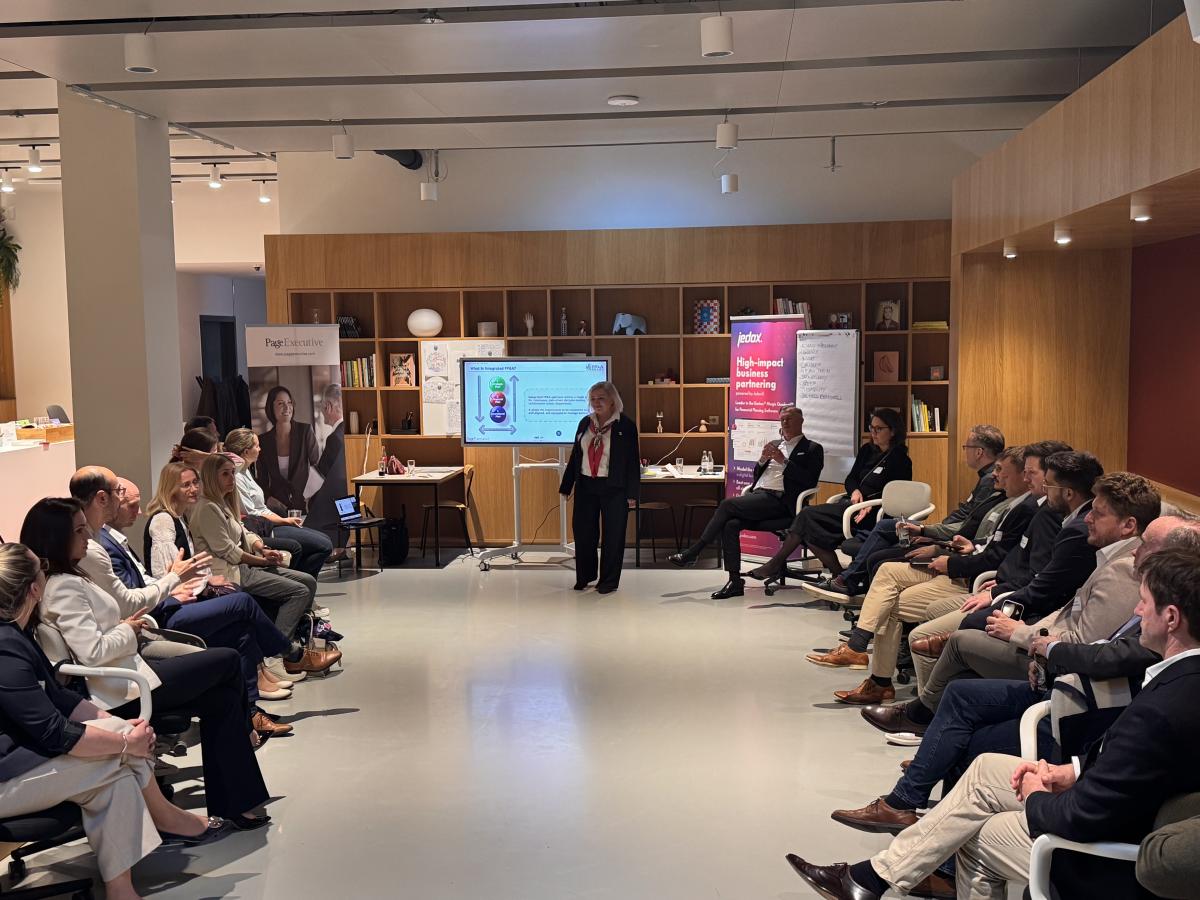
The 6th Munich FP&A Board was held on 21 May 2026, bringing together senior finance leaders for a practical discussion on Mastering Predictive Planning & Forecasting. Since its launch in May 2023, the Munich FP&A Board has become part of the wider International FP&A Board network, which now spans 34 cities across 20 countries.
The session focused on how FP&A can move from static planning approaches toward more predictive, responsive, and continuously adaptive ways of working. In an environment where business conditions change faster than traditional planning cycles can support, the discussion explored how finance teams can strengthen scenario planning, improve forecasting agility, and build greater confidence in data-driven decision-making.
The meeting was facilitated by Larysa Melnychuk, Founder and CEO of FP&A Trends Group and the International FP&A Board. We would like to thank Jedox for sponsoring this event. As well as Page Executive and International Workplace Group (IWG), our partners, for supporting the Munich FP&A Board.

Opening Reflections from Participants
To open the discussion, participants were asked: “What’s the biggest impact Predictive Planning & Forecasting could have on your FP&A?”
Their responses brought a practical Munich perspective to the topic. Participants noted improvements in accuracy, stronger guidance, better insight, credibility, data accuracy, and business readiness. One response captured the direction of travel very simply: “we ask the AI.”
These reflections echoed broader FP&A Board themes such as accuracy, agility, data-driven analysis, and forward-looking decision-making. At the same time, the Munich discussion placed particular emphasis on trust, credibility, and readiness, showing that predictive planning is not only about better models, but also about whether the business understands and uses the outputs.
Why This Topic Matters
Predictive Planning and Forecasting was defined during the session as the use of data, analytics, and technology to anticipate trends, support faster decisions, and make planning more agile.
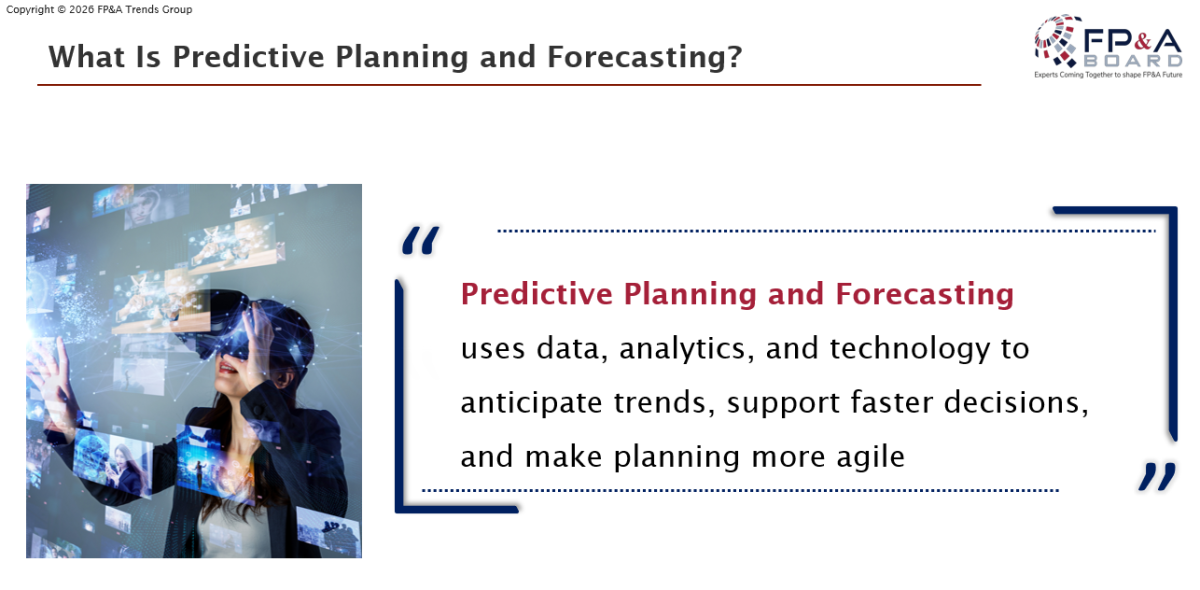
Figure 1.
The relevance of this topic is clear. Business conditions are changing faster than traditional planning cycles can support. The session highlighted that the Predictability Span is shrinking: within this span, organisations can still plan traditionally, but beyond it, uncertainty increases and multiple futures need to be considered.
This makes scenario planning a core capability rather than an occasional exercise. The 2025 FP&A Trends Survey findings showed that only 18% of organisations can run scenarios in less than one day, while 82% are too slow or unable to do so. This highlights a significant agility gap: many FP&A teams cannot yet model alternative outcomes at the speed required by business decision-making.
The challenge is reinforced by how FP&A time is currently spent. Almost 46% of FP&A time is still dedicated to data collection and validation, while only around one-third is spent on high-value activities. This shows why Predictive Planning and Forecasting cannot be treated as a technology upgrade alone; it requires changes in data, processes, models, and ways of working.
Building the Foundations of Predictive FP&A
The discussion then focused on what enables FP&A to become more predictive and agile. The Agile FP&A Ecosystem connected three foundations: Driver-Based Models, Integrated Processes & People, and Analytical Platform, with the outcomes of Scenario Management, Rolling Forecasts, and On-Demand Planning.
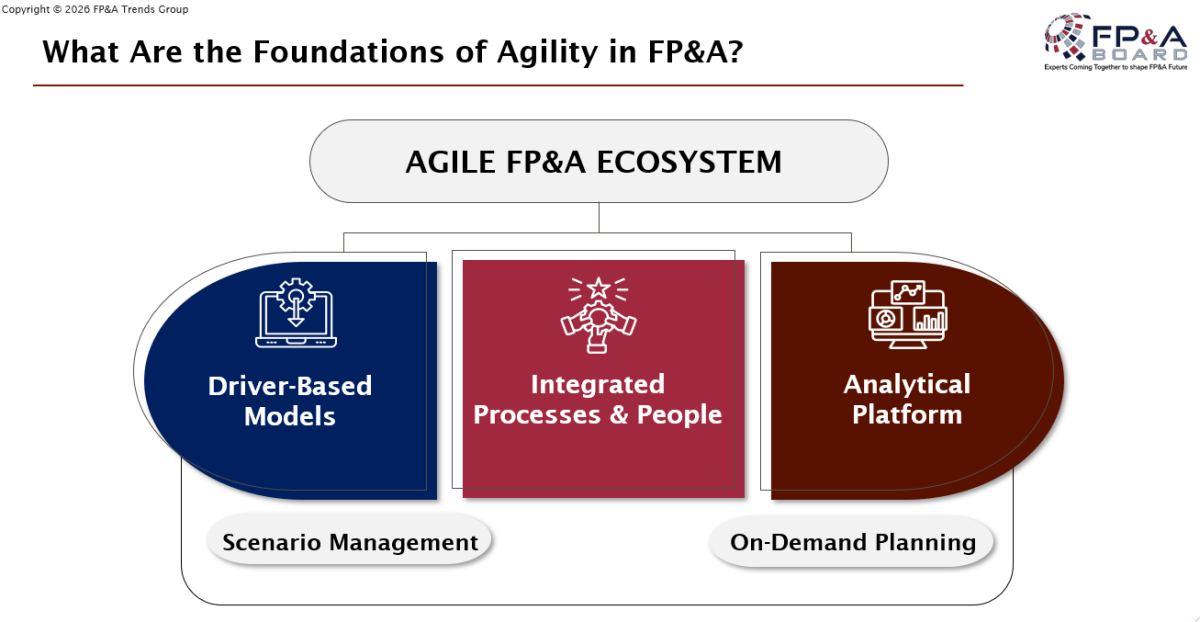
Figure 2.
The key insight is that these elements cannot work in isolation. Driver-based models help FP&A understand what really moves performance. Integrated processes and people ensure that planning is not owned by Finance alone, but connected across the business. Analytical platforms provide the speed, integration, and scalability required to move beyond manual workflows.
Driver-based planning was discussed as a central enabler. The presentation showed that only 17% of organisations fully use driver-based models, while 40% use partially calculated models and 12% do not use driver-based models at all. This reveals a clear maturity gap. Many organisations want predictive planning, but their models are not yet fully connected to the business drivers that shape outcomes.
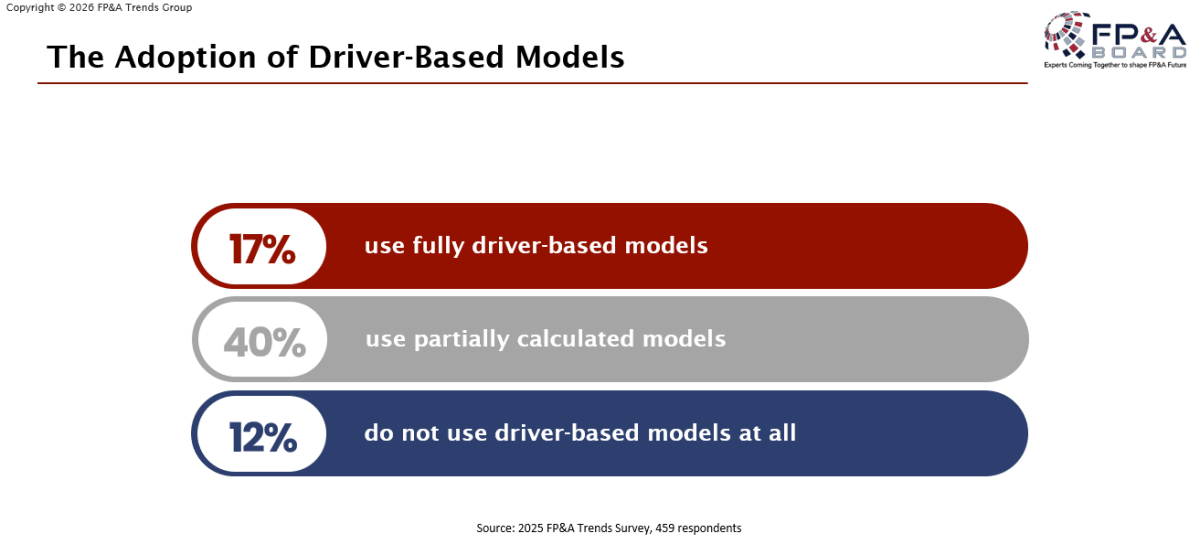
Figure 3.
The discussion also reinforced the importance of focusing on the critical few drivers. The Pareto principle, identifying the 20% of key drivers that explain 80% of results, is essential for avoiding unnecessary model complexity and making forecasts more actionable.
AI, Technology, and Predictive Capability
AI was an important part of the Munich discussion, but it was framed realistically. The session showed that AI can support Predictive Planning and Forecasting, but only when the foundations are strong.
Broader FP&A Board polling from Frankfurt, Boston, San Francisco, Munich and Riyadh FP&A Boards, showed that 29% use Generative AI, 14% use Machine Learning, 16% use both ML and GenAI, while 41% do not use AI.
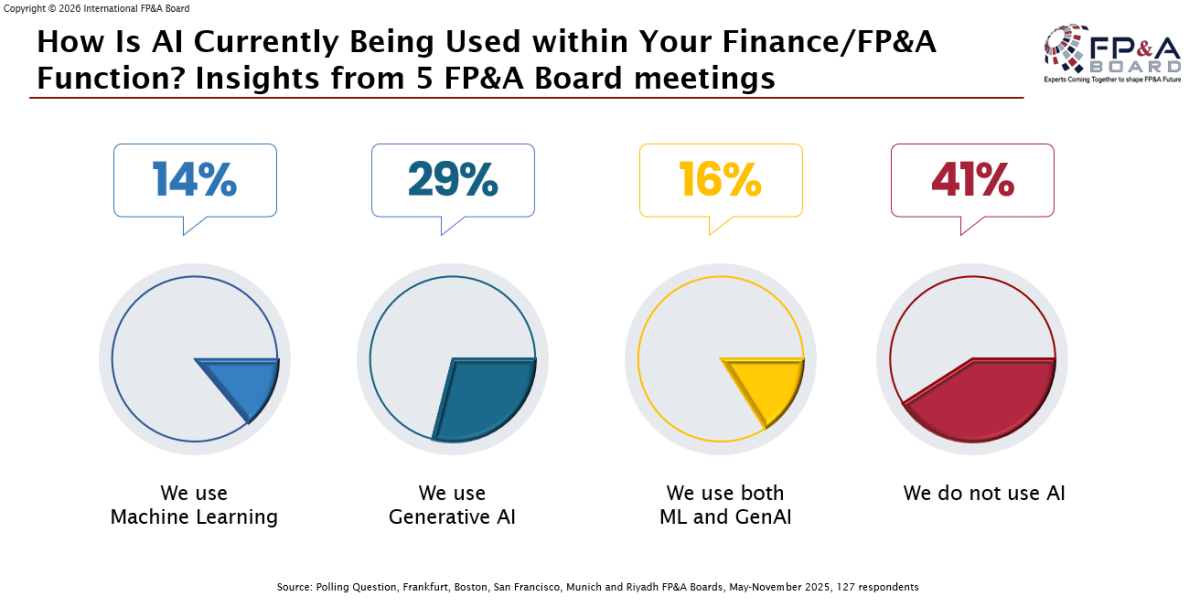
Figure 4.
These results show that adoption is progressing, but remains uneven. The discussion connected AI to the broader technology landscape: planning applications and cloud platforms can strengthen forecasting, improve data-driven decision-making, and increase the time FP&A spends on value-adding activities.
However, the message was clear: technology enables predictive capability, but it does not create it on its own. The real value comes when AI and analytics are connected to reliable data, driver-based models, integrated planning processes, and business understanding. Without these foundations, AI risks becoming another disconnected tool rather than a source of better decisions.
From Implementation to Maturity
The session also explored what organisations need to put in place to implement Predictive Planning and Forecasting effectively. The discussion highlighted five critical dimensions: data, models, processes, decision-making, and technology.
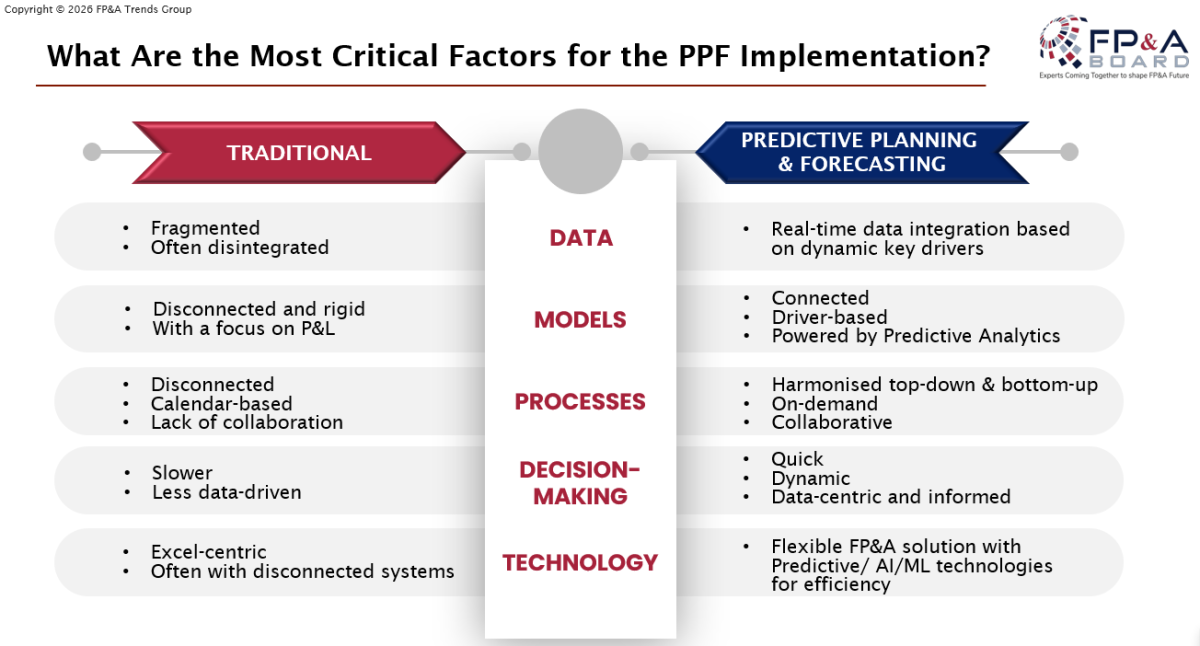
Figure 5.
The contrast was clear. Traditional FP&A is often fragmented, calendar-based, slower, and Excel-centric. Predictive FP&A requires real-time data integration, connected driver-based models, harmonised top-down and bottom-up planning, faster decision-making, and flexible technology with predictive and AI/ML capabilities.
The Predictive Planning and Forecasting Maturity Model then provided a practical way to assess progress. It maps maturity from Basic to Leading across data, drivers, driver-based models, process, FP&A skills, and technology.
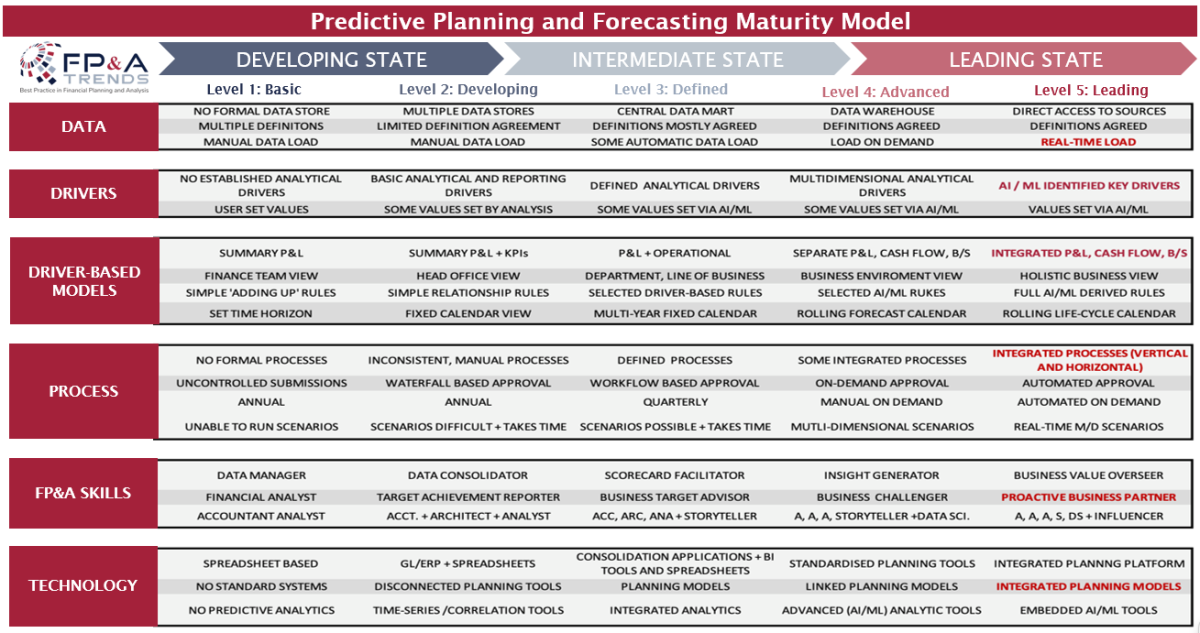
Figure 6.
Together, these two frameworks show that Predictive Planning and Forecasting is a journey. The implementation factors explain what must change, while the maturity model helps organisations understand where they are today and what they need to strengthen next.
Speaker Insight
A special thank you goes to Niklas Panzer, VP Sales Central Europe at Jedox, who shared perspectives on “How AI Is Transforming FP&A Agility.” His contribution helped connect the broader discussion on predictive planning with the emerging role of AI in supporting faster, more adaptive decision-making.
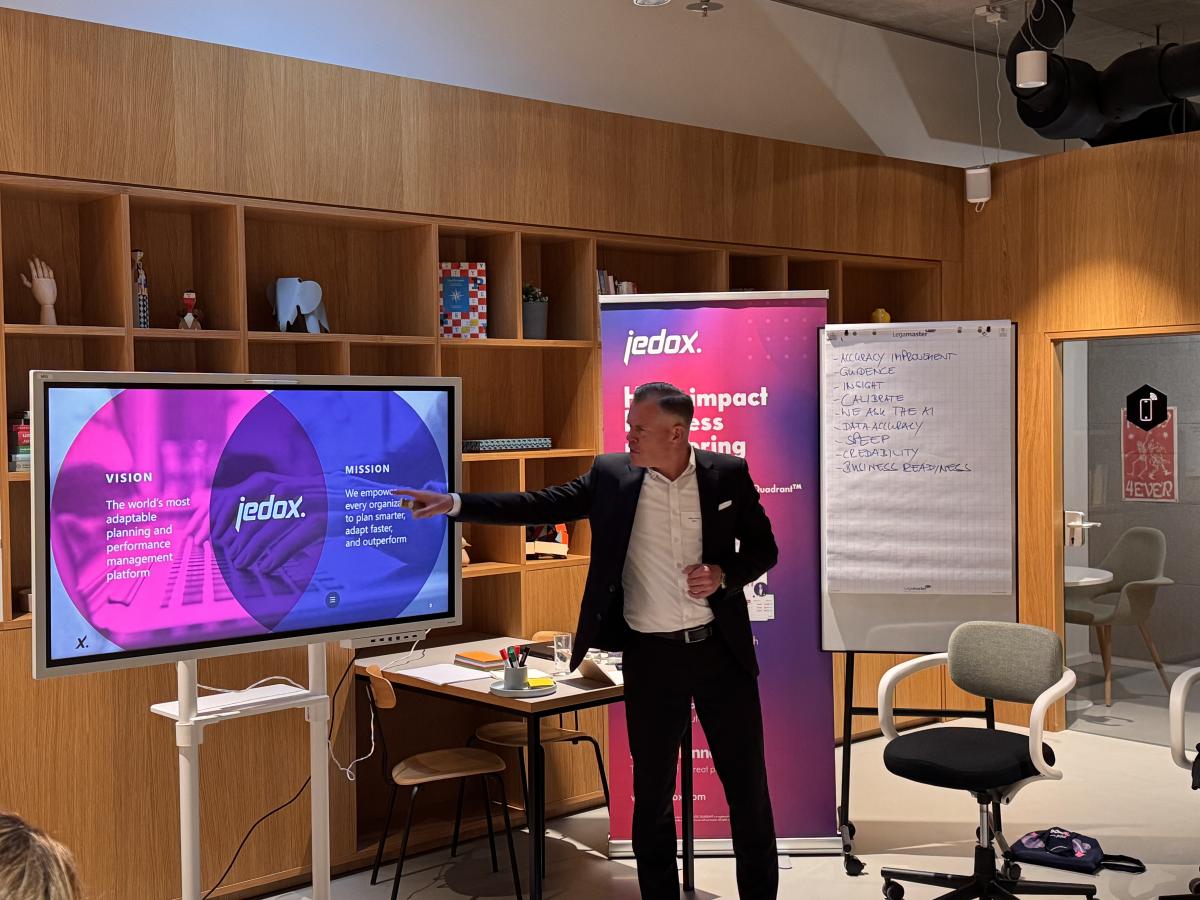
The discussion reinforced a practical message: AI can enhance FP&A, but predictive planning becomes valuable only when business teams understand the model logic, trust the outputs, and use them in decision-making.
Group Work: From Concepts to Practical Steps
The session concluded with group work focused on the practical steps required to reach the Leading Stage in Predictive Planning and Forecasting.
Group 1: Dynamic Driver-Based Model Development
Participants highlighted the need to start with clear business objectives, KPI definitions, and a shared understanding of the model’s purpose. They then focused on identifying the main business drivers, building and back-testing the model, and ensuring a strong data foundation using both internal and external data.

Group 2: Process Improvement
The second group emphasised business objectives, systems integration, governance, and a clear understanding of key business drivers. Change management was also central, including mindset, training, people enablement, user experience, project leadership, roles and responsibilities, stakeholder alignment, and feedback loops.

Group 3: Technology and Analytics
The third group focused on data management, data quality, advanced analytics, AI, and better financial acumen. They also highlighted the importance of measuring impact and continuously improving predictive planning capabilities.
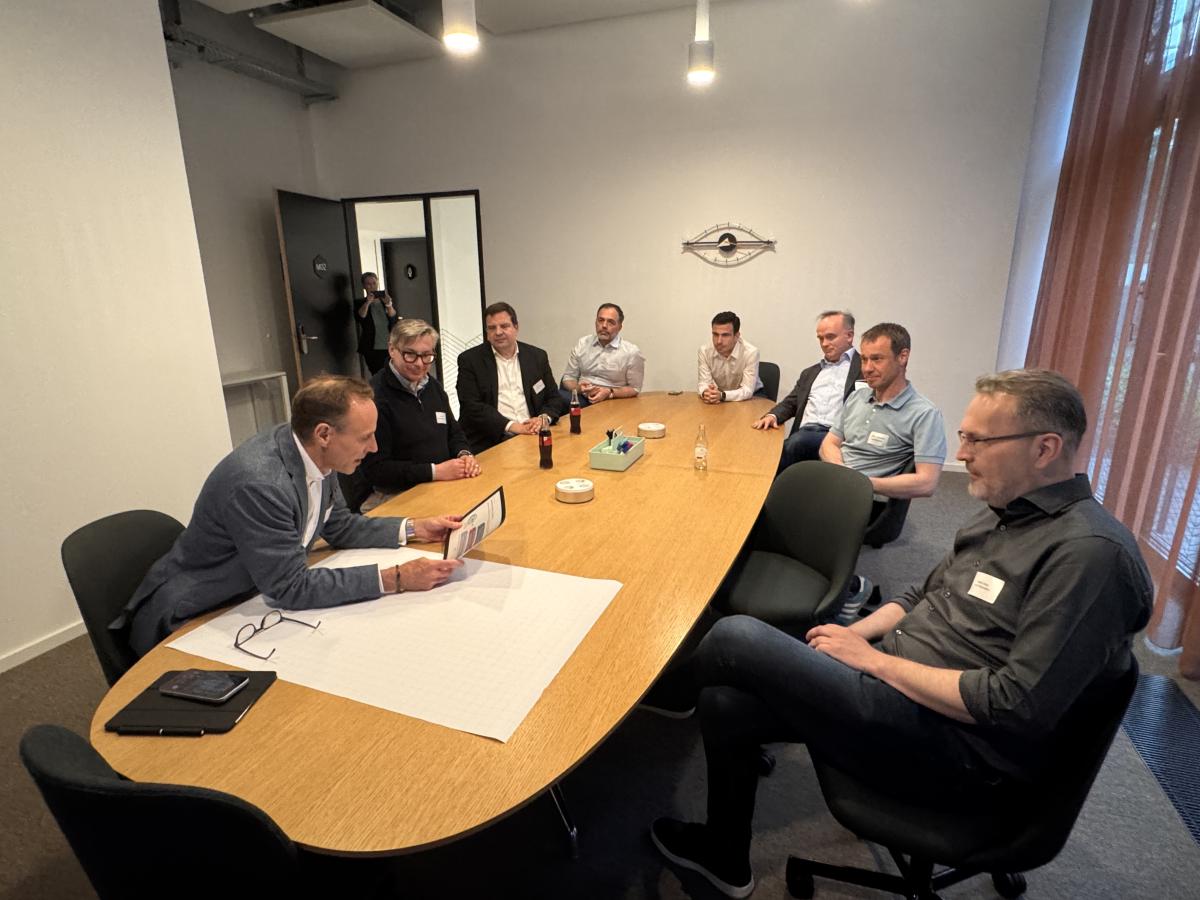
Together, the group outputs reinforced that Predictive Planning and Forecasting depends on more than models or technology. It requires clear objectives, trusted data, aligned processes, capable people, and continuous improvement.
Conclusion
The Munich FP&A Board discussion reinforced that Predictive Planning and Forecasting is becoming a critical capability for modern FP&A. The need is clear: organisations must be able to respond faster, test scenarios more dynamically, and support decisions with greater confidence.
At the same time, the session showed that predictive planning is not only about AI or advanced tools. It depends on the ability to connect data, drivers, processes, platforms, and people into one coherent planning capability.
What made the Munich discussion especially practical was its focus on readiness. Participants recognised that the future of FP&A is not simply about forecasting more accurately, but about helping the business prepare for what may come next.
Ultimately, Predictive Planning and Forecasting enables FP&A to move from explaining what happened to helping organisations anticipate, adapt, and decide with greater confidence.