

In this article, the author reveals why xP&A initiatives fail when organisations overlook the maturity of...

Beyond Finance: Unlocking the Power of xP&A
June 30, 2026
Still Planning in Silos
A finance leader at a recent International FP&A Board meeting described a planning challenge that many in the audience immediately recognised. His company had three different plans for the same product. Sales focused on volume. Operations planned for capacity. Finance worked off profitability. Same product, but completely different assumptions.
This situation is not unusual. Many organisations are still stuck in silos, as evidenced by the data. In the 2026 FP&A Trends Survey, respondents said that, on average, FP&A still spends 47% of its time on low-value activities such as data collection and validation. Only 32% is used to generate insights or drive action. And this pattern shows little improvement over the past eight years (see Figure 1).
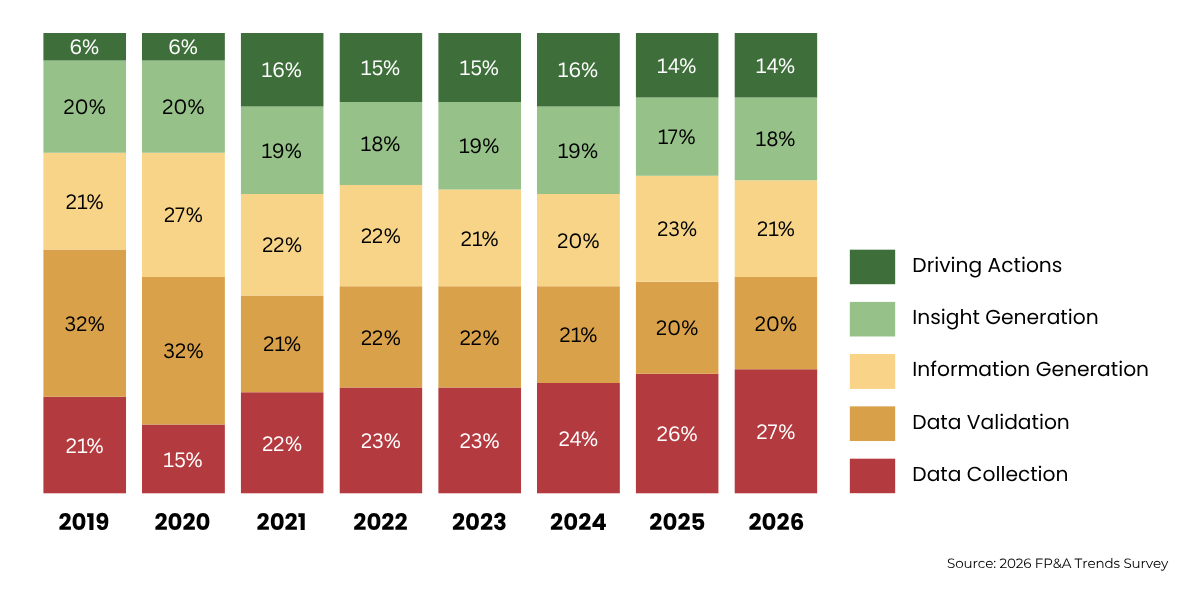
Figure 1: Time Allocation Across the FP&A Value Chain, 2019–2026
It is no surprise. Sales may be forecasting offline, operations in a separate tool, and finance still in spreadsheets. With each team working alone, the idea of a “single version of the truth” remains elusive.
Breaking this cycle takes more than new tools. It starts with real integration — of data, people, processes and plans.
From FP&A to xP&A
Planning is no longer just a finance exercise. What used to be a budgeting cycle managed in isolation is turning into something faster, more connected and far more useful to the business. Sales, supply chain, HR and operations each have a role to play — and they all need to plan using the same assumptions.
That is the essence of Extended Planning and Analysis, or xP&A: a joined-up approach that brings strategic, financial and operational planning into one single process. It helps organisations stay aligned, make better decisions and move quickly when situations change. xP&A works in every direction. It connects top-down targets with bottom-up insights. It links long-term goals with day-to-day action. Most importantly, it brings different teams into one shared planning rhythm.
The diagram (Figure 2) below shows how it fits together. Instead of separate vertical processes, xP&A creates a single, connected structure that runs across the business.
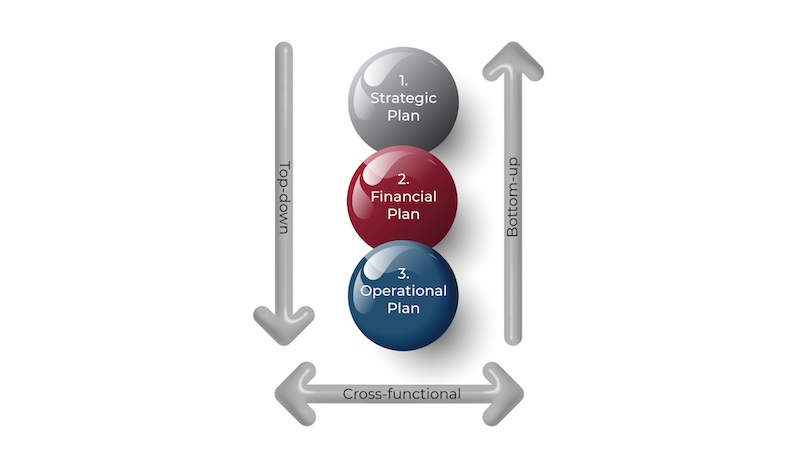
Figure 2: How xP&A Connects Planning
The way in which planning is done is changing too. Static models are being replaced by dynamic, driver-based ones. Scenarios that used to take days can now be built in minutes. Instead of wrestling with spreadsheet versions, teams can adjust plans in real time and focus on what matters.
Analysis has moved on as well. It is no longer just about explaining what happened — and more about helping the business look ahead, using predictive insights to make better decisions. And perhaps the biggest shift of all: planning is no longer something handed down. It is built collaboratively. When teams help shape the plan, they understand it, own it and respond faster when things change.
That is the real power of xP&A. It is not just better planning — it is better business.
From Siloed to Smart: A Practitioner Roadmap to xP&A
xP&A goes beyond a technology shift — it is a fundamental change in how planning is owned, aligned and executed. Based on insights from our research interviews and ongoing International FP&A Board discussions in more than 20 countries, five practical steps have emerged. These steps are summarised in Figure 3 and illustrated below through examples shared by senior practitioners.
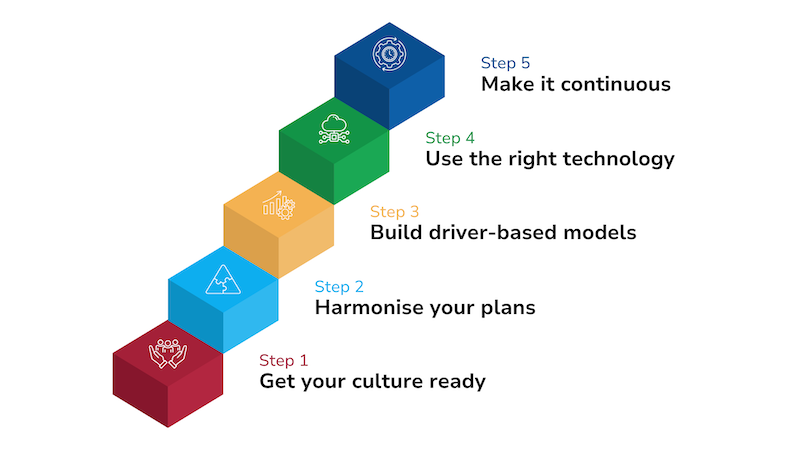
Figure 3: Five Steps to xP&A Implementation
Step 1: Get Your Culture Ready
Every transformation starts with people. In xP&A, planning is no longer just finance’s responsibility: sales, marketing, operations and HR must all be involved. The role of FP&A evolves — from plan owners to business connectors.
At one Board meeting, a senior FP&A leader from a global FMCG group shared how integrating commercial and finance teams uncovered a long-overlooked pricing and stock issue. With shared planning, the commercial team was able to act quickly and recover lost performance.
Step 2: Harmonise Your Plans
xP&A only works when strategic goals flow into operational decisions and financial targets. That means linking plans across the business, not running them in isolation.
In one example, an energy company used xP&A to connect its carbon reduction strategy with vehicle fleet planning and operational budgets. This turned sustainability targets into real actions — built into the plan from the start.
Step 3: Build Driver-Based Models
Static plans do not adapt. Driver-based models reveal what truly moves the business — and connect decisions across strategy, operations and finance.
A technology leader shared how their team used drivers to test multiple growth scenarios. Pricing, production and staffing inputs were adjusted in real time — giving teams a clear view of trade-offs before acting.
Step 4: Use the Right Technology
A strong platform brings the process to life. One healthcare provider used a cloud-based solution to connect HR, procurement and operations data. Planning cycles shortened. Visibility improved. Teams made decisions faster and with more confidence.
Step 5: Make It Continuous
One global tech company representative described how they replaced their annual budget with rolling forecasts. Sales, marketing and ops used shared drivers to plan together — staying in sync with business reality as it changed.
Assessing Your Maturity: Where Are You on the Journey?
Every transformation starts with an understanding of where you stand. Before making changes to planning, it helps to take a step back and identify what is working, where the gaps are, and what best practice might look like for your organisation. In our conversations with FP&A leaders around the world, many have found it useful to reflect on areas like leadership, data, technology and business partnering — not to score themselves, but to focus their efforts and build a clear path forward.
Make xP&A More Than a Buzzword
The 2026 FP&A Trends Survey shows just how far most organisations still are from full integration. Only 10% have fully integrated strategic, financial and operational planning, while 22% report no integration at all. The remaining 68% are stuck somewhere in between, linking two areas at a time. Often, finance is connected to operations, or to strategy. But these are still partial fixes. Full alignment across strategy, finance and operations remains the exception.
One figure stands out: only 7% link strategy directly to operations. That is more than a system issue — it exposes a structural gap between vision and execution.
If xP&A is to deliver real impact, it needs to be owned. Not by finance alone, but by the business as a whole. When planning is shared, connected and understood, it becomes something more than a process. It becomes how decisions get made.
This article was first published on the SAP Blog.
The full text is available for registered users. Please register to view the rest of the article.
Related articles

Discover how Integrated FP&A breaks functional silos by aligning finance, operations and commercial strategies into one...

A CFO shares how to make Extended Planning & Analysis (xP&A) a reality through practical strategies...

In this article, the author describes how to leverage Business Partnering to achieve Extended Planning and...

In this article, the author describes how to create a dynamic and integrated sales harnessing the...

This article highlights the immense benefits of one of the important aspects of xP&A – an...
+
Subscribe to
FP&A Trends Digest

We will regularly update you on the latest trends and developments in FP&A. Take the opportunity to have articles written by finance thought leaders delivered directly to your inbox; watch compelling webinars; connect with like-minded professionals; and become a part of our global community.