

FP&A leaders must redesign talent pipelines before AI automates the early-career tasks where finance judgement was...

Learn the Basics, Build the Judgment: The New Finance Career Ladder
July 21, 2026

I keep hearing a question nowadays: if Artificial Intelligence is taking over routine Finance work, should young people still study Accounting, Audit, FP&A, Tax, Treasury, or Commercial Finance?
Given the rapid changes, my answer is simple: Yes. Study them deeply. But do not study them only as tasks. Study them as judgment systems.
Nowadays, AI can actually perform several tasks, such as reconciliation, variance commentaries, summarising audit evidence, producing periodic dashboards, and refreshing forecasts. However, what AI cannot do (as of now) is determine whether the accounting treatment is correct, whether the margin is sustainable, whether the forecast assumptions are weak, whether the business is overreacting, or whether leadership is about to make a poor decision based on a polished report. This is where future Finance value will sit: not in producing the number, but in knowing what the number means, what risk it carries, what decision it should influence, and what leadership should do next. I call this “Finance judgment systems”.
In today’s fast-changing environment, the real risk is not job loss; it is skill loss! But then the follow-up question can be:
How to learn this “Finance judgement systems” with a shallow study of the basics?
Your learning curve starts from the basics:
You learn accounting by preparing journals.
You learn auditing by checking evidence.
You learn FP&A by explaining variances.
You learn treasury by understanding cash movements. You learn commercial Finance by reviewing deals.
You learn business partnering by sitting close to the business and seeing how decisions are really made.
Therefore, the answer is not to avoid what AI can do; instead, “Do the work >> Understand the logic >> Then move above the task.” This is the new mantra for career evolution. The faster you understand this, the faster you can turn the tables. Sadly, many people get stuck at the bottom because they only learn the task, not the thinking behind the task. We all know that AI is reducing mechanical Finance work, so young people need to change gears to focus on judgment-led Finance work because Finance does not create value by being mechanically correct. Finance creates value when it helps the business make better choices under uncertainty.
How Can a Career in Finance Evolve, Beating the Pace of AI?
Figure 1 below shows how each finance area is moving from task execution to judgment-building.
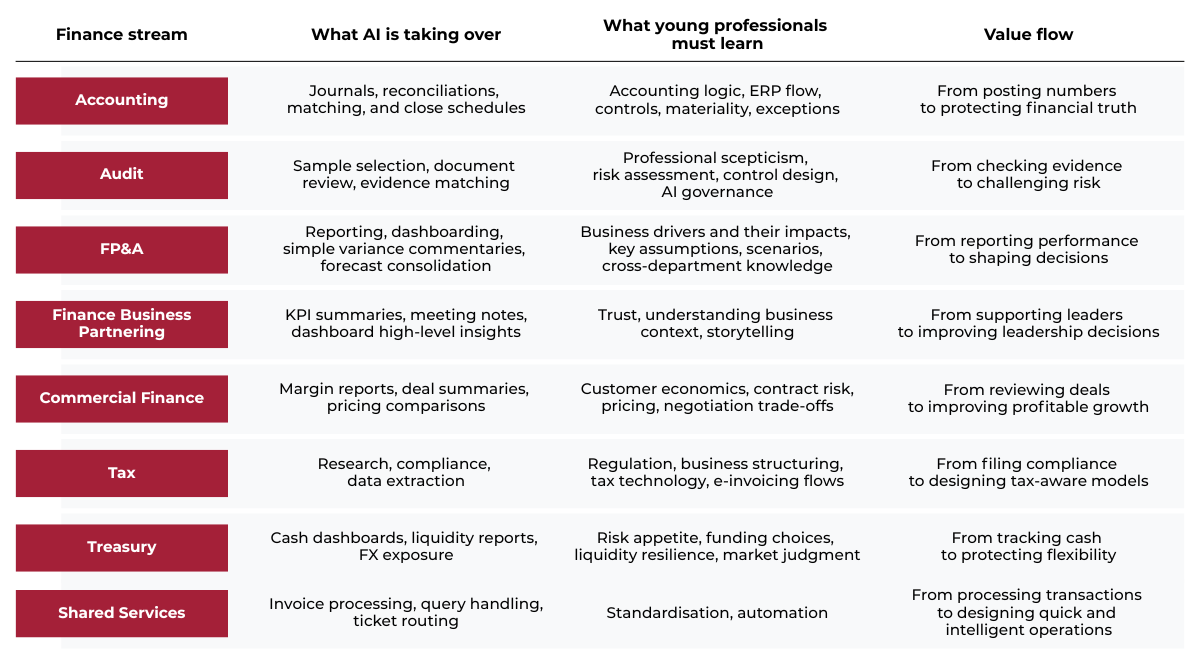
Figure 1. From Finance Tasks to Judgement-Building
Focusing Specifically on FP&A
Business partnering (X factor of “real” FP&A). FP&A without business partnering becomes reporting, and therefore, FP&A and Business Partnering become inseparable. The value is no longer only in reporting faster, but in asking better business questions.
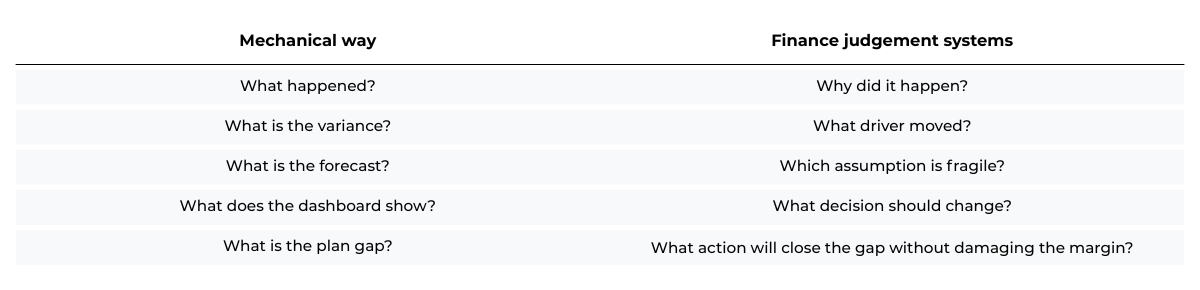
Figure 2. From Mechanical Questions to Finance Judgement
AI can help draft the commentary, but FP&A must own the interpretation. AI can summarise the movement, but FP&A needs to learn to challenge the assumption. AI can refresh the dashboard, but a capable FP&A knows where the metric will influence or impact.
A Message for CFOs, Heads of FP&A, and Finance Leaders
As AI reduces manual finance work, we need to be intentional about how judgment is built in the next generation. If we automate the basics and remove the learning curve, we cannot expect future leaders to develop strong financial instincts.
This means rethinking quick and impactful development pathways. Junior finance talent should not only prepare reports like bots. They should also be coached to understand business models, sit in forecast discussions, observe trade-offs, challenge assumptions, and connect numbers to real operational outcomes. Future finance function will not be judged by how much it automates, but by whether automation creates space for better thinking, stronger partnering, and better decisions. In simple terms: AI should not make Finance less thoughtful. It should give Finance more room to think.
So, My Final Advice to Early-Career Finance Professionals Is This
Do not avoid the areas AI touches; AI will touch every area of Finance sooner or later. The smarter strategy is to build your career in layers, because each layer builds a different part of financial judgment.
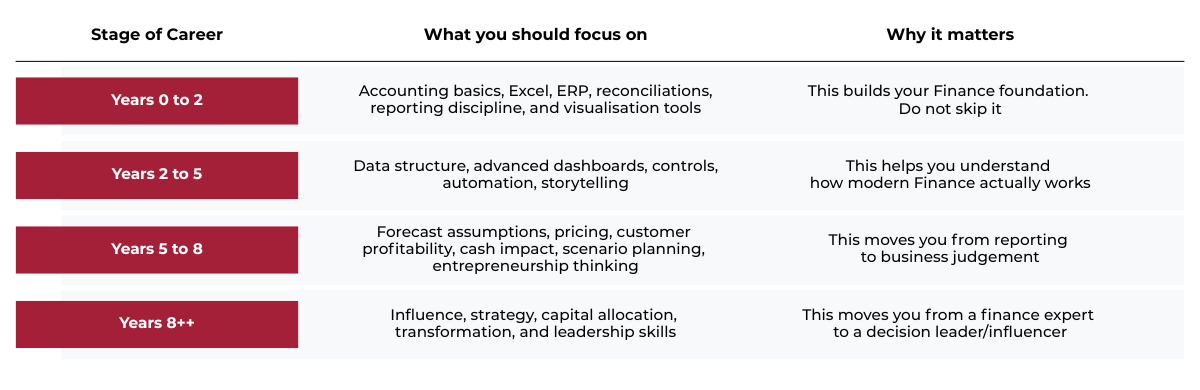
Figure 3. The New Finance Career Ladder
Do not focus on which Finance job will AI not touch? That is the wrong question fundamentally. Instead, focus on and ask:
In the finance area I choose, what type of human judgment becomes more valuable as AI takes over more routine work?
In this evolving environment, you need not prepare only for the finance job your seniors started with; prepare for the Finance role that businesses will need next. And this is exactly where we have a Talent Shortage as of today!
This is the author’s second contribution to FP&A Trends. His first article, FP&A: The Fastest and Sharpest Route to the CFO Chair, explored FP&A’s role in career progression toward senior finance leadership.
The full text is available for registered users. Please register to view the rest of the article.
Related articles

Finance has a strange job. We are not the ones making most of the business decisions...

In this article, discover how AI is transforming FP&A roles, skills, and storytelling — and what...

Join the FP&A Trends Webinar on March 18th to hear how leading FP&A teams are using...

In this article, the author explores how an FP&A team can evolve across three maturity levels...

Most professionals working in the FP&A discipline have degrees in finance or accounting and previously worked as...
+
Subscribe to
FP&A Trends Digest

We will regularly update you on the latest trends and developments in FP&A. Take the opportunity to have articles written by finance thought leaders delivered directly to your inbox; watch compelling webinars; connect with like-minded professionals; and become a part of our global community.